Antique Prints, Maps, & Books of Natural History, Botanicals, & More
Lot 3150:
Description
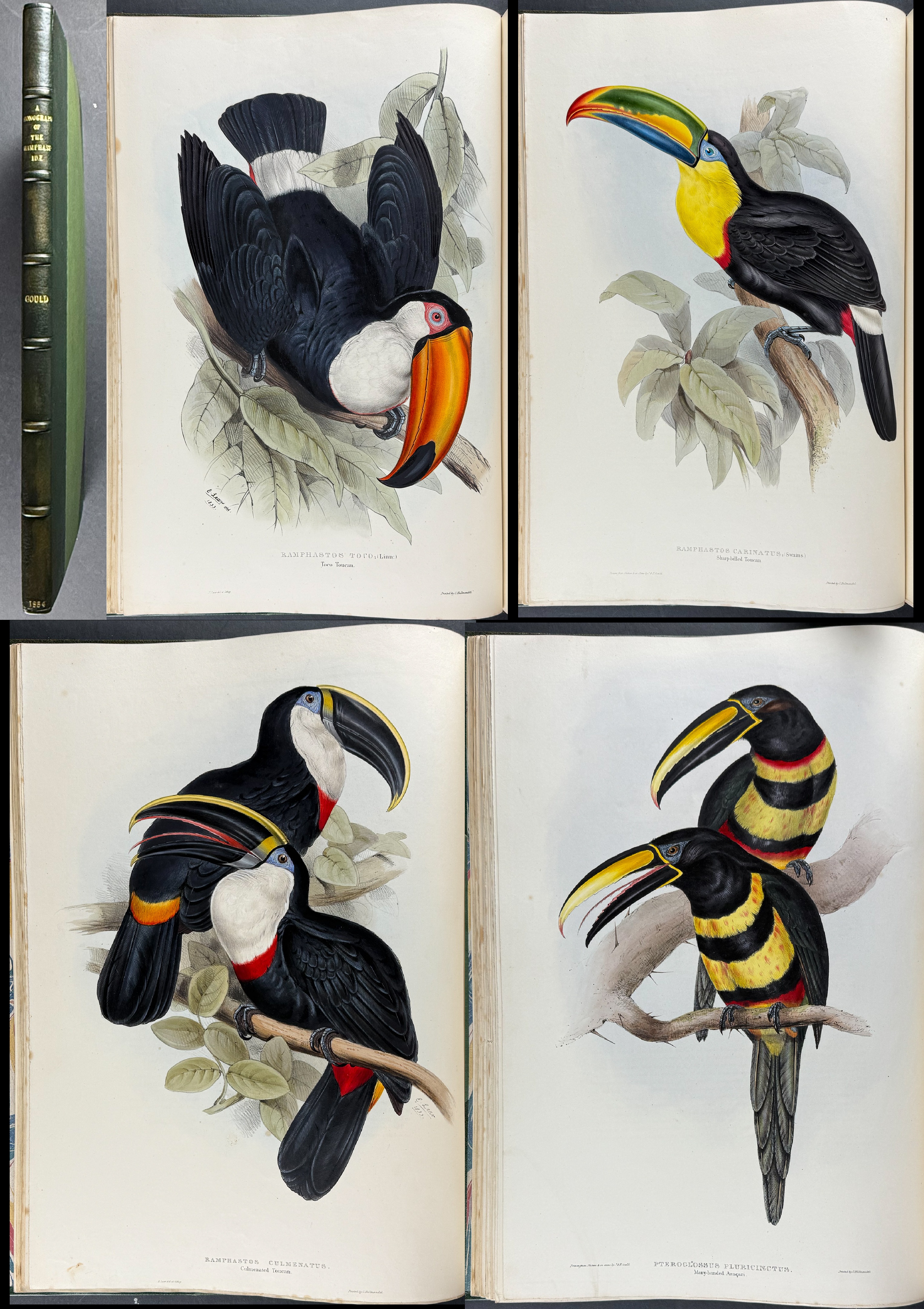
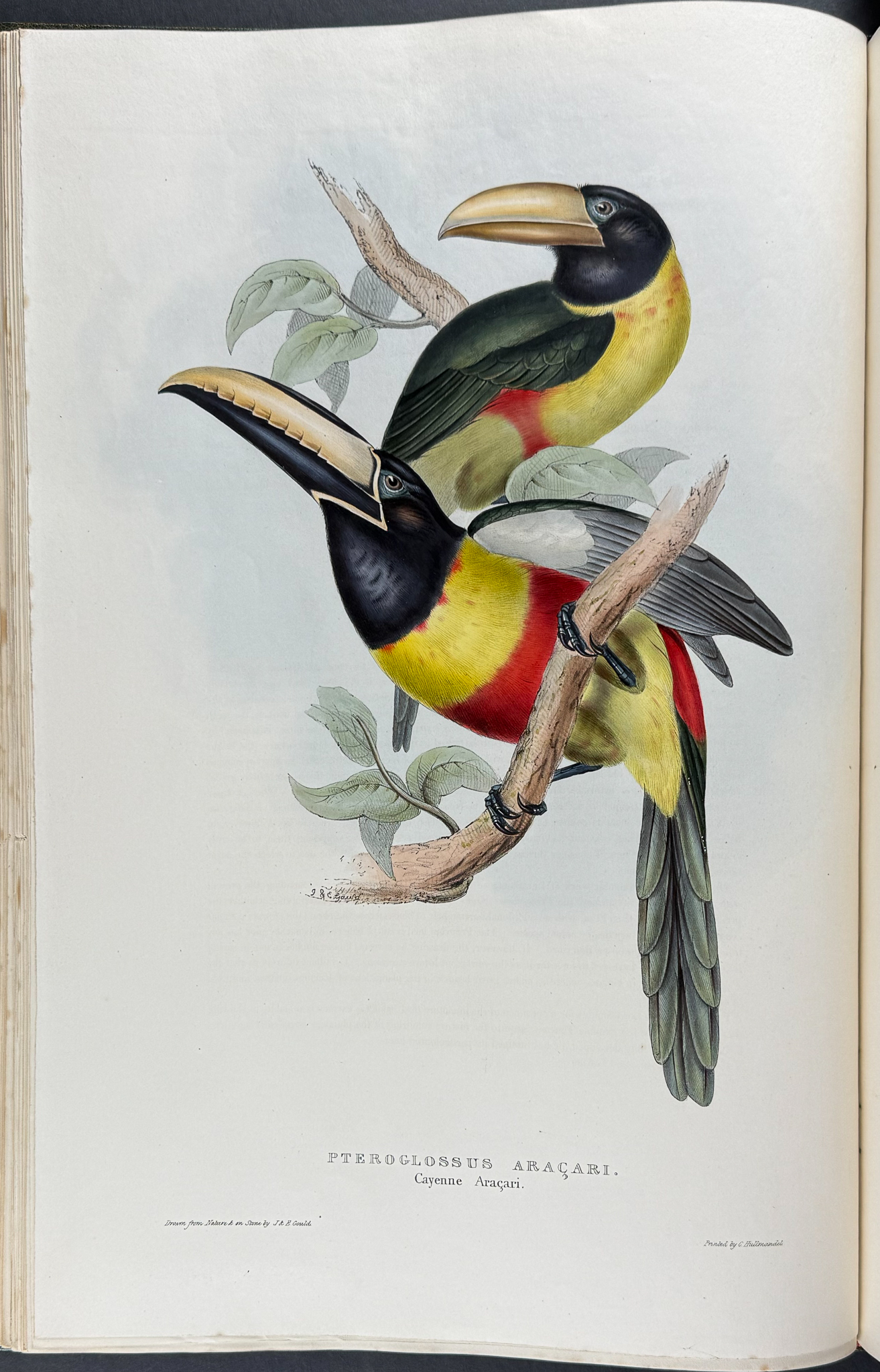
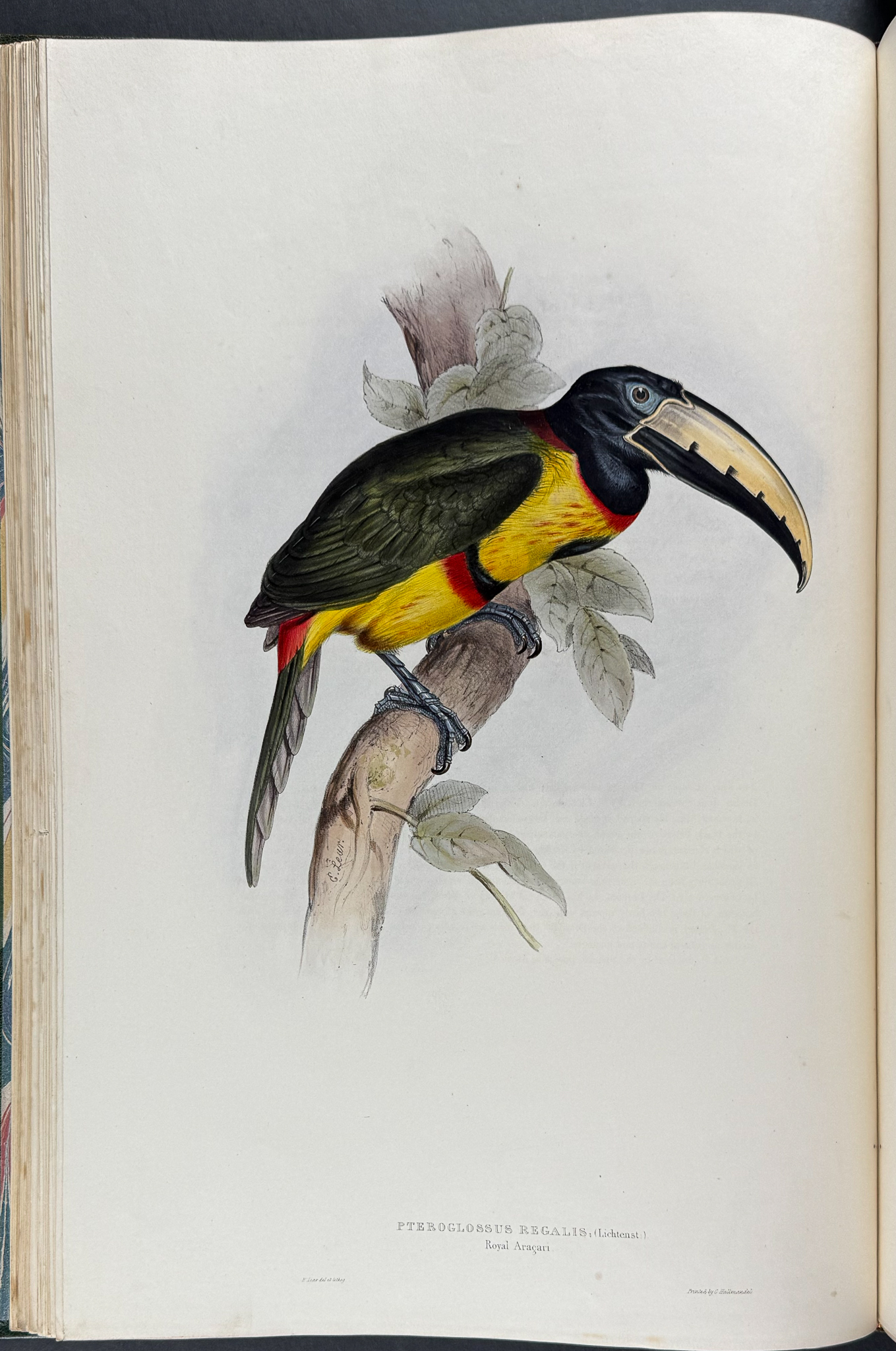
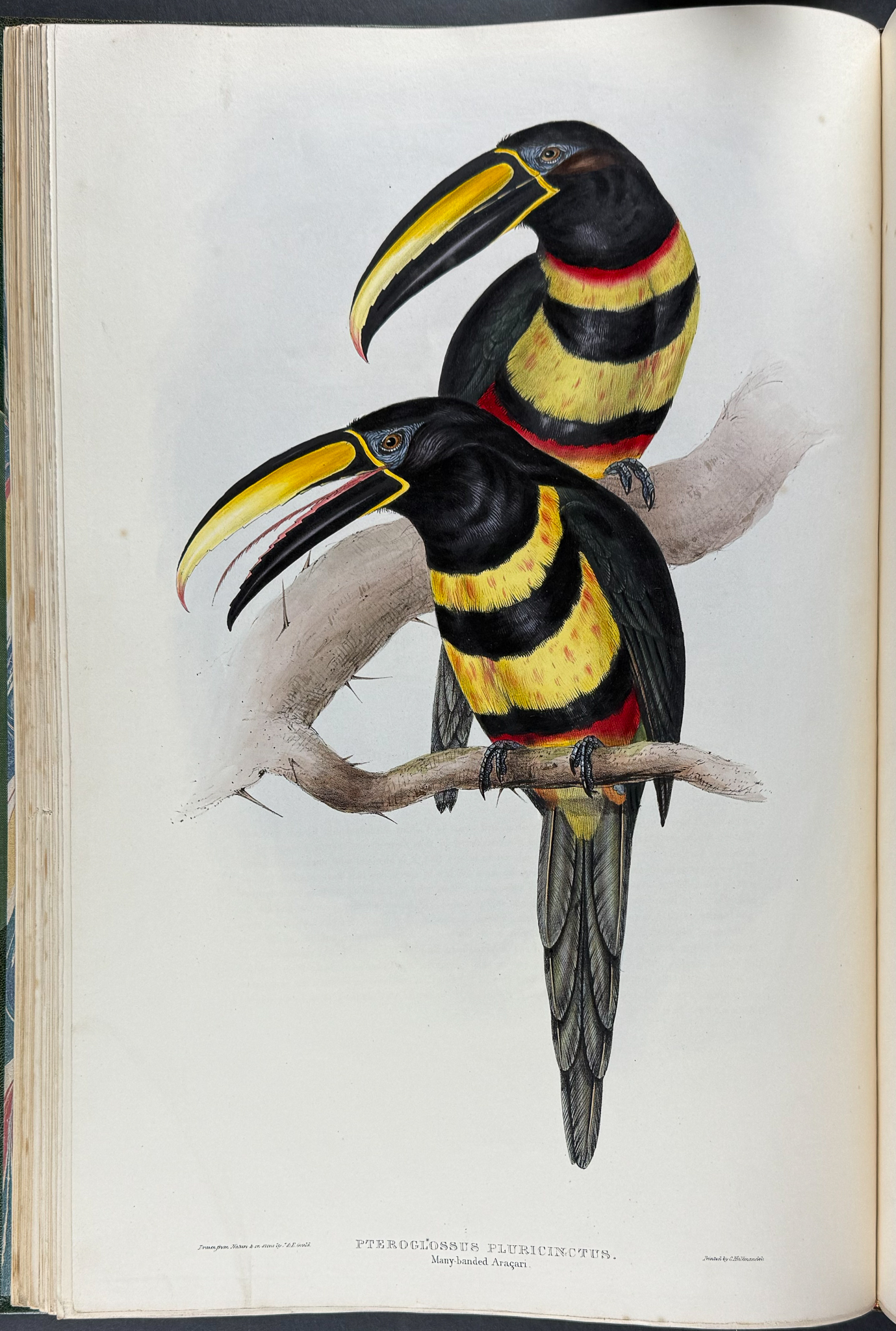
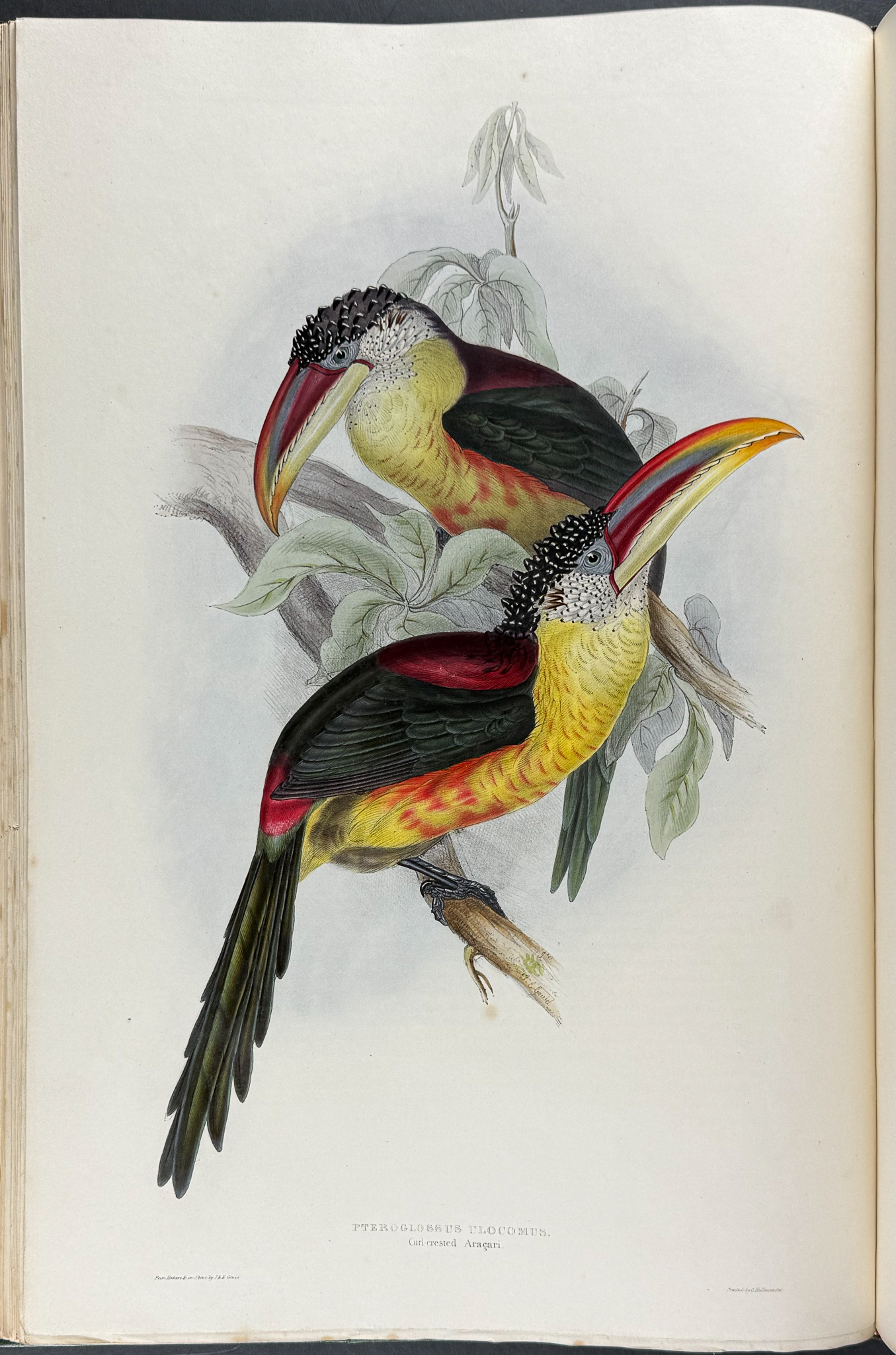
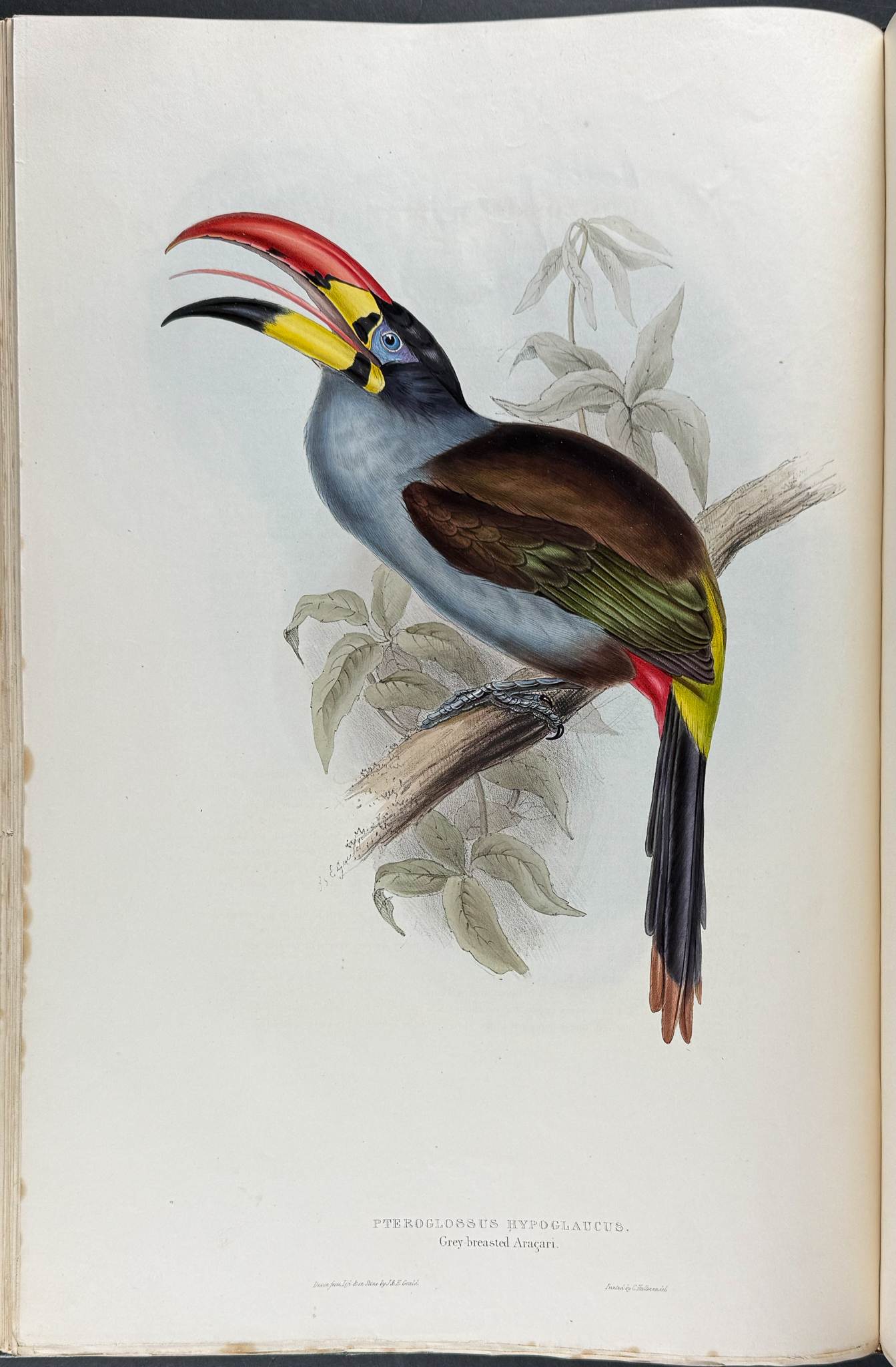
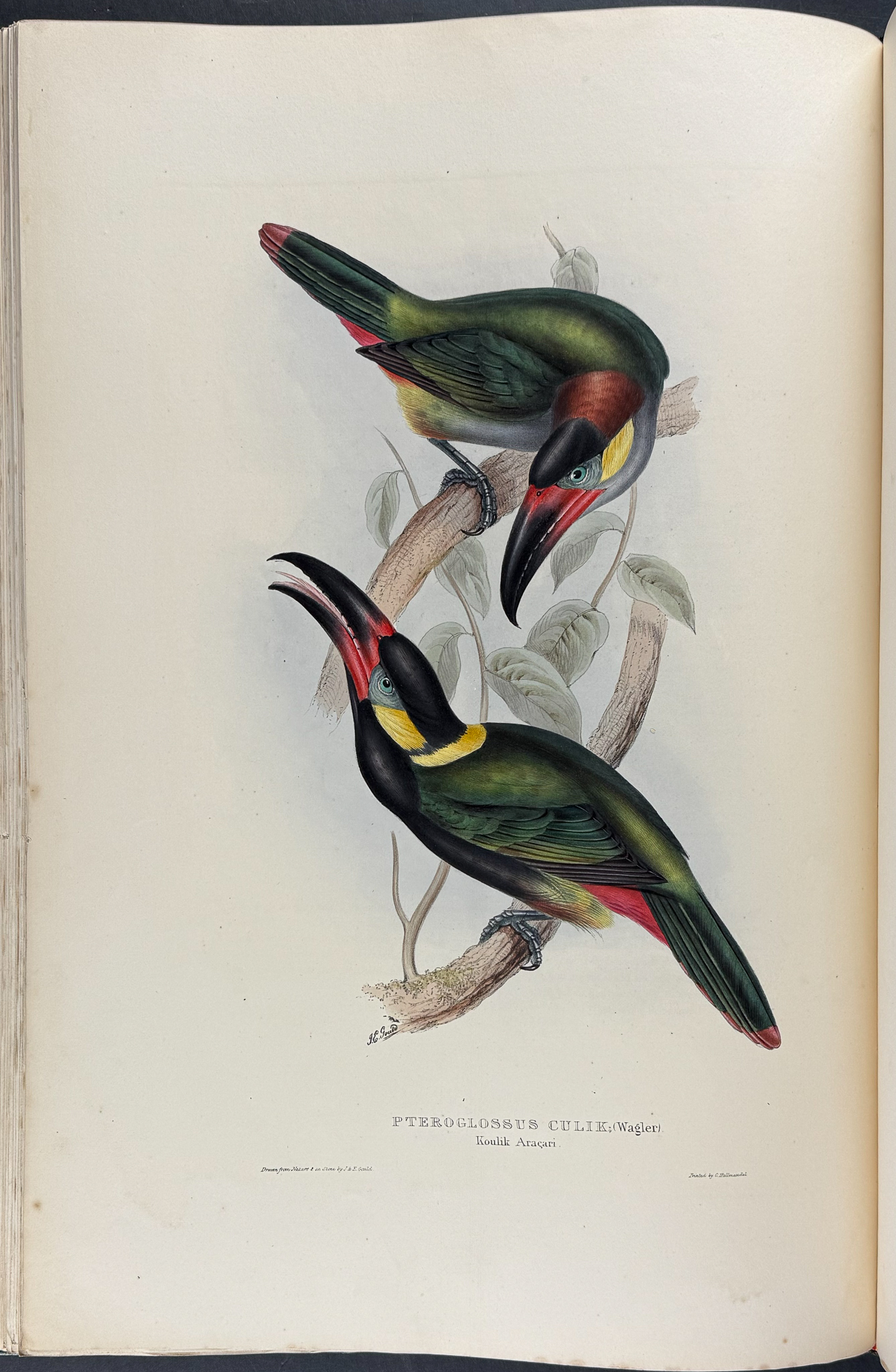
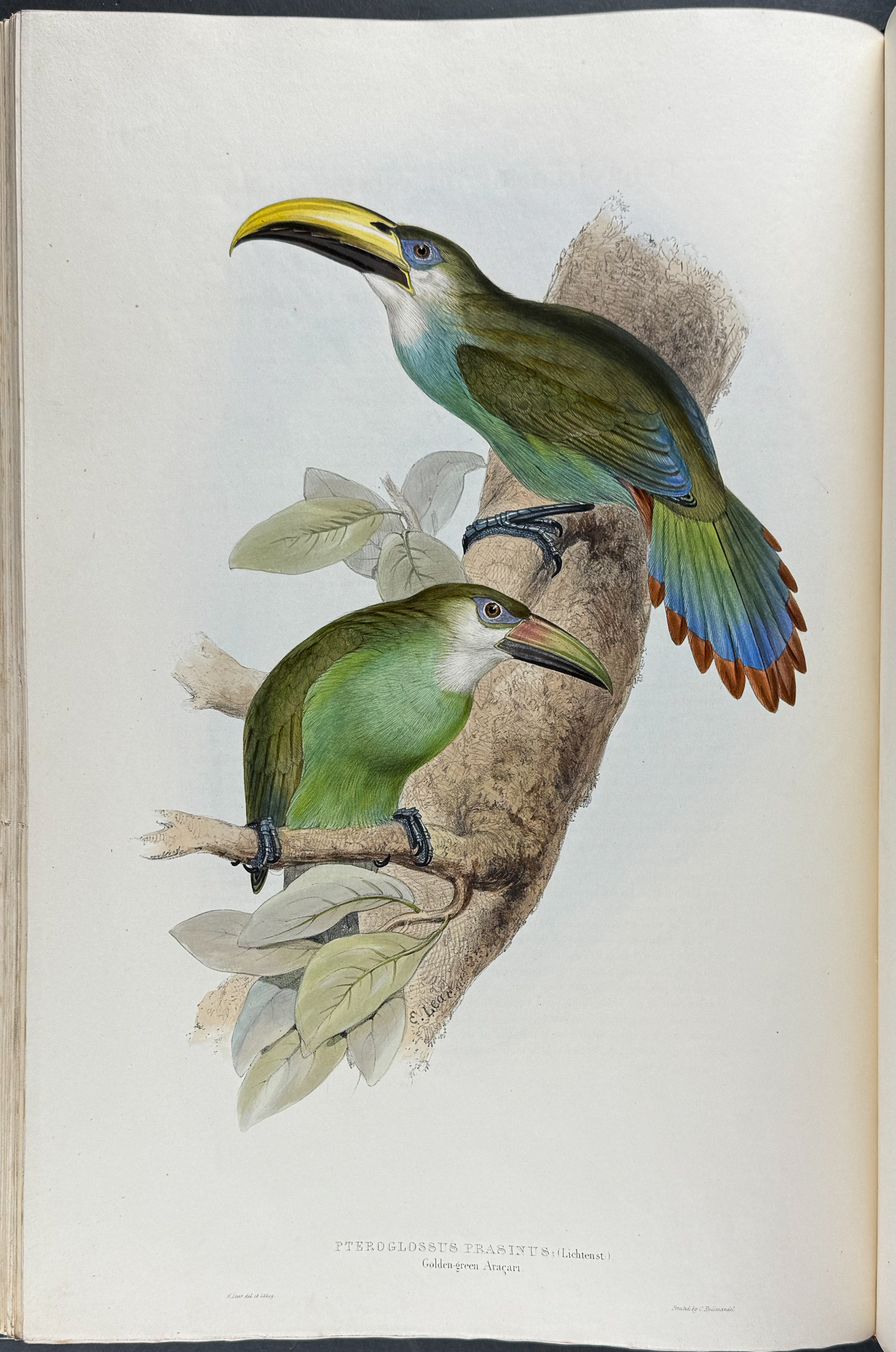
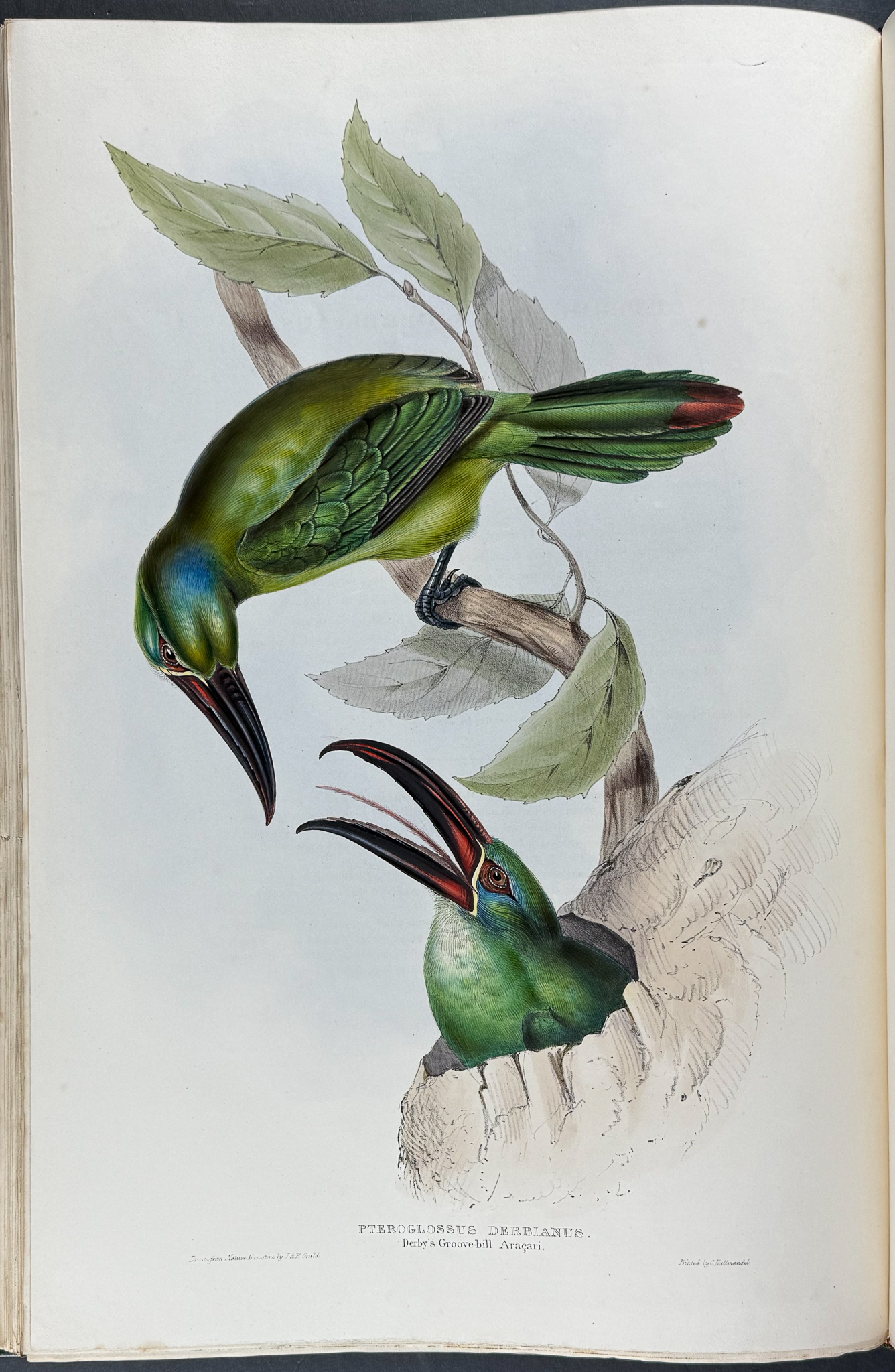
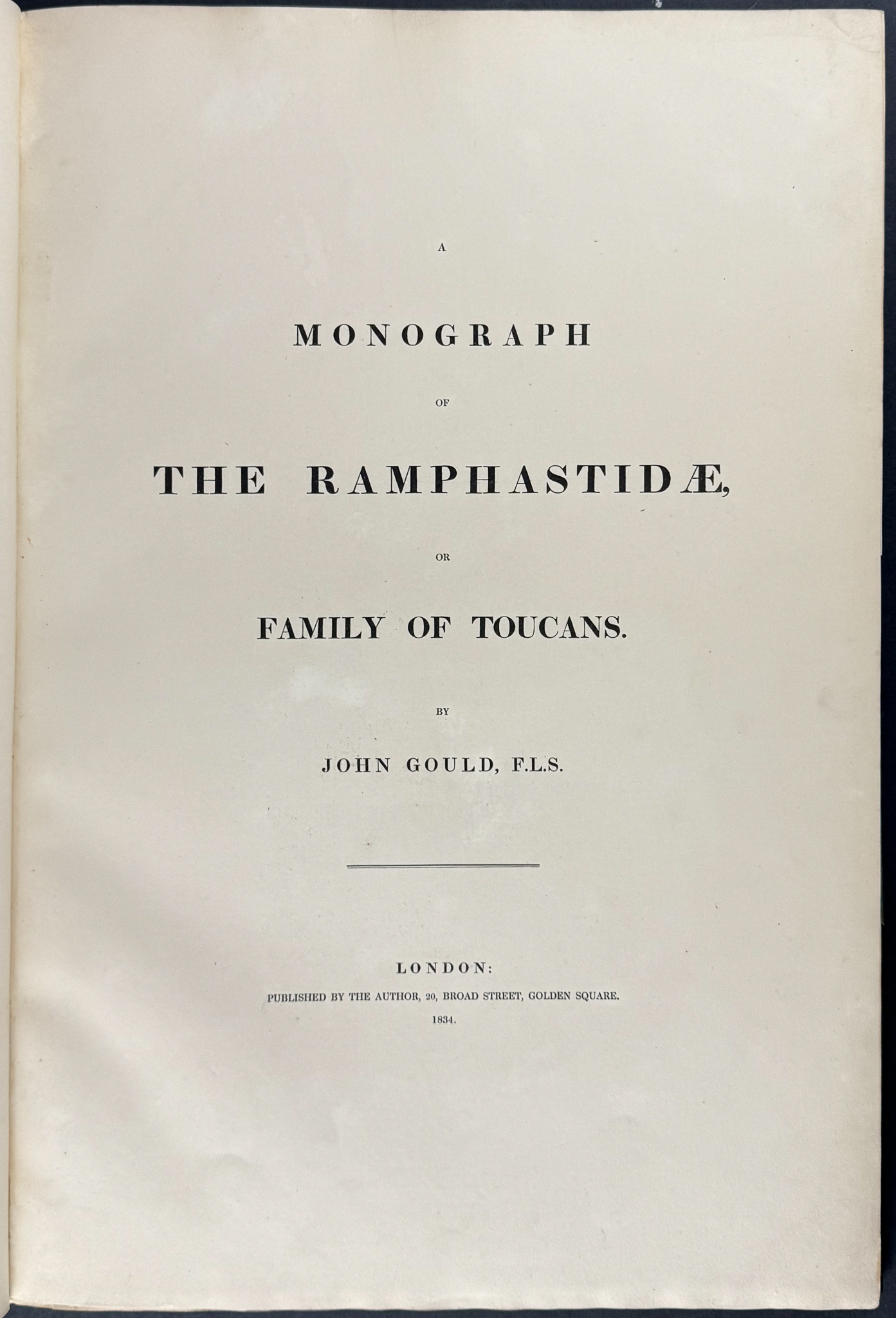
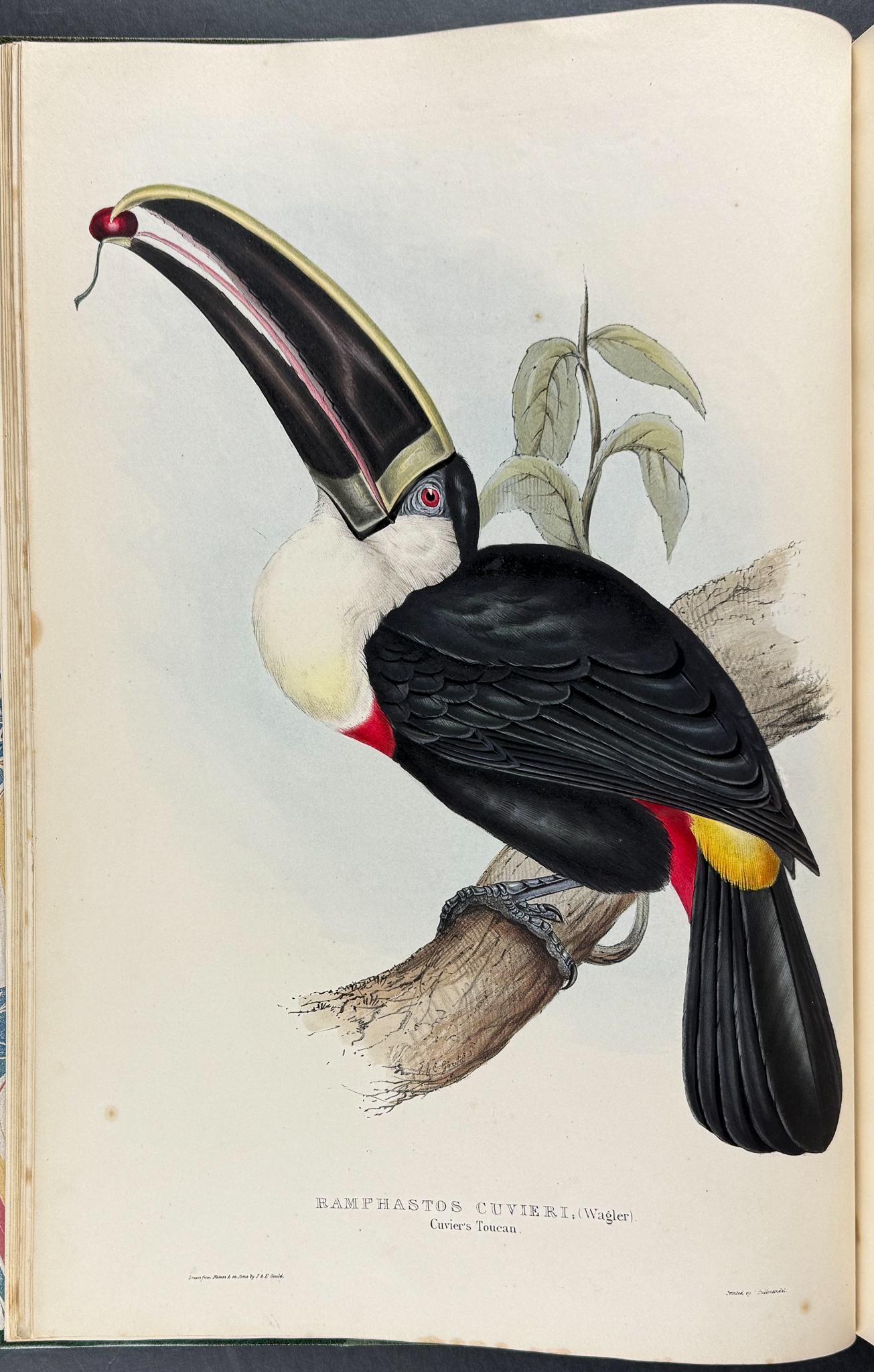
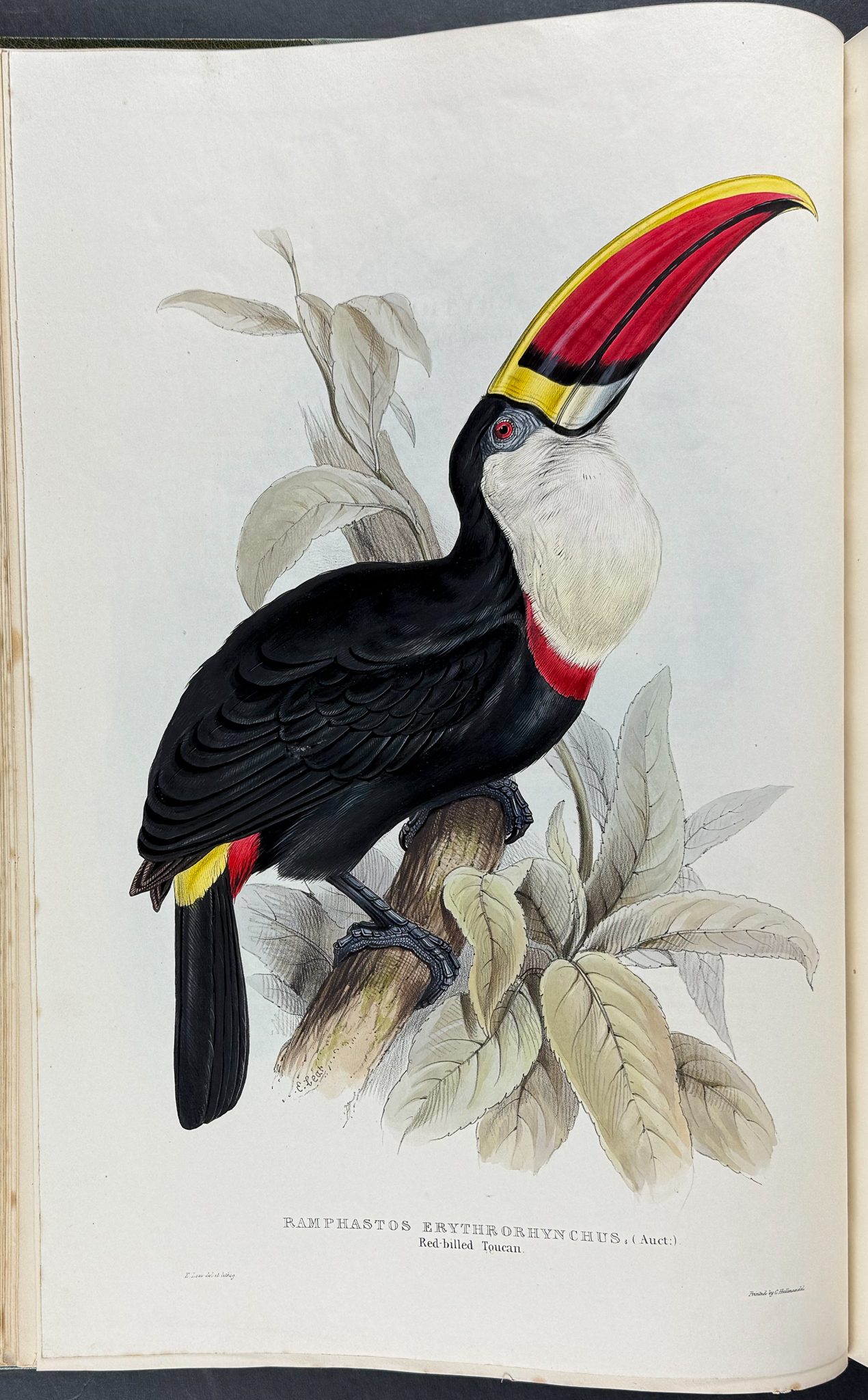
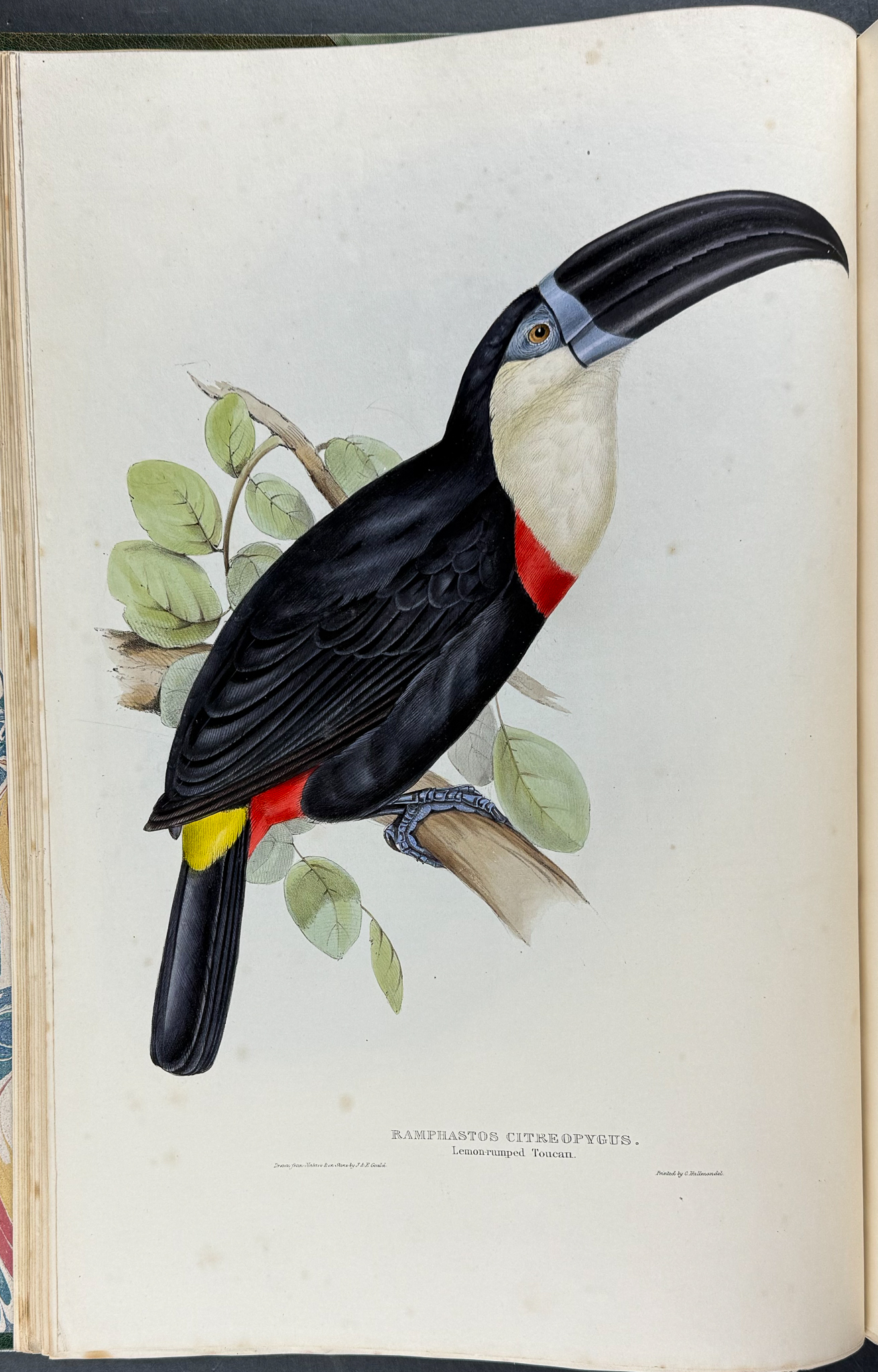
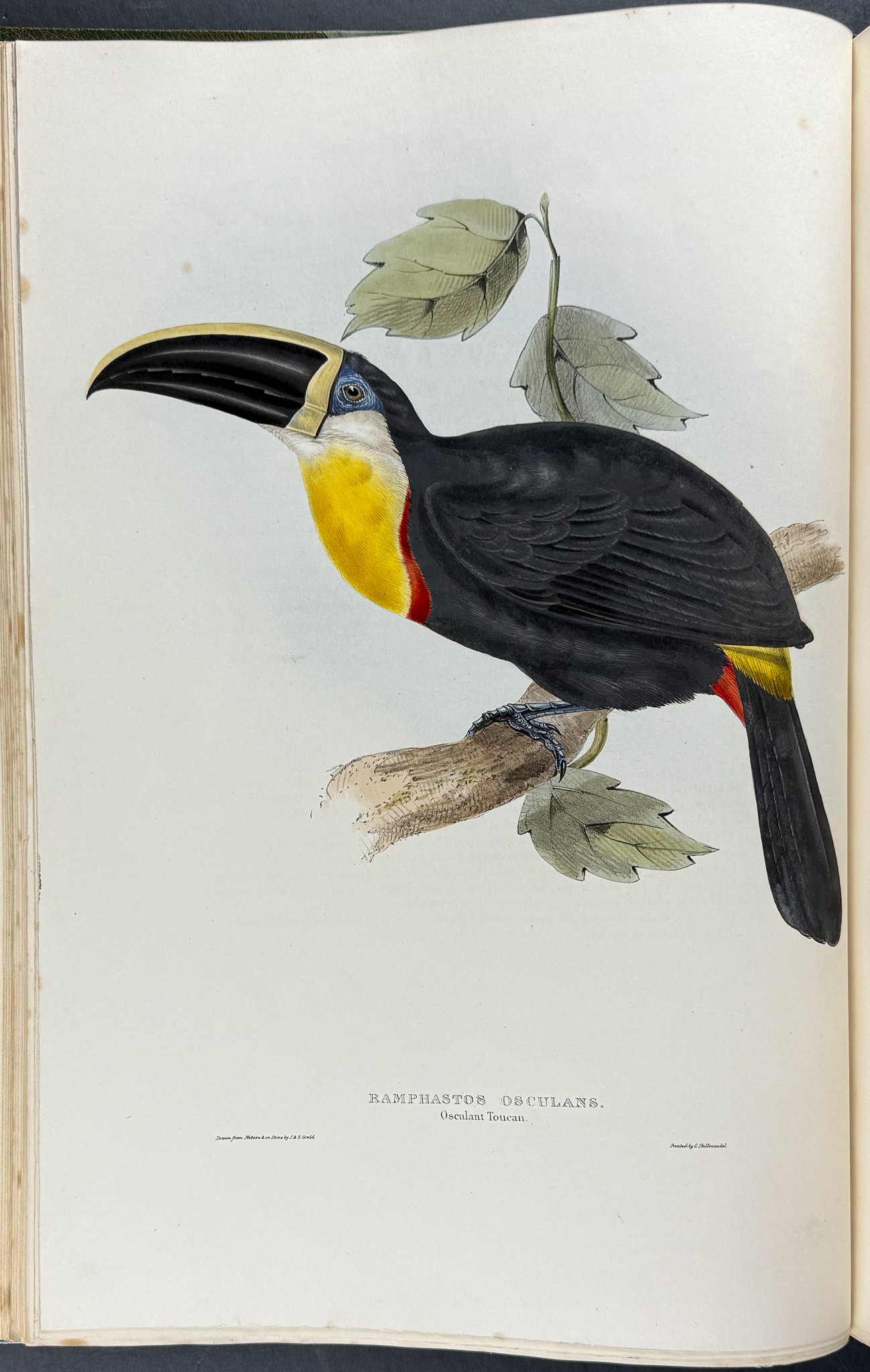
This first edition with 33 exquisite lithographs is John Gould’s
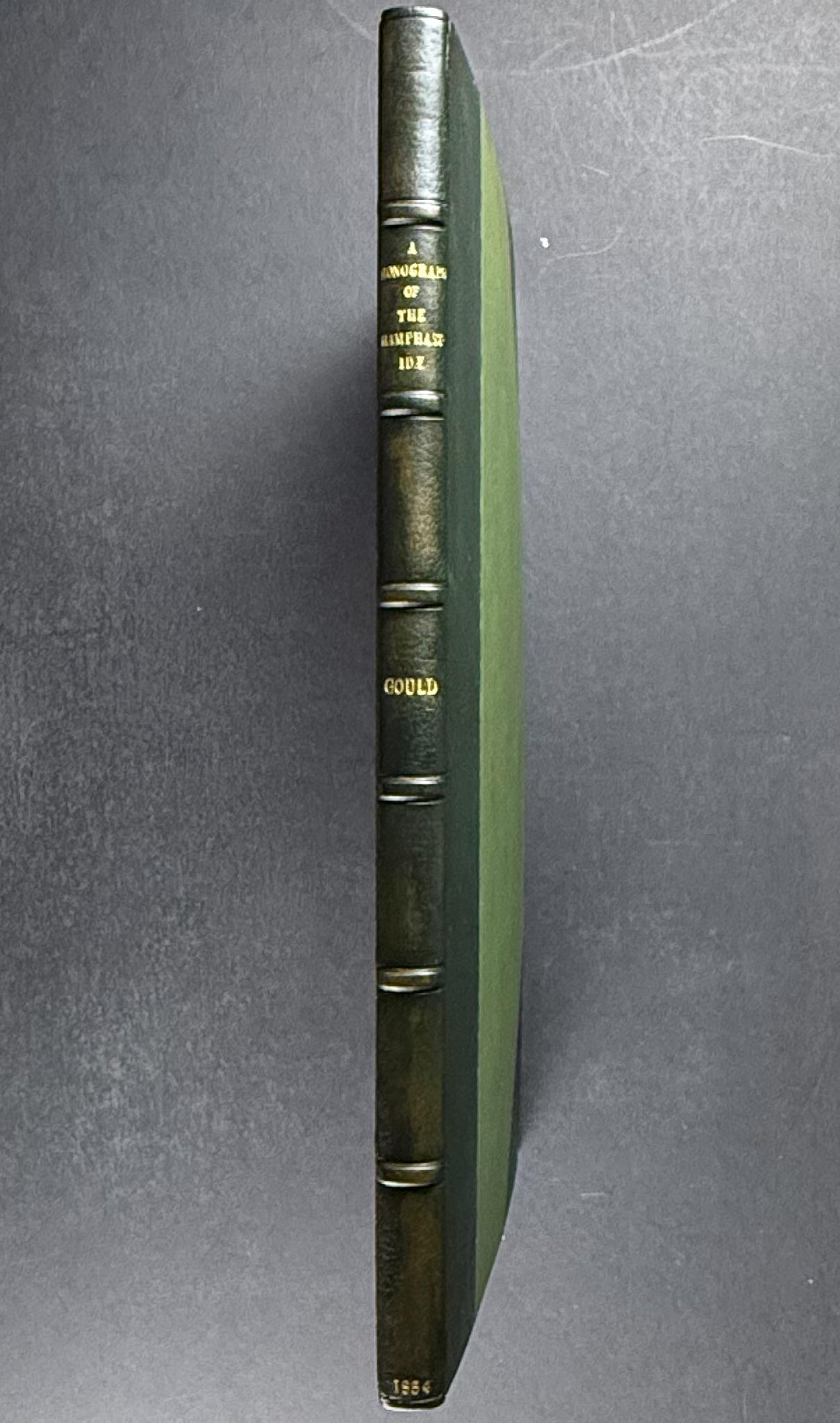
A Monograph of the Ramphastidae, or Family of Toucans. The work was published in London for the author between 1833 and 1835. All of the plates were printed by Charles Hullmandel.
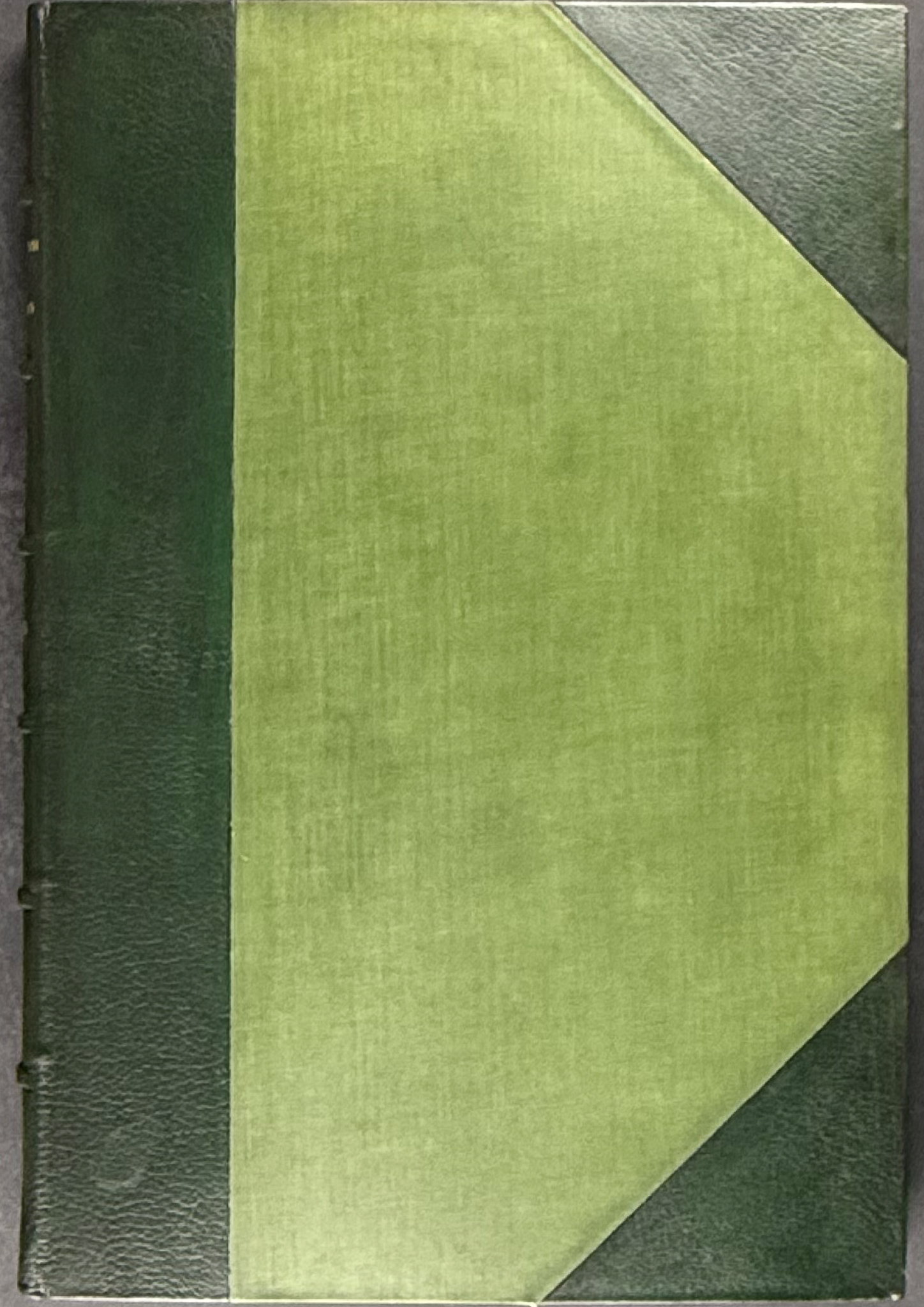
The volume is bound in 20th century green three-quarter morocco by Riviere & Son, top edge gilt. It includes a special anatomical essay by Richard Owen. There are 33 originally hand-colored lithographs and one uncolored lithograph done by G. Scharf. The title page and subscriber’s list are present.
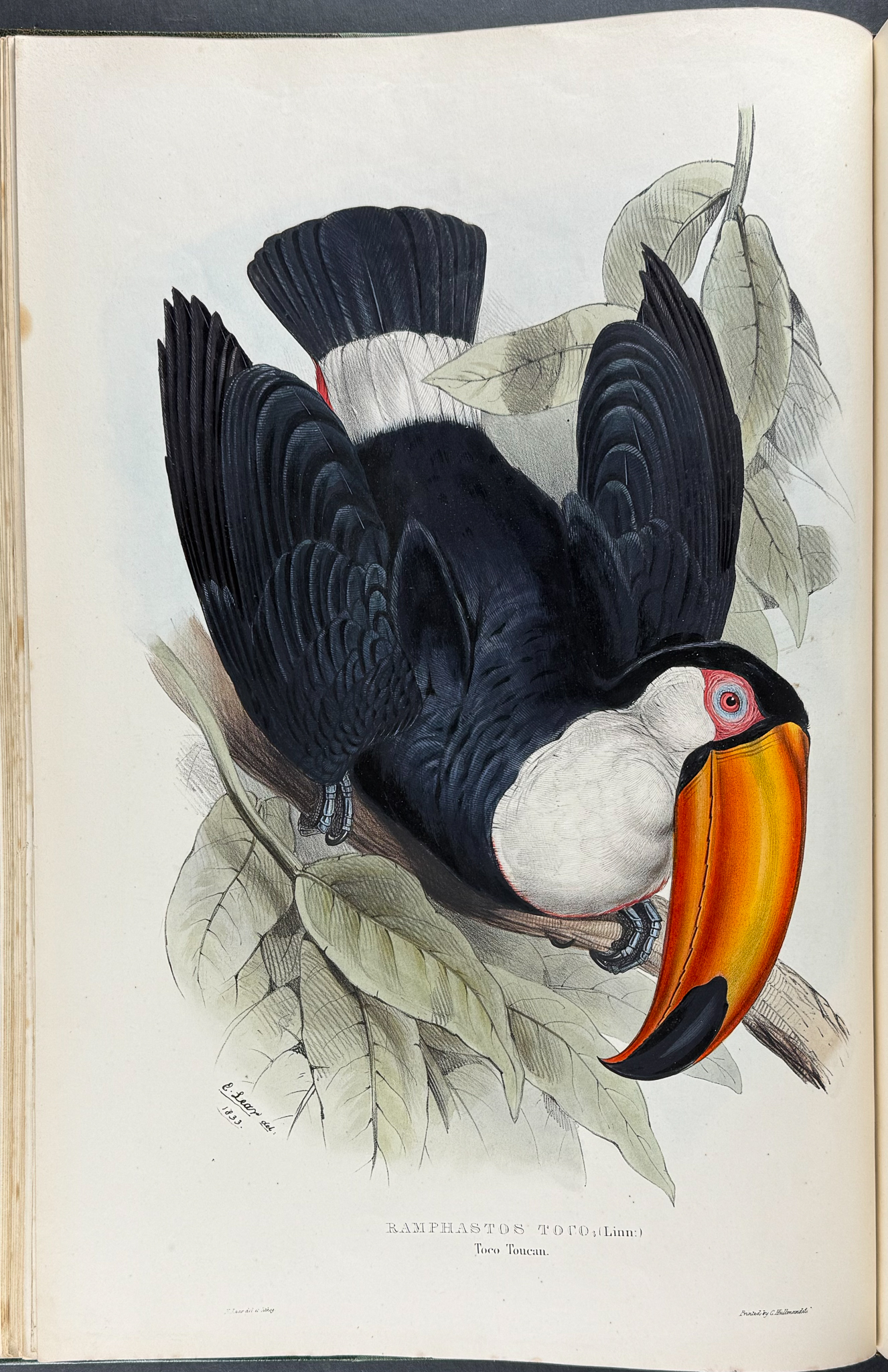
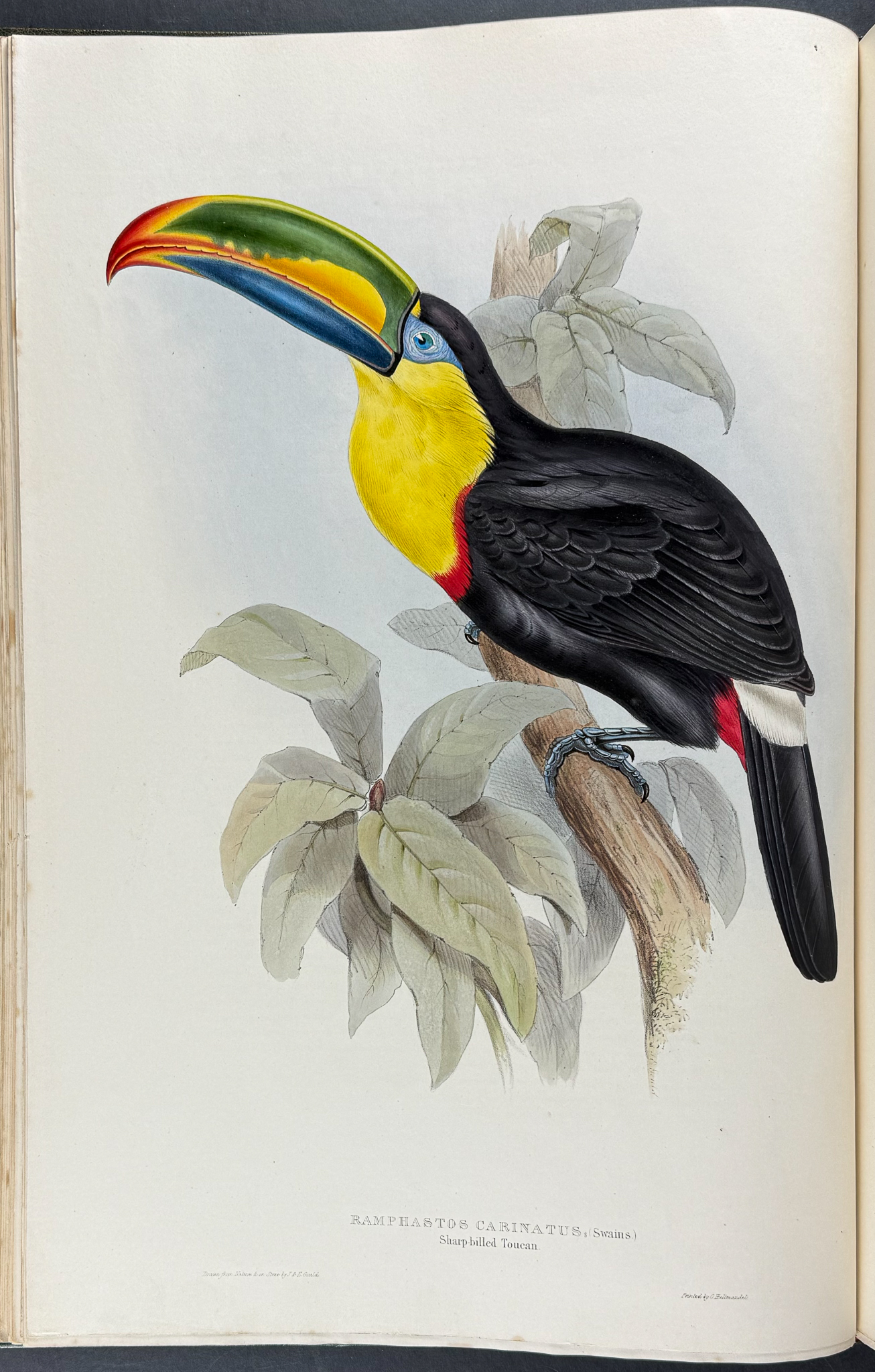
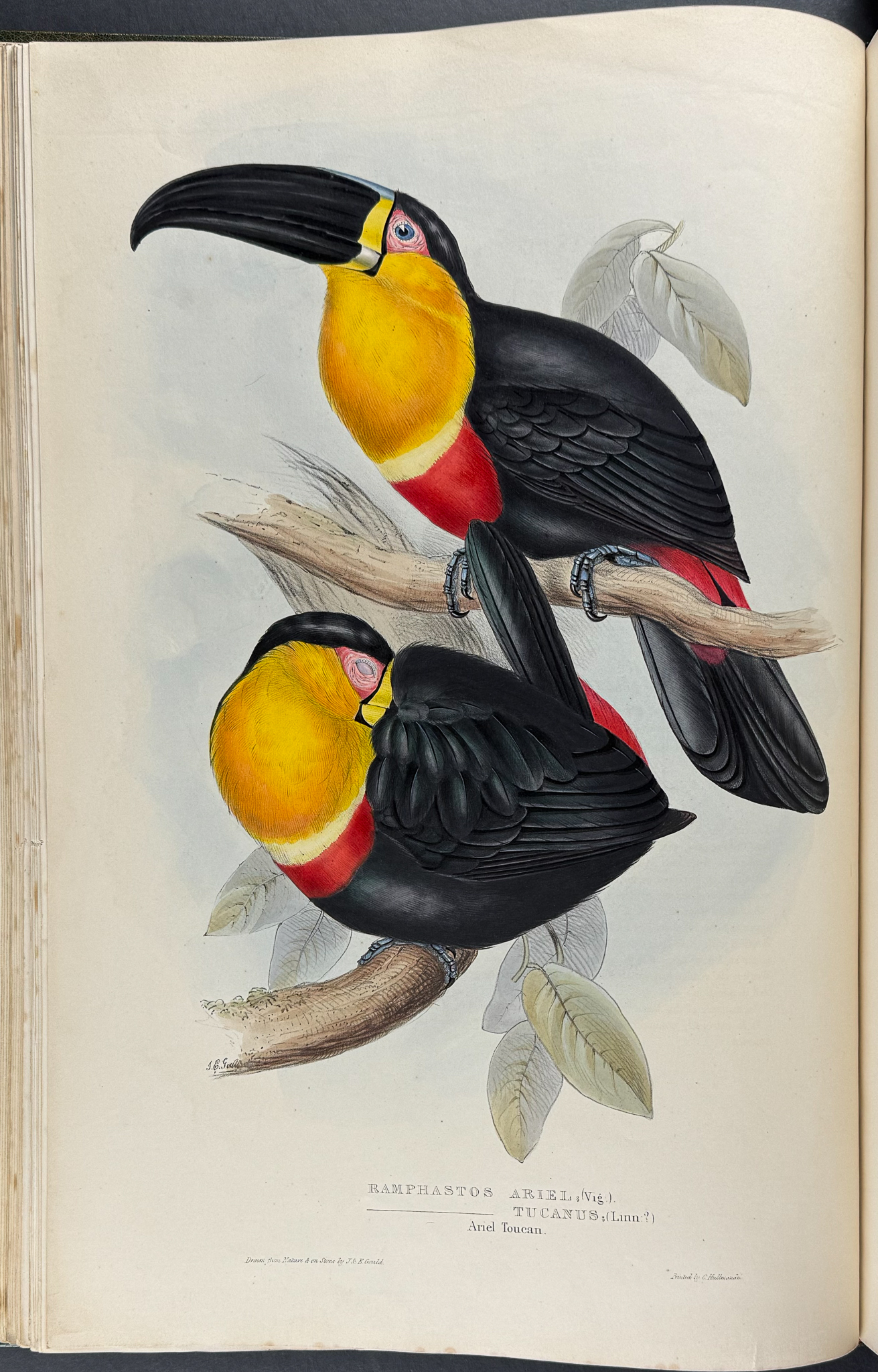
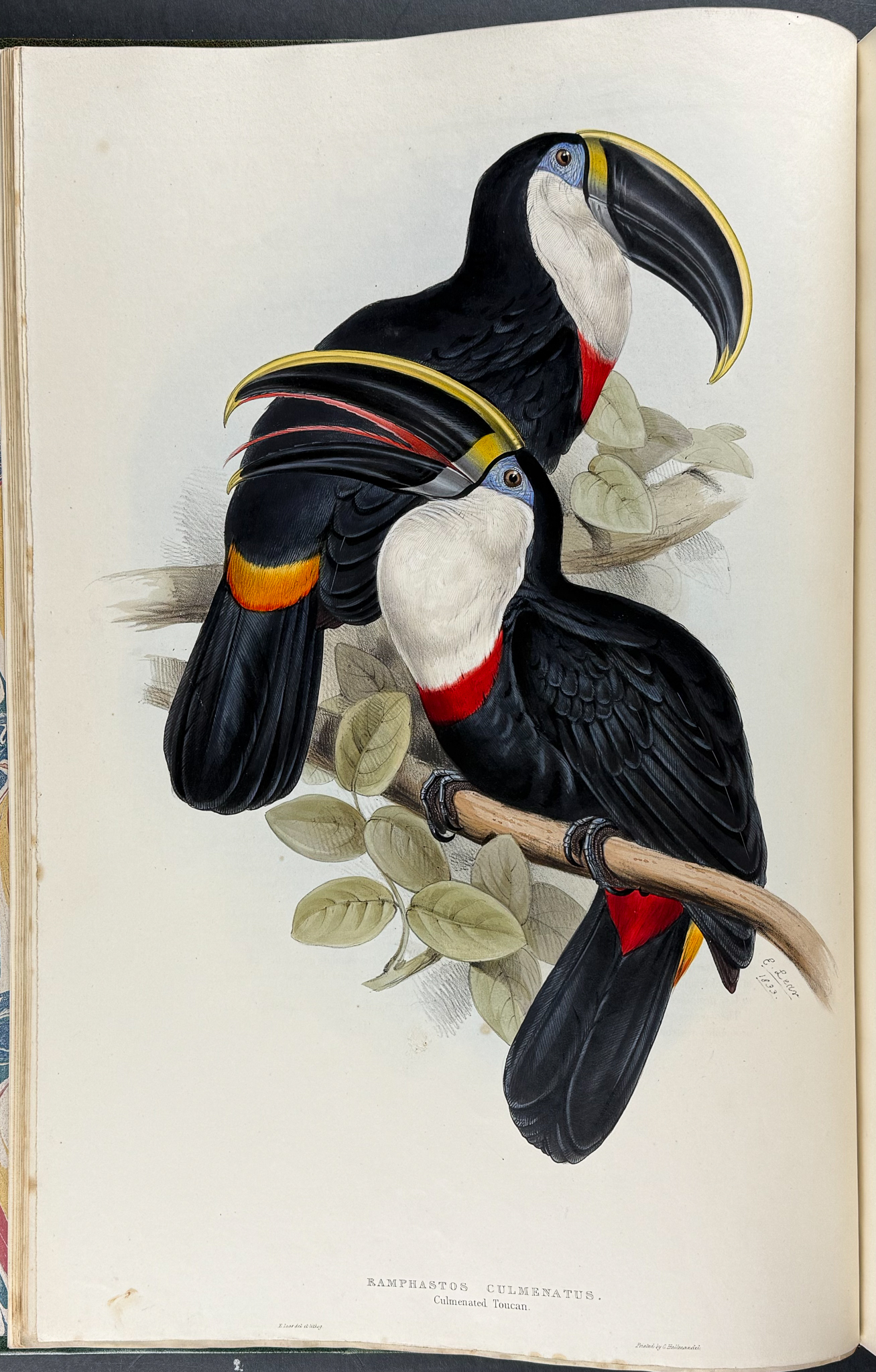
Many consider this work to contain the most stunning images Gould ever produced. The toucans are represented with true-to-life details. Rich, luminous colors and splendid composition combine to make the Toucans come to life on the page.
Gould was the foremost bird artist and publisher in Great Britain, publishing over 15 folio sets. He employed the best artists of his day to complete his works.
A Monograph of the Ramphastidae features lithographs after Gould himself, his wife Elizabeth, Edward Lear (10), H. C. Richter, and W. Hart. Lear’s stunning images for this work are considered some of his best zoological renderings.
The toucan family is limited to Mexico, Central and South America and some West Indian islands. The first time that any member of the family was described was by Gonzalo Fernandez de Oviedo y Valdes in his "de la natural hystoria de las Indias" (Toledo, 1526, chapter 42), in 1555 Pierre Belon included an illustration of its beak in his "L’Histoire de la nature des oyseaux" (Paris, 1555, p.184). Andre Thevet first used the name ‘Toucan’ with a long description, and a woodcut of a whole bird, in his "Singularitez de la France" (Paris, 1555, pp.88-90). The Latin name "Burhynchus" or "Ramphestes" (in reference to the size of the beak) was suggested by Conrad Gesner ("Icones Avium", 1560, p.130), and Linnaeus later adopted Aldrovandus’ corrupted form of the latter ("Ramphastos") which is how the family was still recognized at the time of the publication of the present image.
John Gould created nearly 3000 hand-colored plates of animals in his extensive career. Gould gained much of his knowledge by observation and experience and contributed greatly to scientific knowledge at the time. Gould is believed to have done the original sketches for all of his plates. Even at the time of publication, Gould’s plates were very expensive and only sold to a small set of subscribers. Due to the limited subscriber list, the plates remain rare and of high value for collectors today.
Provenance: Harwarden Castle (small library label on front pastedown)
Paper Size: ~ 14 3/4" by 22"
Paper Type or Special Features: Volume with 33 Originally Hand-colored Toucan Lithographs
Condition report:
The work is in very good to excellent condition overall. The title is fainly soiled, mainly to verso. There is heavy soiling and some creasing or tears to the subscribers list. The binding extremeities are faintly rubbed and spine sunned. There is some scattered foxing or occasional very light offset which is typical to Gould\'s works. It is generally very nice with wide margins. There may be a few minor imperfections to be expected with age. Please review the image carefully for condition and contact us with any questions.
Share this lot: