Antique Prints, Maps, & Books of Natural History, Botanicals, & More
Lot 64356:
Description
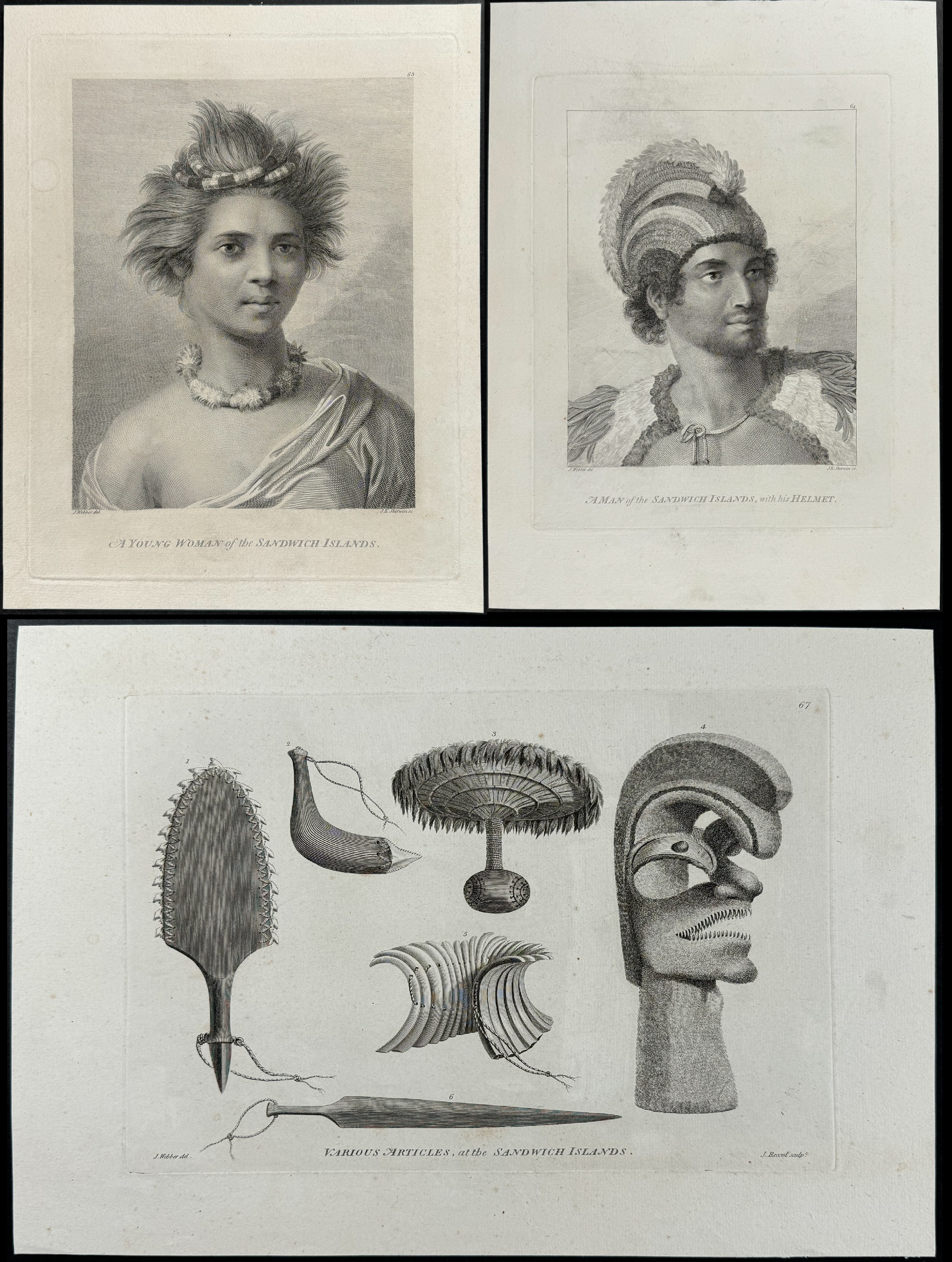
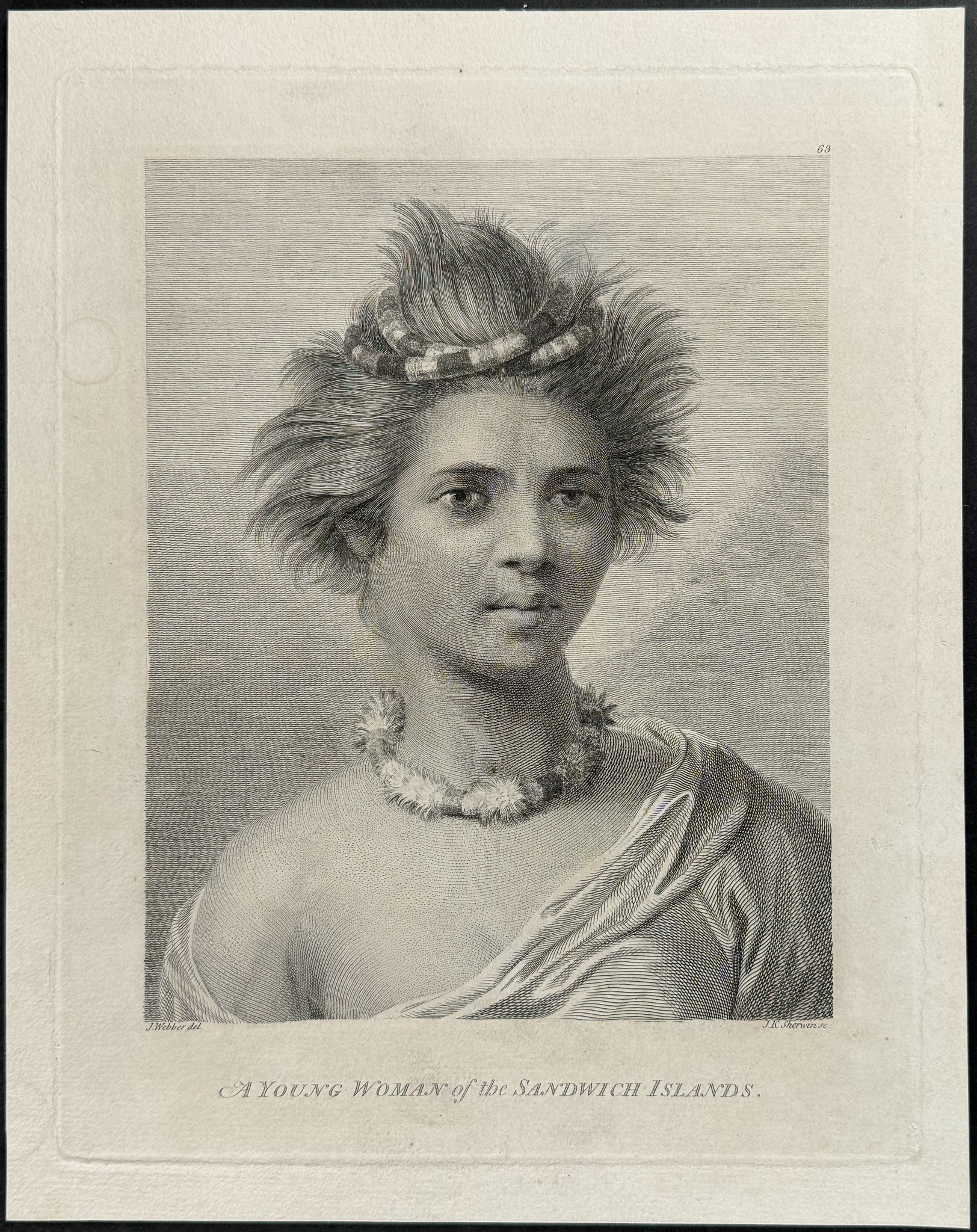
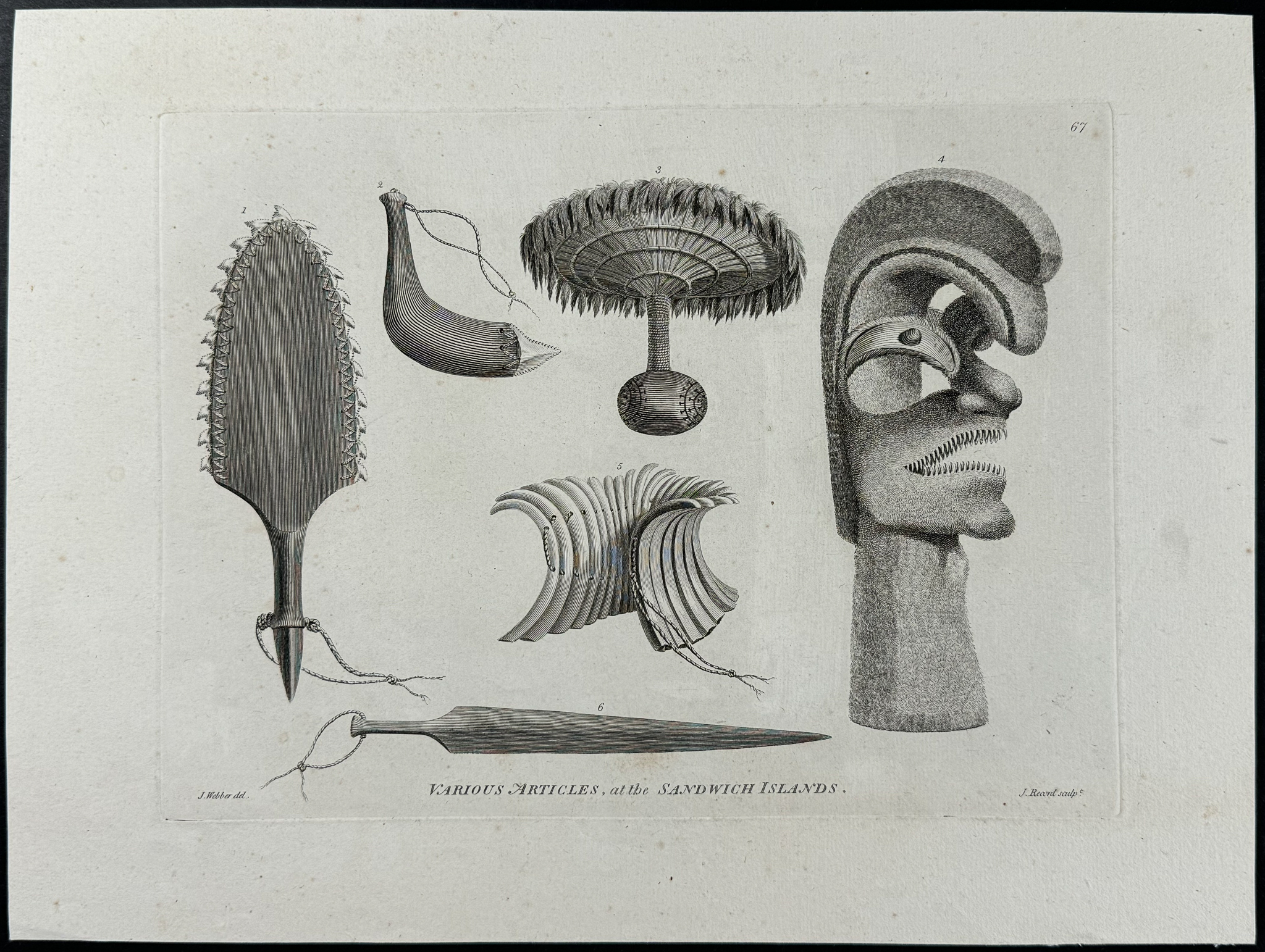
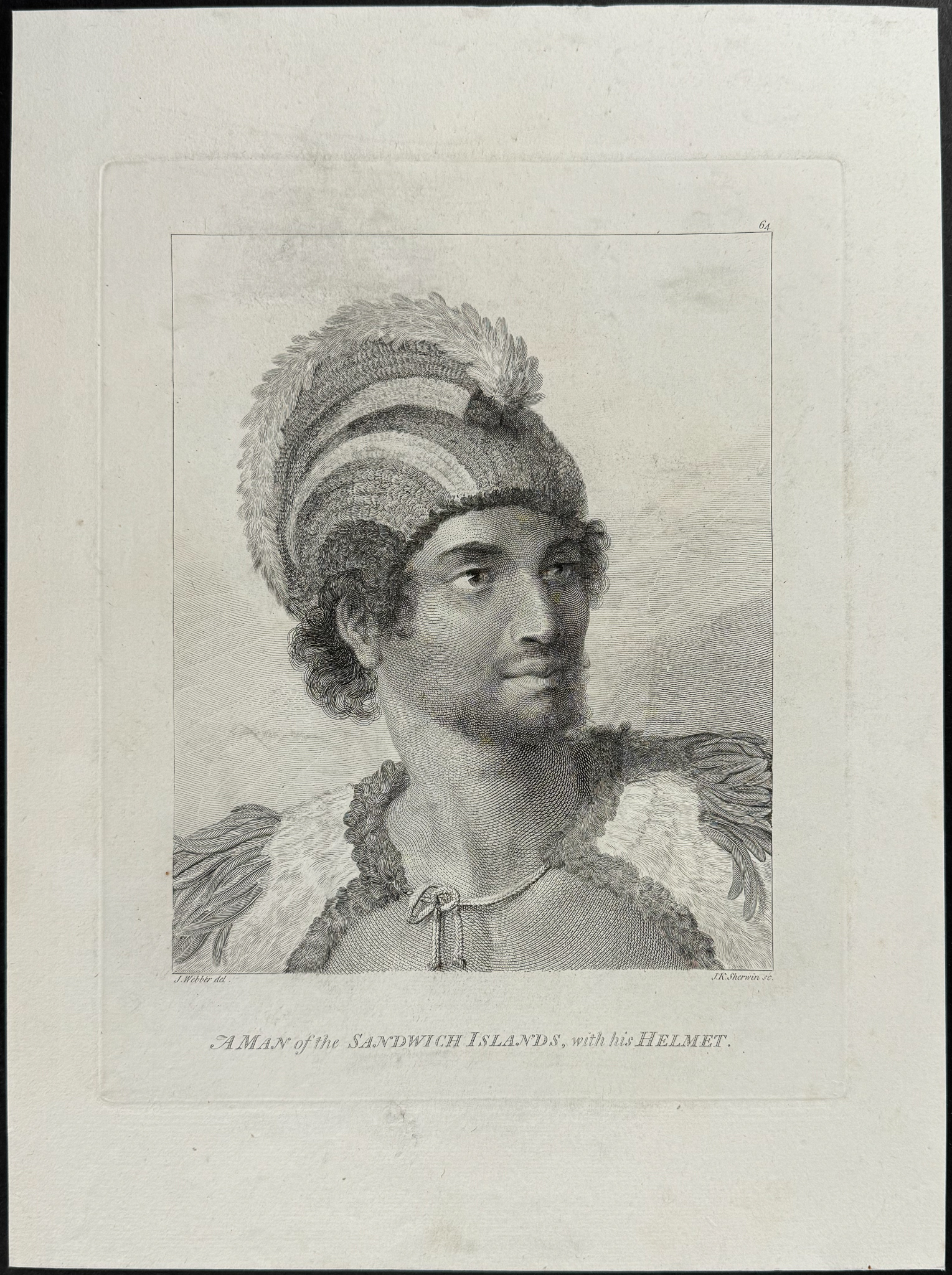
Three Engravings from this work:
A Young Woman of the Sandwich Islands. 63
Various Articles, at the Sandwich Islands. 67
A Man of the Sandwich Islands, with his Helmet. 64
This fascinating engraving is from Captain James Cook & James King’s
A Voyage to the Pacific Ocean, for making Discoveries in the Northern Hemisphere. To determine the Position and Extent of the West Side of North America; its Distance from Asia; and the Practicality of a Northern Passage to Europe. Performed under the Direction of Captains Cook, Clerke, and Gore, in His Majesty’s Ships the Resolution and Discovery; in the Years 1776, 1777, 1778, 1779, and 1780. The work was published in London by H. Hughs for G. Nicol and T. Cadell in 1785. It is the official account of Cook’s 3rd and last voyage, during which he explored Hawaii and the west coast of America, Canada, and Alaska. This is a first edition, first issue printed on large paper and uncut.
James Cook was already a celebrated Captain by 1776, having completed two scientific expeditions for the Admirality and Royal Society. He embarked on this third voyage on the HMS Resolution and HMS Discovery in hopes to find the Northwest passage. The passage was blocked by ice, but it resulted in Cook’s discovery of the Hawaiian Islands, the charting of Alaska’s coastling, and the exploration of the North Specific up to 70° N. The expedition returned South to Hawaii where Captain Cook met his untimely demise over a fight over the theft of a cutter in Kealakekua Bay. His second lietenant, James King, made a second attempt at the Northwest passage before returning to England via China and the Thames. King completed the third volume from which these engravings are offered.
"The famous accounts of Captain Cook’s three voyages form the basis for any collection of Pacific books. In three great voyages Cook did more to clarify the geographical knowledge of the southern hemisphere than all his predecessors had done together. He was really the first scientific navigator and his voyages made great contributions to many fields of knowledge" (Hill).
"Cook’s third voyage was organized to seek the Northwest Passage and to return [the islander] Omai to Tahiti. Officers of the crew included William Bligh, James Burney, James Colnett, and George Vancouver. John Webber was appointed artist to the expedition. After calling at Kerguelen Island, Tasmania, New Zealand, and the Cook, Tonga, and Society Islands, the expedition sailed north and discovered Christmas Island and the Hawaiian Islands, which Cook named the Sandwich Islands. Cook charted the American west coast from Northern California through the Bering Strait as far north as latitude 70 degrees 44 minutes before he was stopped by pack ice. He returned to Hawaii for the winter and was killed in an unhappy skirmish with the natives over a boat. Charles Clarke took command and after he died six months later, the ships returned to England under John Gore. Despite hostilities with the United States and France, the scientific nature of this expedition caused the various governments to exempt these vessels from capture. The voyage resulted in what Cook judged his most valuable discovery – the Hawaiian Islands" (Hill).
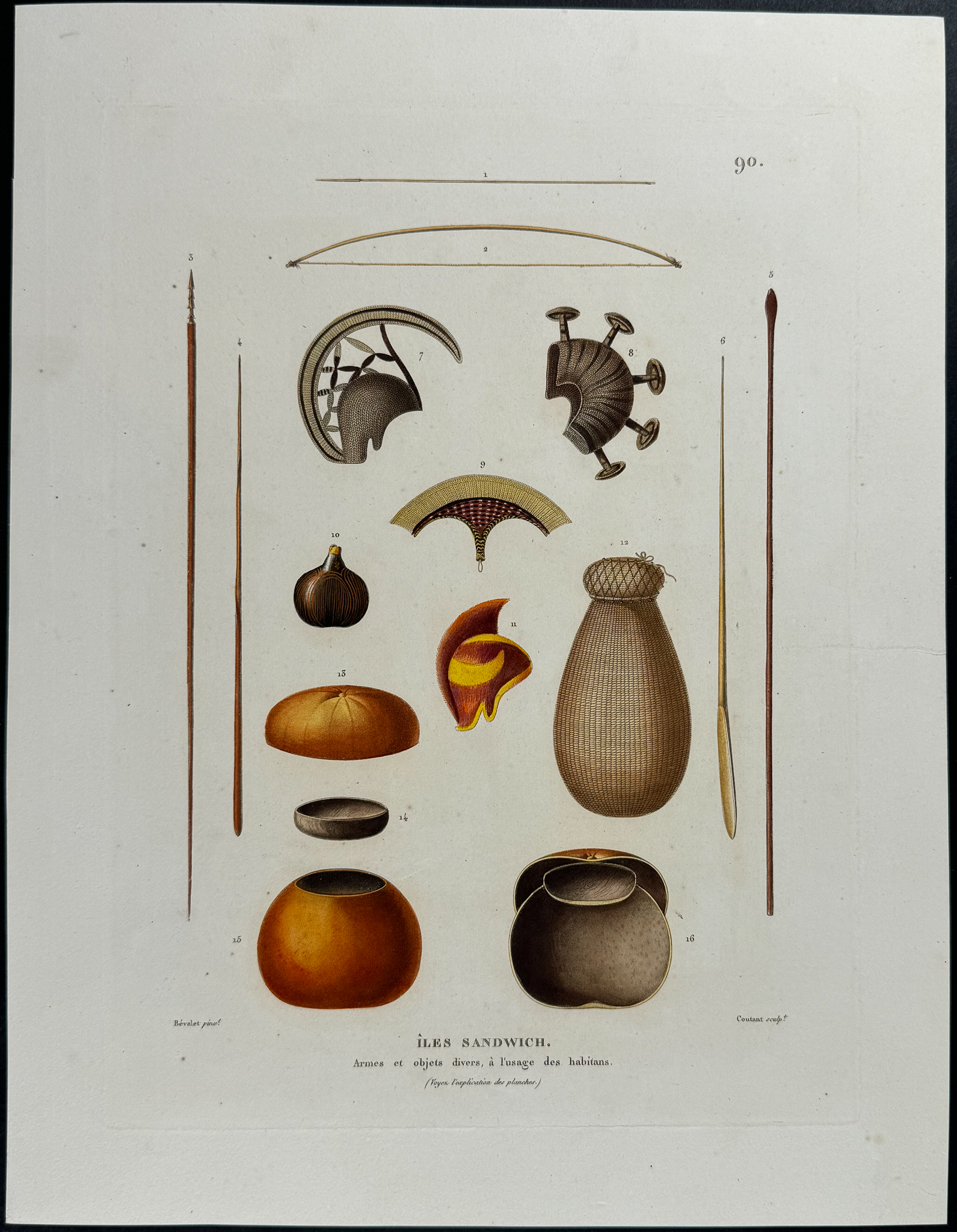
Engraving of Tools by Coutant as part of:
This originally hand-colored engraving is from Louis-Claude de Saulces de Freycinet’s
Voyage autour du monde des corvettes l’Uranie et la Physicienne pendant les années 1817, 1818, 1819 et 1820. The work was published in Paris in 1824 by Langlois.
This work was the official account of Freycinet’s voyage of scientific exploration. His voyage was one of the most important French 19th century circumnavigations of the globe. Many zoological and botanical specimens were collected on the voyage by naturalist-surgeons: Jospeh Paul Gaimard and Jean Rene Constant Quoy. Freycinet also smuggled his wife, Rose, on board the ship making it the first time a woman circumanvigated the globe.
"This later circumnavigation by Captain Freycinet was organized by the French government, under the recently restored Bourbon Dynasty, to show the flag around the world and to make scientific observations on geography, magnetism, and meteorology. It was one of the important voyages of exploration of the early nineteenth century. The URANIE sailed from Toulon to Gibraltar, Tenerife, Rio de Janeiro, Cape of Good Hope, Mascarene Islands, Western Australia, Timor, New Guinea, the Mariana Islands, Caroline Islands, Sandwich Islands, New South Wales, New Zealand, Tierra del Fuego, and the Falkland Islands, where the URANIE was shipwrecked in French Bay….The ship’s doctors, Quoy and Gaimard, and the pharmacist Gaudichaud served as the naturalists, collected specimens, and published separate volumes on zoology and botany. Freycinet was clandestinely accompanied by his wife, Rose, after whom he named an island in the Samoan chain….The scientific results of Freycinet’s explorations in Timor, the islands off New Guinea, the Marianas, and Hawaii were particularly significant and added greatly to the fund of knowledge that the Europeans had of the geography, cultures, and histories of these areas. The writings on the penal colony of Port Jackson, Australia, are of special historic importance" – Hill. The voyage included a one-month visit in the Sandwich Islands, with time spent in Hawaii, Maui, and Oahu, as well as visits to Rio de Janeiro, Cape of Good Hope, Montevideo, Mauritius, New South Wales, and the Caroline Islands. The handsome plates in the atlases, many of which are colored, add greatly to the ethnographic and natural historical aspect of the work." (Ferguson 941, Hill 649, Sabin 25916, Forbes 602)
"The Uranie, with a crew of 123 men, entered the Pacific from the West to make scientific observations on geography, magnetism, and meteorology… the expedition… visited most notably Australia, the Hawaiian Islands, Tonga, and Tierra del Fuego. The original ship, wrecked off the Falkland Islands, was replaced by the Physicienne which visited Rio de Janeiro. Captain… Freycinet’s wife, Rose, was smuggled on board at the advent of the voyage and made the complete journey, causing a great deal of discord among the crew. Freycinet named an island he discovered after her–Rose Island among the Samoa Islands." (Hill pp.9-10)
Paper Size P. 69 ~ 10" by 12 3/4"; P. 67 ~ 14 1/4" by 10 3/4"; P. 64 ~ 11 3/8" by 15 1/2"; Freycinet ~ 11 3/4" by 15"
Condition report:
The work is in good to very good condition overall. The folio pages have been trimmed down by a previous owner on the Cook plates. There may be a few minor imperfections to be expected with age. Please review the image carefully for condition and contact us with any questions.
Share this lot: