Antique Maps & Prints of Natural History, Botanicals, & More
Lot 62257:
Description
One print from:
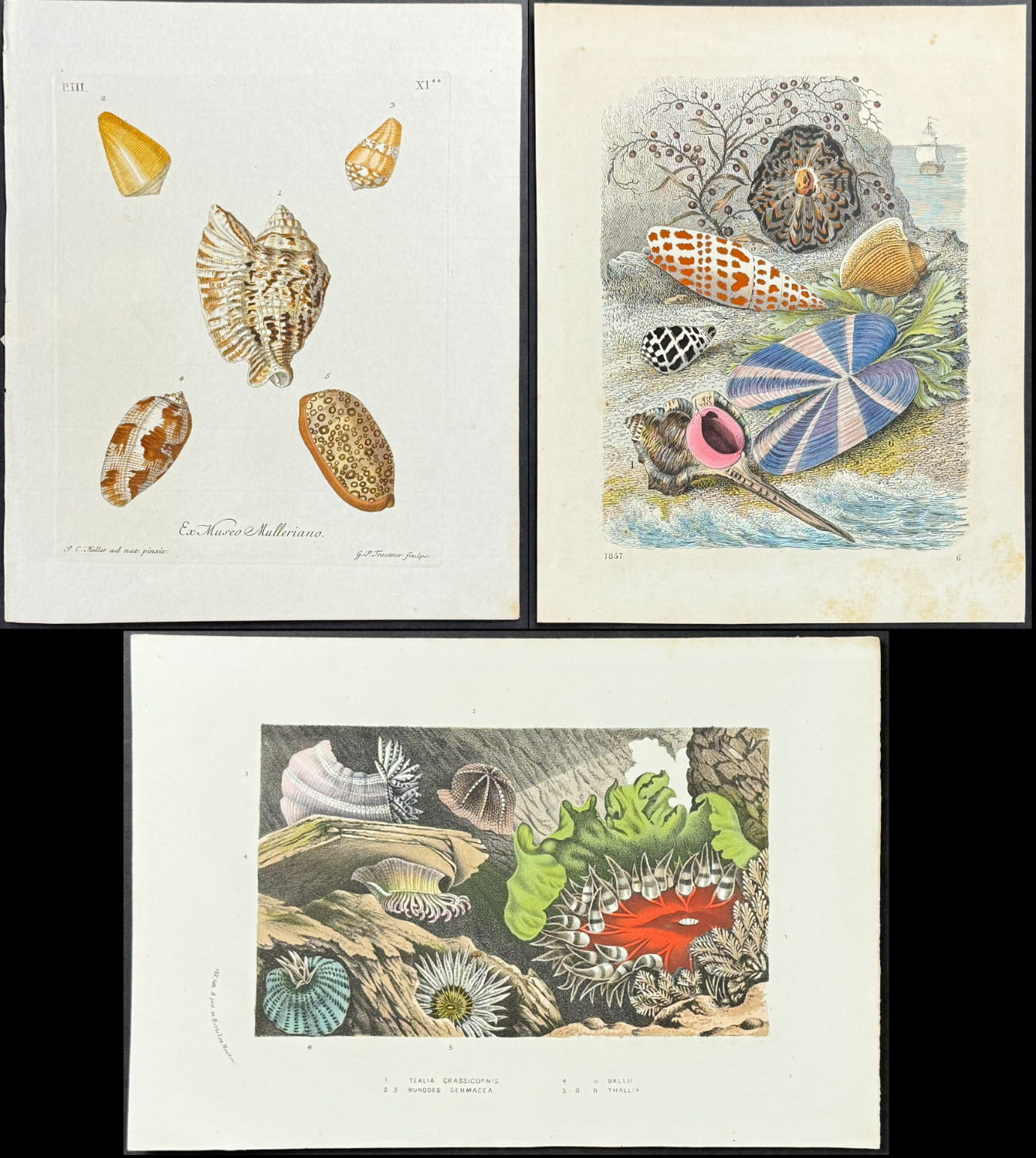
Georg Wolfgang Knorr created one of the most renowned works on shells entitled
Les Delices des Yeux et de L’Esprit, a la Representation d’une Collection Universelle des Coquilles or
The Delights of the Eyes and the Mind, or General Collection of the different species of shellfish that the sea contains. The work was published in Nuremberg, Germany between 1760 and 1771. Knorr’s work was notable for its attractive hand-coloring. Each plate features beautiful shells on chain-linked paper. Some plates feature a crown watermark as well.
Knorr noted that "physicists […] make every effort to bring natural history to its perfection", but he regretted that for "the wonders of nature that the Sea contains in its bosom, we admire with pleasure their external beauty […] but when it comes to looking more closely at their properties […] we find ourselves stopped by boundaries that it does not always depend on us to cross perfectly." This was the reasoning for him doing this work, where he worked to be as scientific and truthful as possible on the subject. (Brunet, III, 682; Nissen, Zoologische, 228)
Three Prints from
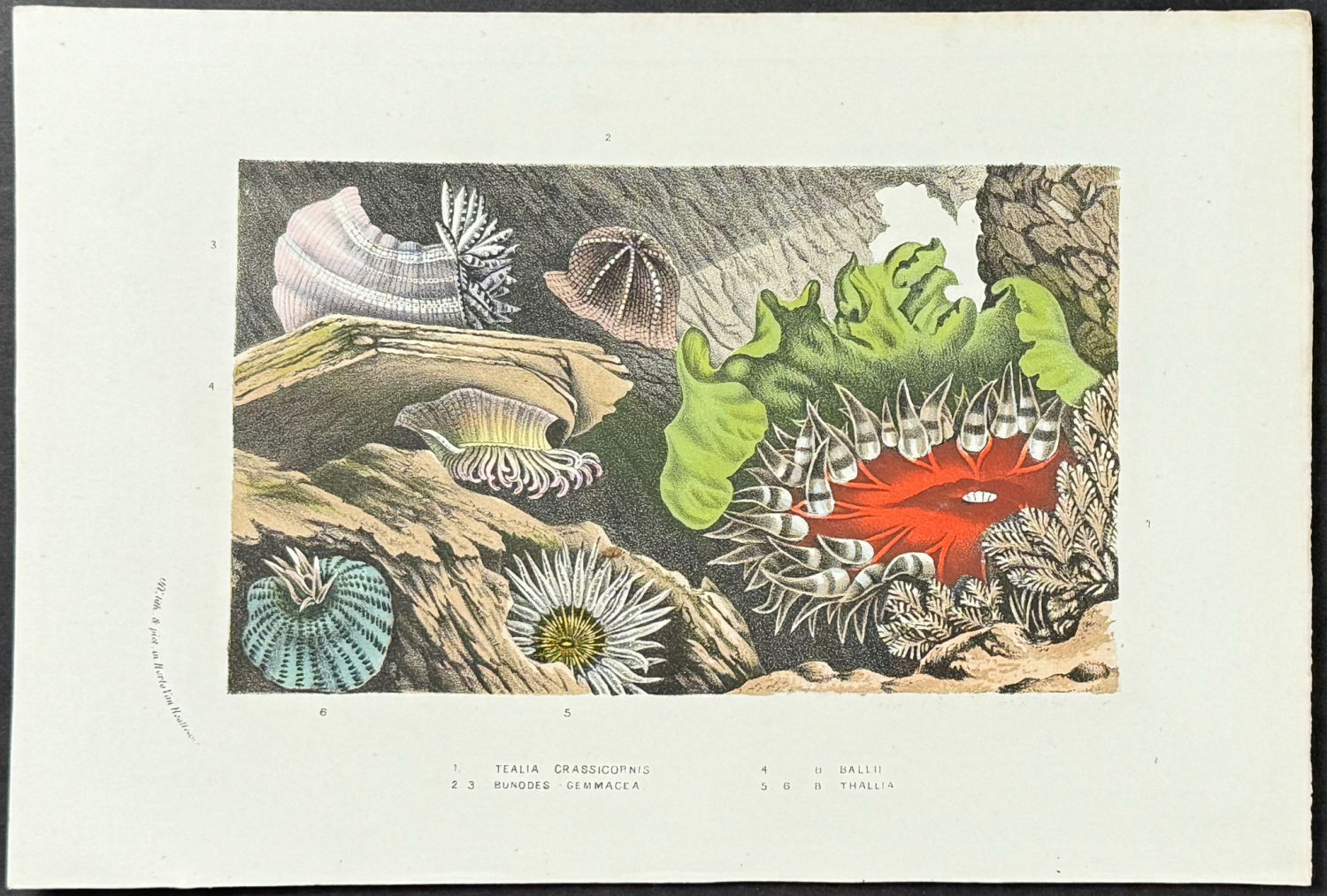
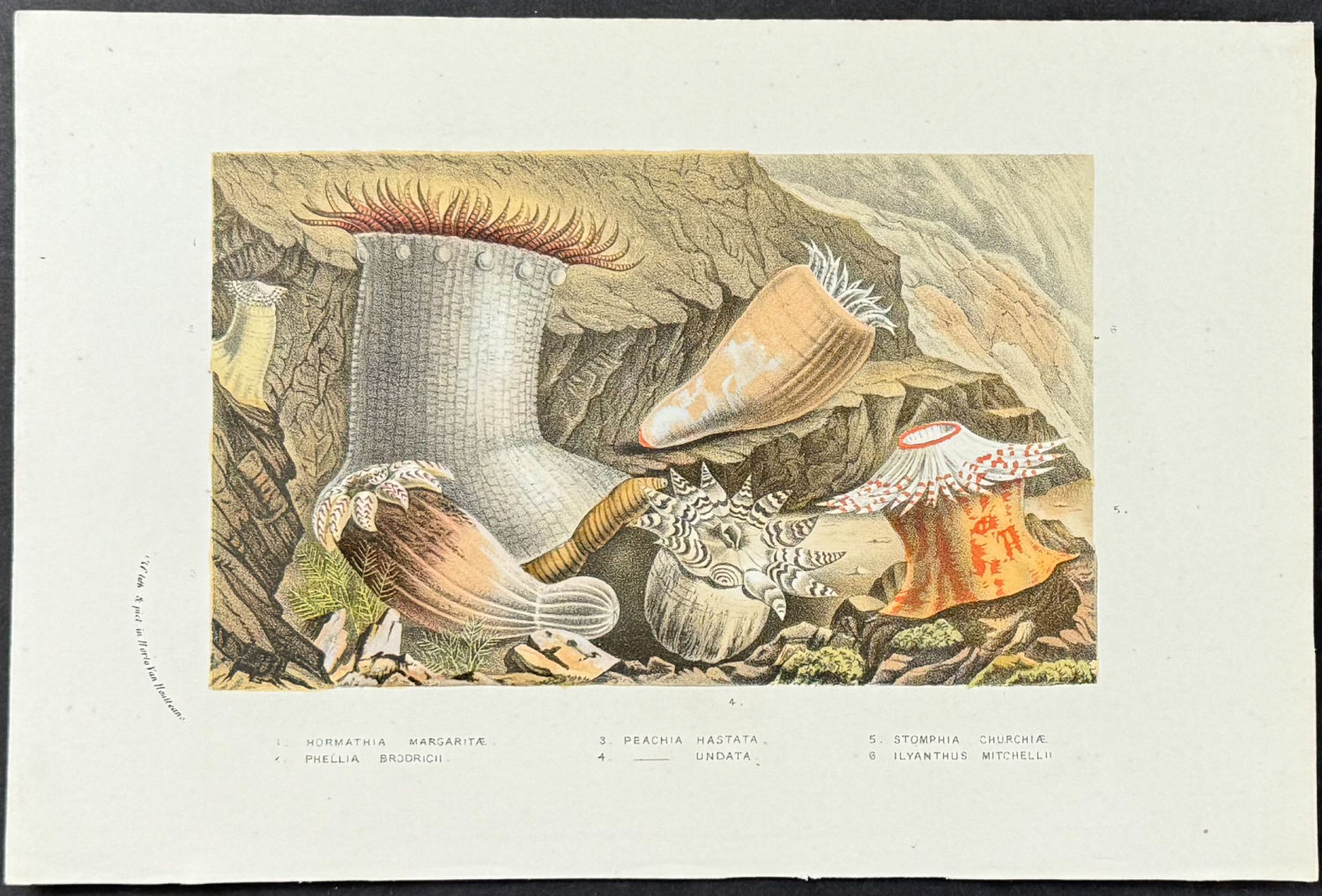
This beautiful botanical print comes from Louis Van Houtte’s monumental work entitled
Flore des Serres et des Jardins de l’Europe (Flowers of the Greenhouses and Gardens of Europe) published between 1845 and 1883. Van Houtte was considered one of the premier horticulturists of his day and served as the chief editor for this work in coordination with prominent botanist Charles Lemaire.
Van Houtte owned many nurseries and greenhouses where many of the plants and flowers depicted in
Flore des Serres were actually cultivated. These plates in essence acted as his catalogue, and thus feature what were the most desirable botanicals of the time. Orchids, roses, camellias, carnivorous plants, and tropical or exotic flowers were particularly shown in the work.
One print from:
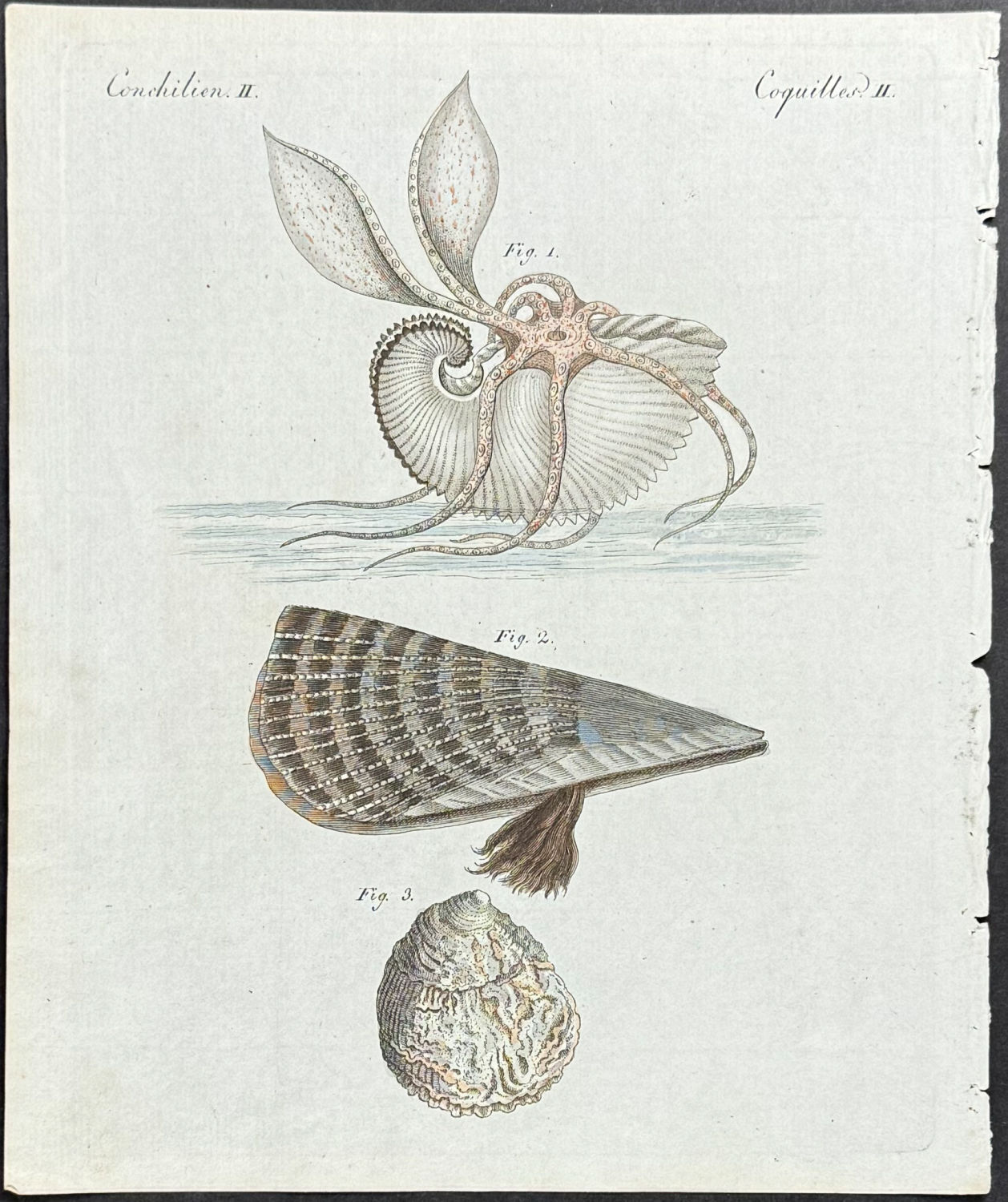
This attractive originally hand-colored engraving is from Friedrich Justin Bertuch’s
Bilderbuch fur Kinder enthaltend eine angenehme Sammlung von Thieren, Pflanzen, Blumen, Fruchten, Mineralien, Trachten und allerhand andern unterrichtenden Gegenständen aus dem Reiche der Natur, der Künste und Wissenschaften. The work was published by Industrie-Comptoir between 1792 and 1810 in Weimar, Germany. The work was considered one of the finest natural history encyclopedias made for children. The engravings were done by Ludwig Ebner, C. Ermer, Theodor Götz, Ludwig Hess, Conrad Horney, J.B. Hoessel, C., G. Starcke, and more under the direction of Melchior Kraus and Johann Heinrich Lips.
"Without a doubt, Bertuch’s picture book is one of the greatest works that the children’s book collector will encounter … This is where modern, scientific thinking begins, the determination with which modern non-fiction is anticipated in children’s books. In addition, it is one of the most precious treasures of the Collector’s illustrated books." (E. Strobach in Philobiblon XIII, 255 ff.) As Bertuch stated in his introduction, "A picture book is just as essential and even more indispensable a meuble for a nursery as the cradle, doll or hobbyhorse."
The work was many-varied in what it illustrated. In "the 1100 panels not only contain the objects and areas listed in the title, they also contain curiosities such as the seven wonders of the world, mythical animals, a bullfight in Spain, horse races in England, microscopic views of animals and various objects, the telescope from Herschel, a diving bell, the telegraph in Paris, the Degen flying machine from Vienna and much more besides: the abundance of knowledge and direct visual aids, the care that is focused on the largest and the smallest, on the strangest and the everyday is used is astonishing and corresponds to the seemingly modern psychological-pedagogical considerations, as the author makes in the preliminary report." (European children’s books from the 15th to the 19th century 137-137a)
Friedrich Justin Bertuch (1747-1822) studied theology and law, and was a poet, playwright, translator, publisher, and naturalist. He became a successful publisher with his firm in Weimar, Germany becoming the largest employer of that town. Bertuch’s work was inspired by that of Bloch, Jablonsky, Merian, Esper, Ellis, and more.
One print from:
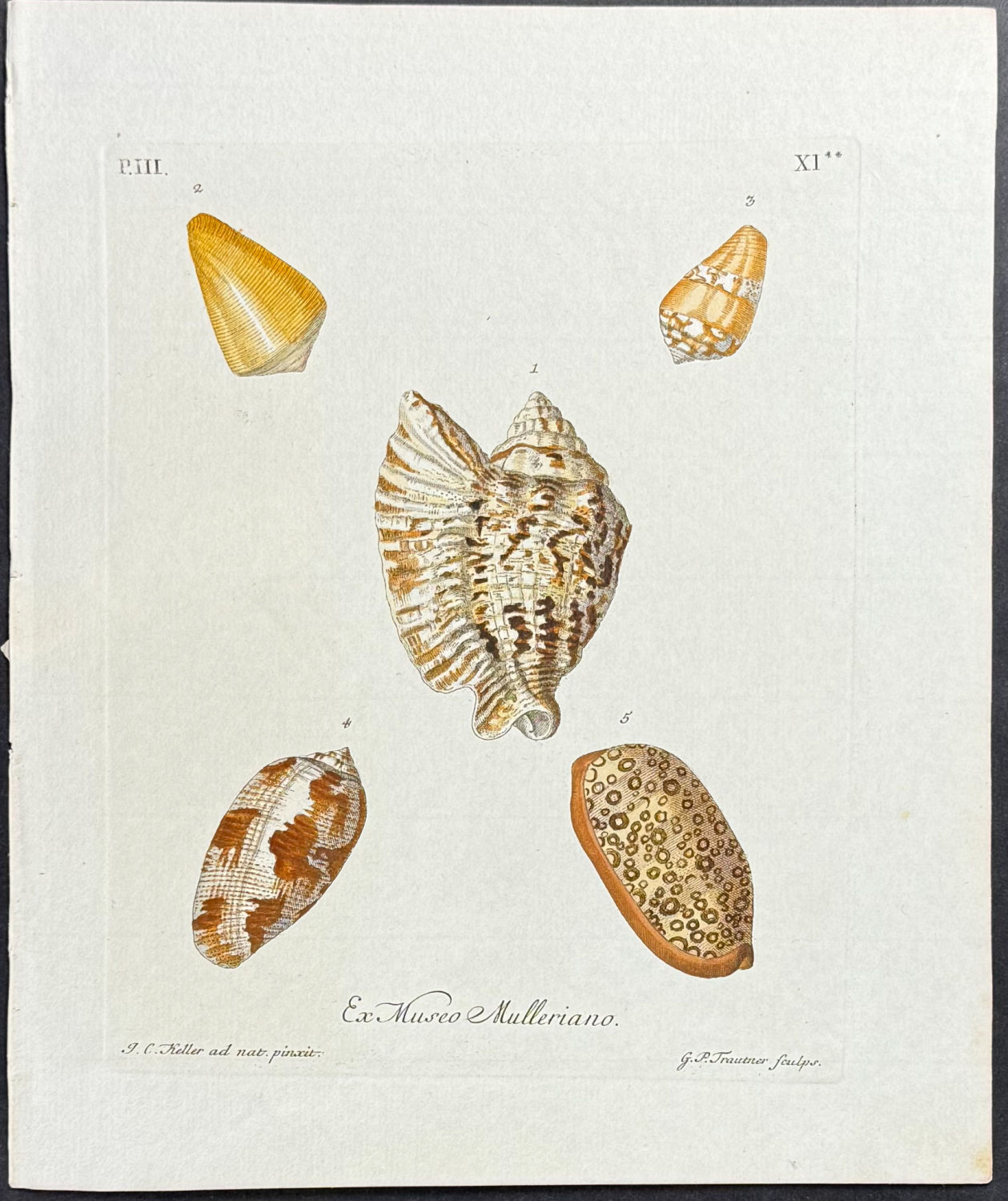
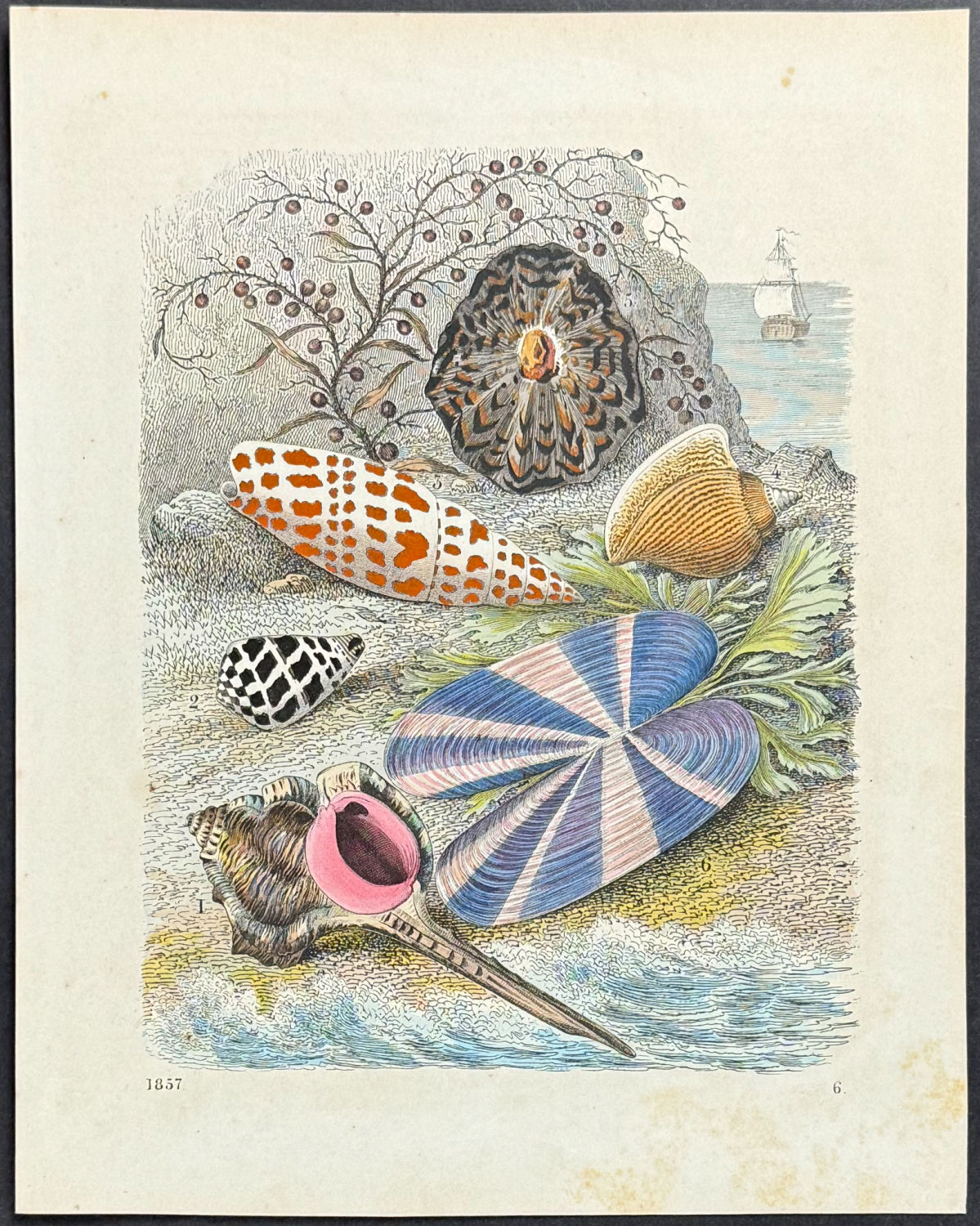
This hand-colored lithograph is from Carl Hoffmann’s
Book of the World. The work was published in Stuttgart in 1857.
One print from:
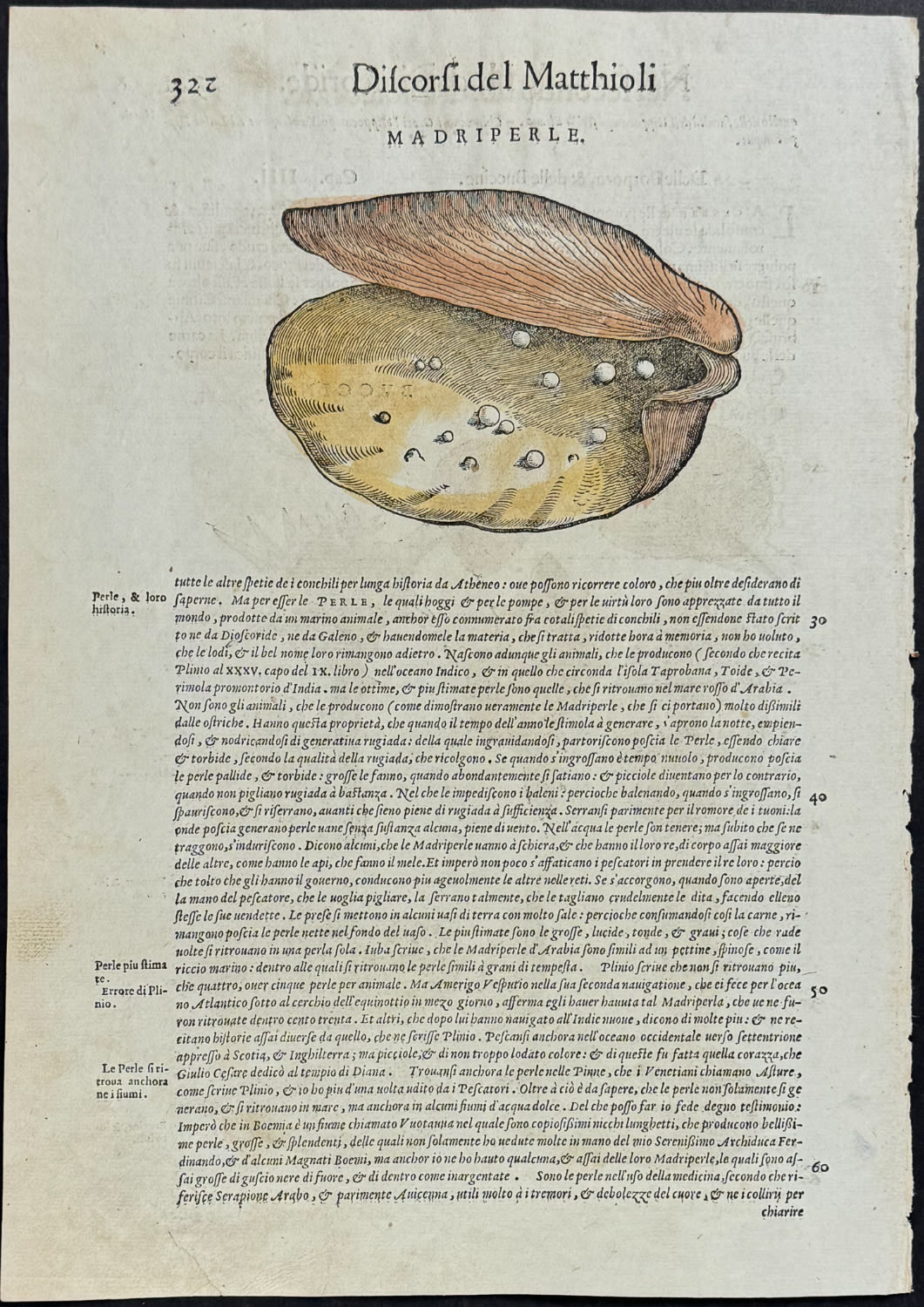
This engraving is from Pietro Andrea Mattioli’s
The Discourses. The illustrations were by Gherardo Cibo. The work was published in Venice by Valgrisi in 1568.
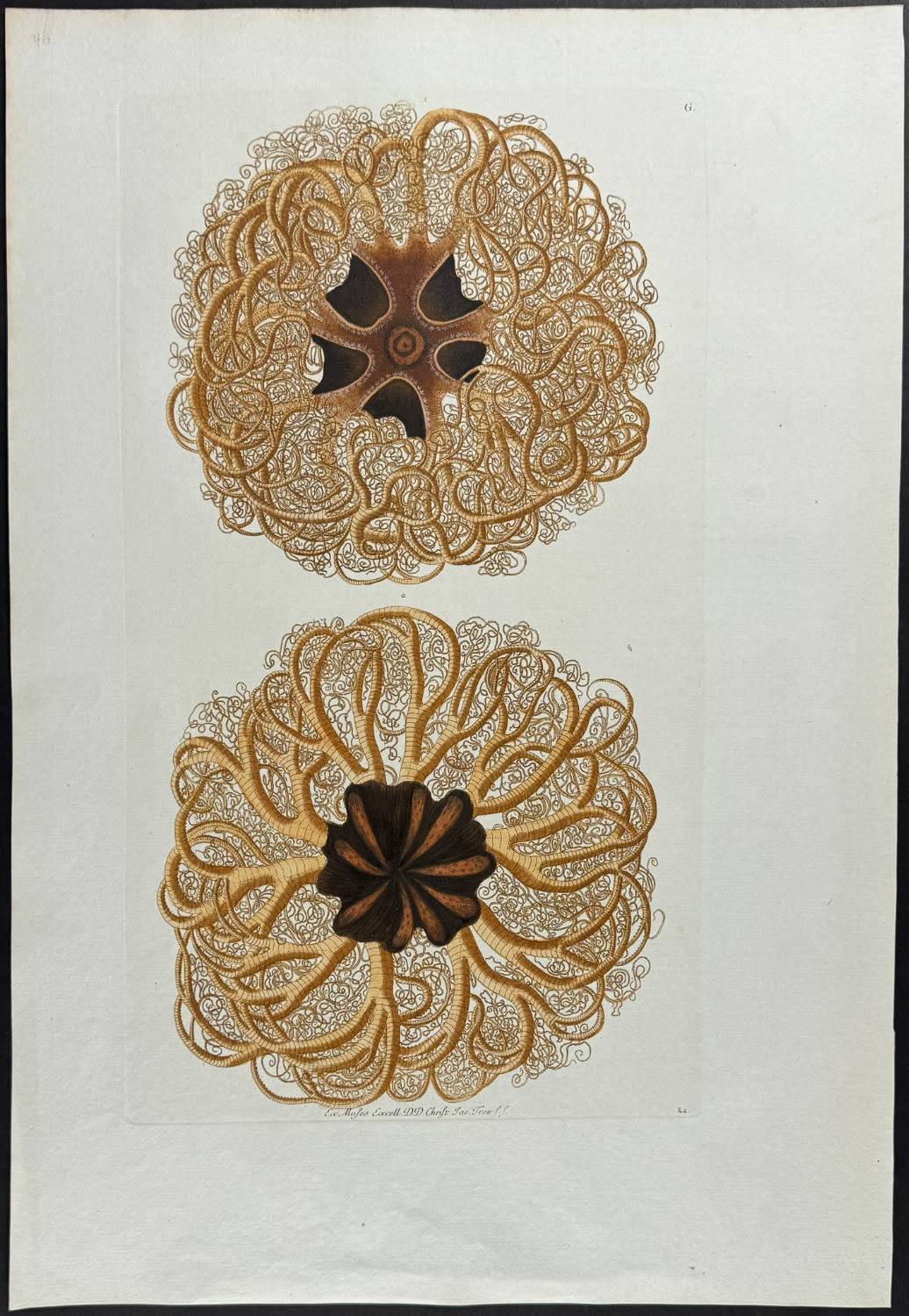
One print from:
This superb, originally hand-colored folio engraving is from Georg Wolfgang Knorr’s rare, monumental work,
Delices de la Nature ou Choix de tout ce que les Trois Regnes de la Nature … un Cabinet or
Selected Delights of Nature, or the Exquisite Collector’s Cabinet. The work was published in Nuremberg in 1779 by Ches les Heritiers for Knorr. The engravings are truly great illustrations from a German natural history work from the Golden Age of German printing.
Knorr was a German paleontologist, painter, draftsman, engraver, collector, and art dealer. He learned engraving from Leonhard Blanc and Martin Tyroff and worked on the illustrations in Jacob Scheuchzer’s
Physica Sacra. He worked with the celebrated Christoph Jakob Trew as well. Knorr’s
Delices… is often considered his masterpiece.
Paper Size ~ 8 1/4" by 10"
~ 6 1/2" by 10"
~ 8" by 9 1/2"
~ 8" by 10"
~ 9 1/4" by 13 1/4"
~ 13 1/4" by 19 1/4"
Condition report:
The work is in very good to excellent condition overall. There may be a few faint marks or imperfections to be expected with age. Please review the image carefully for condition and contact us with any questions.
Share this lot: