Antique Prints, Maps, & Books of Natural History, Botanicals, & More
Lot 1271:
Description
Description of the image:
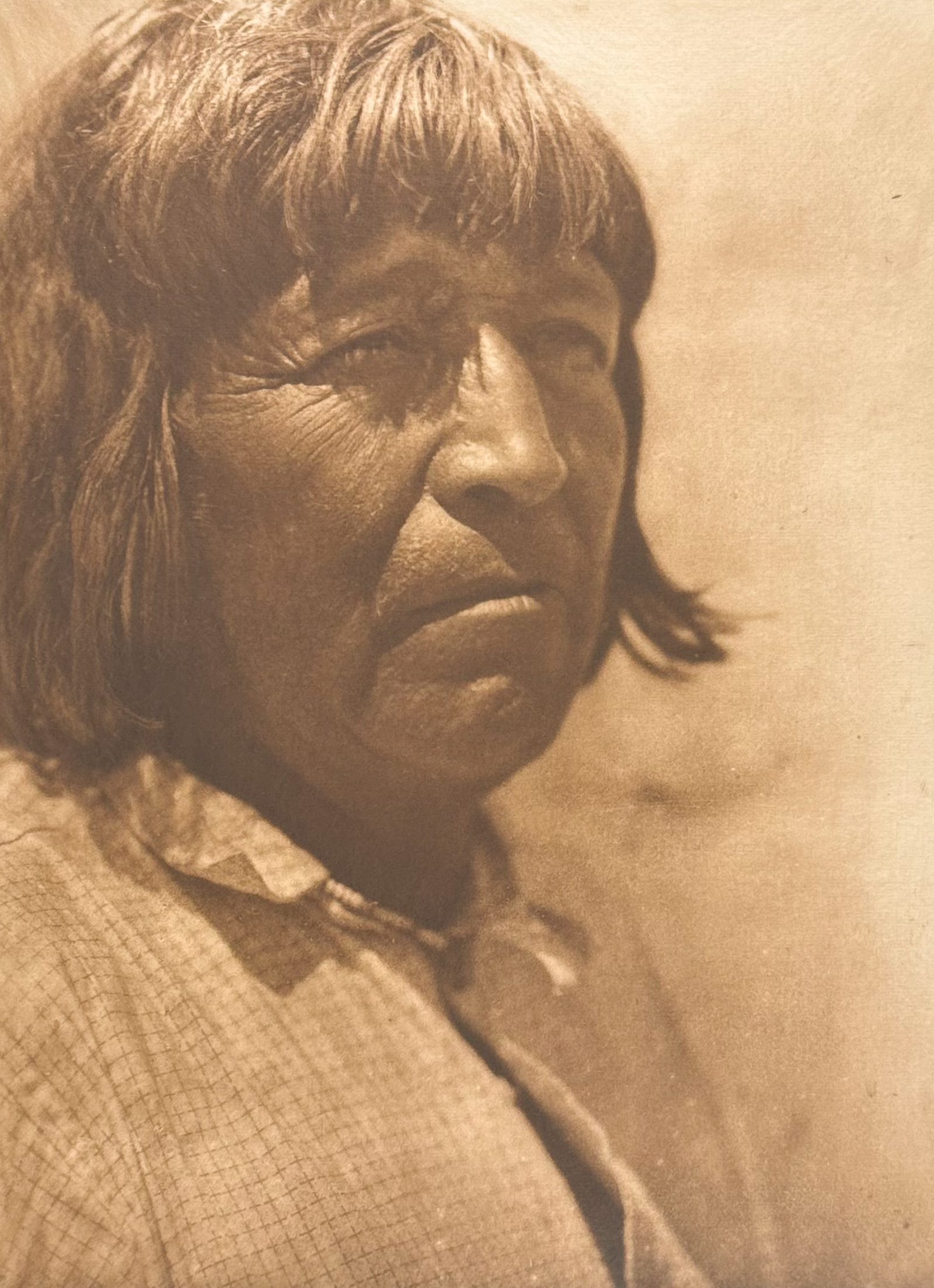
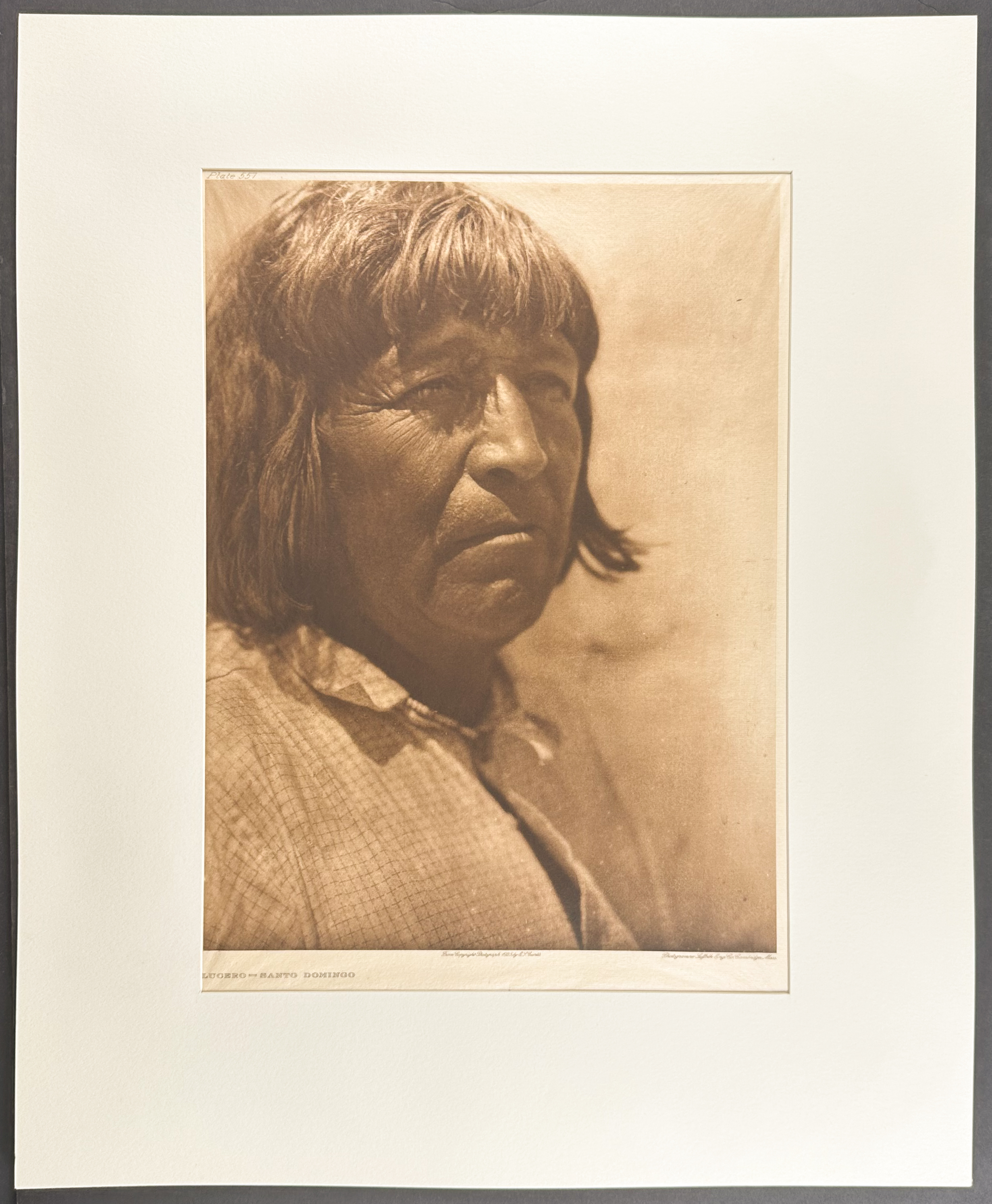
Photographing a native of Santo Domingo is comparable to hunting big game with a camera. This pueblo measures its contentment inversely to the extent of unavoidable contact with the hated white race. A guard is detailed to watch the Catholic priest when he visits the village, and the Government has pursued the wise policy of detailing Indian teachers to the local school. The Santo Domingans long resisted the gratuitous digging of wells to be equipped with windmills, continue to deny their sick children the services of the Government physician, and resist the activities of census enumera- There is no doubt that the death sentence would be passed on any individual found guilty of revealing native practices, and if the priestly authorities learned that Lucero sold his likeness to a white man he doubtless had an unpleasant half hour.
Description of the work:
This moving photogravure is from Edward Curtis’s
The North American Indian being a Series of Volumes Picturing and Describing the Indians of the United States and Alaska. Edited by Frederick Webb Hodge. Foreword by Theodore Roosevelt. Field Research conducted under the patronage of J. Pierpont Morgan. The work was published in 1930 in Cambridge, Massachusetts. This was part of a proposed edition of 500 (though about 272 sets are believed to be completed).
The photogravures depict Native Americans from the Tiwa and Keres cultures. Tiwa communities were located near Taos, Picuris, Sandia, Isleta, and Ysleta del Sur (near El Paso). The Keres were located along the Rio Grande at Cochiti, San Felipe, Santa Ana, Santo Domingo / Kewa, and Zia as well as at Acoma and Laguna.
Each photogravure is on Japanese tissue on support sheets as issued with Curtis’s credit, printer’s credit, title, copyright date, and plate number printed on recto. The deckle is preserved on the edges, and they are on the original overmats. The Japanese tissue issue was produced in the smallest number at great expense. It is the most rare issue of his photogravures. The tissue provides a truly refined presentation of Curtis’s images. The picture shown is with a presentation mat over the original issue overmats.
Curtis’s work was a remarkable record of native American life and one of the most ambitious anthropological studies done. W. H. Holmes, Chief of the Bureau of American Ethnology in 1910, stated that this "publication should last for a thousand years."
The North American Indian was referred to as “the most gigantic undertaking since the making of the King James Edition of the Bible” and containing “the most exquisite book art of our time.”
Edward Sheriff Curtis (1868-1952) was an American photographer and ultimately historian of the American West. He travelled extensively for three decades living with the Native American tribes. He immersed himself in their customs, languages and beliefs. He detailed and photographed the tribes creating a truly comprehensive look into their lives.
Paper Size: Mat Size ~ 19" by 23 1/4"; Paper ~ 21 3/4" by 17 3/4"
Paper Type or Special Features: Folio Photogravure on Original Overmat / Archivally Matted
Condition report:
The work is in very good to excellent condition overall. This photogravure is on the original overmat and archivally matted for presentation. It is possible there could be some residue in the margins from the matting process if removed. There may be a few minor imperfections to be expected with age. Please review the image carefully for condition and contact us with any questions.
Share this lot: