Antique Prints, Maps, & Books of Natural History, Botanicals, & More
Lot 6456:
Description
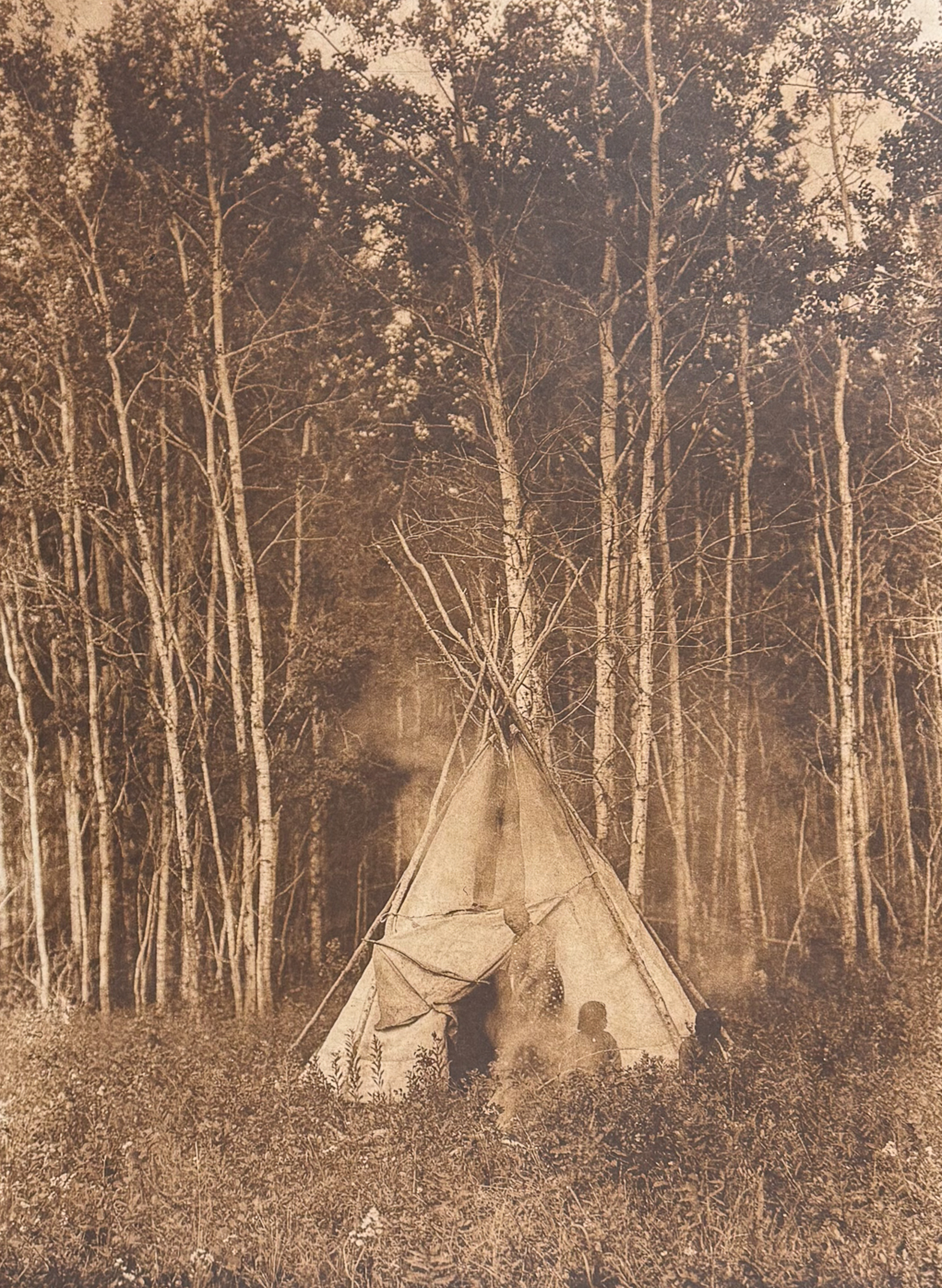
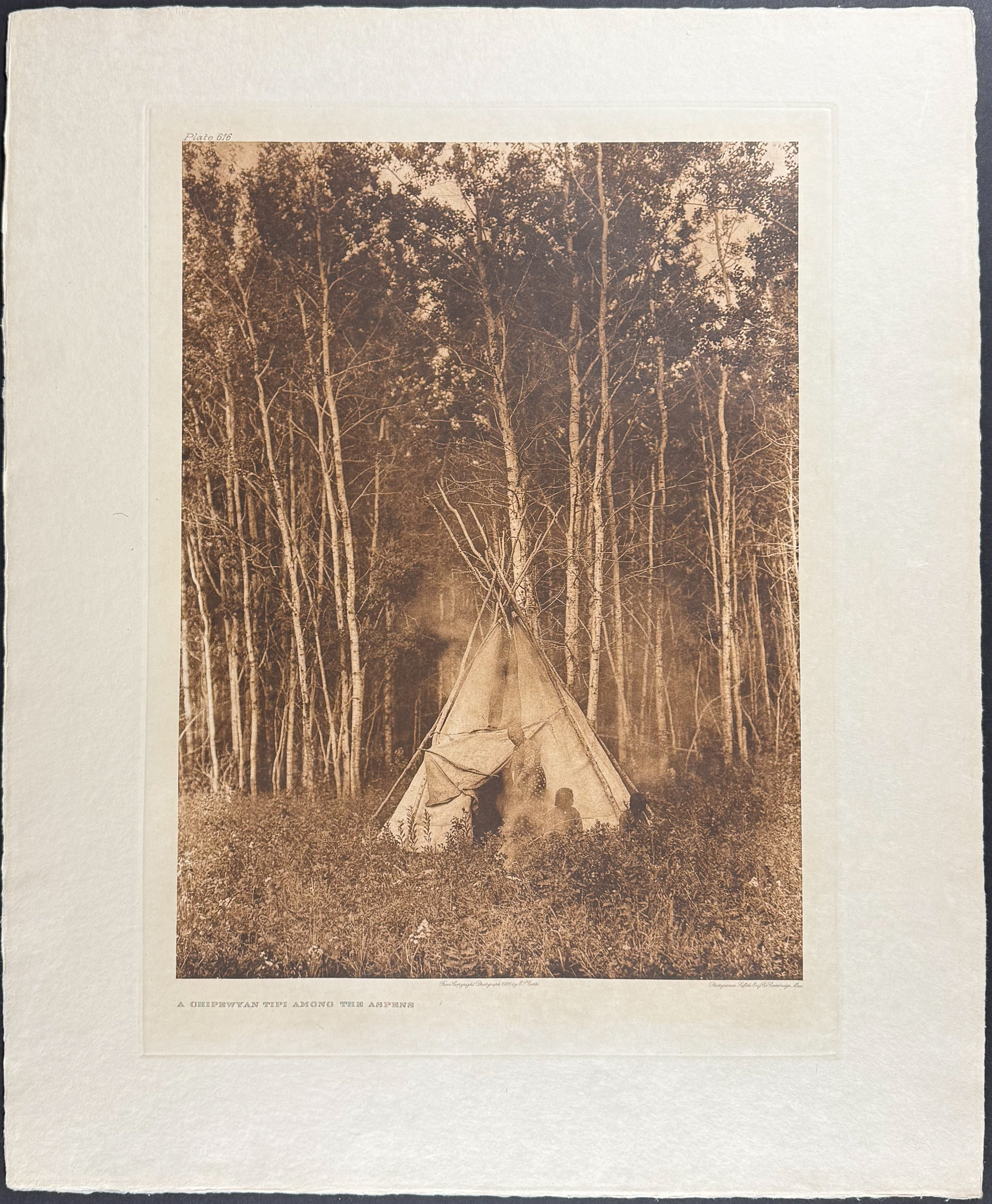
Curtis’s description of the image:
The Chipewyan are one of several Athapascan groups occupying the territory between Hudson bay and the Rocky mountains, from about the fifty-seventh parallel to the Arctic circle. Much of this area is barren, but the streams that feed and drain the innumerable lakes are bordered by thick groves of the slender, white boles of aspens, whose pleasant glades are favored by camps of fishermen and berry- pickers. The Chipewyan dwelling, formerly made of the skins of caribou, on which animal these people principally depended for food, clothing, and shelter, was one of the few points in which their culture resembled that of the plains Indians. Their distinctive gar- ment was a leather or fur coat with skirts cut to a point before and behind, a feature to which the appellation Wichipwayániwuk ("they pointed fur people"), the Cree original of Chipewyan, alluded.
Description of the work:
This moving photogravure in folio size is from Edward Curtis’s
The North American Indian being a Series of Volumes Picturing and Describing the Indians of the United States and Alaska. Edited by Frederick Webb Hodge. Foreword by Theodore Roosevelt. Field Research conducted under the patronage of J. Pierpont Morgan. The work was published in 1928 in Cambridge, Massachusetts. The photogravure is on Japanese vellum.
The photogravures depict Native Americans from the Chipewyan, Cree and Sarsi cultures. Curtis’s work was a remarkable record of native American life and one of the most ambitious anthropological studies done. W. H. Holmes, Chief of the Bureau of American Ethnology in 1910, stated that this "publication should last for a thousand years."
The North American Indian was referred to as “the most gigantic undertaking since the making of the King James Edition of the Bible” and containing “the most exquisite book art of our time.”
Edward Sheriff Curtis (1868-1952) was an American photographer and ultimately historian of the American West. He travelled extensively for three decades living with the Native American tribes. He immersed himself in their customs, languages and beliefs. He detailed and photographed the tribes creating a truly comprehensive look into their lives.
Paper Size: ~ 17 1/2" by 21 1/2"
Paper Type or Special Features: Photogravure
Condition report:
The work is in very good to excellent condition overall. There may be a few minor imperfections to be expected with age. Please review the image carefully for condition and contact us with any questions.
Share this lot: