Antique Prints, Maps, & Books of Natural History, Botanicals, & More
Lot 80751:
Description
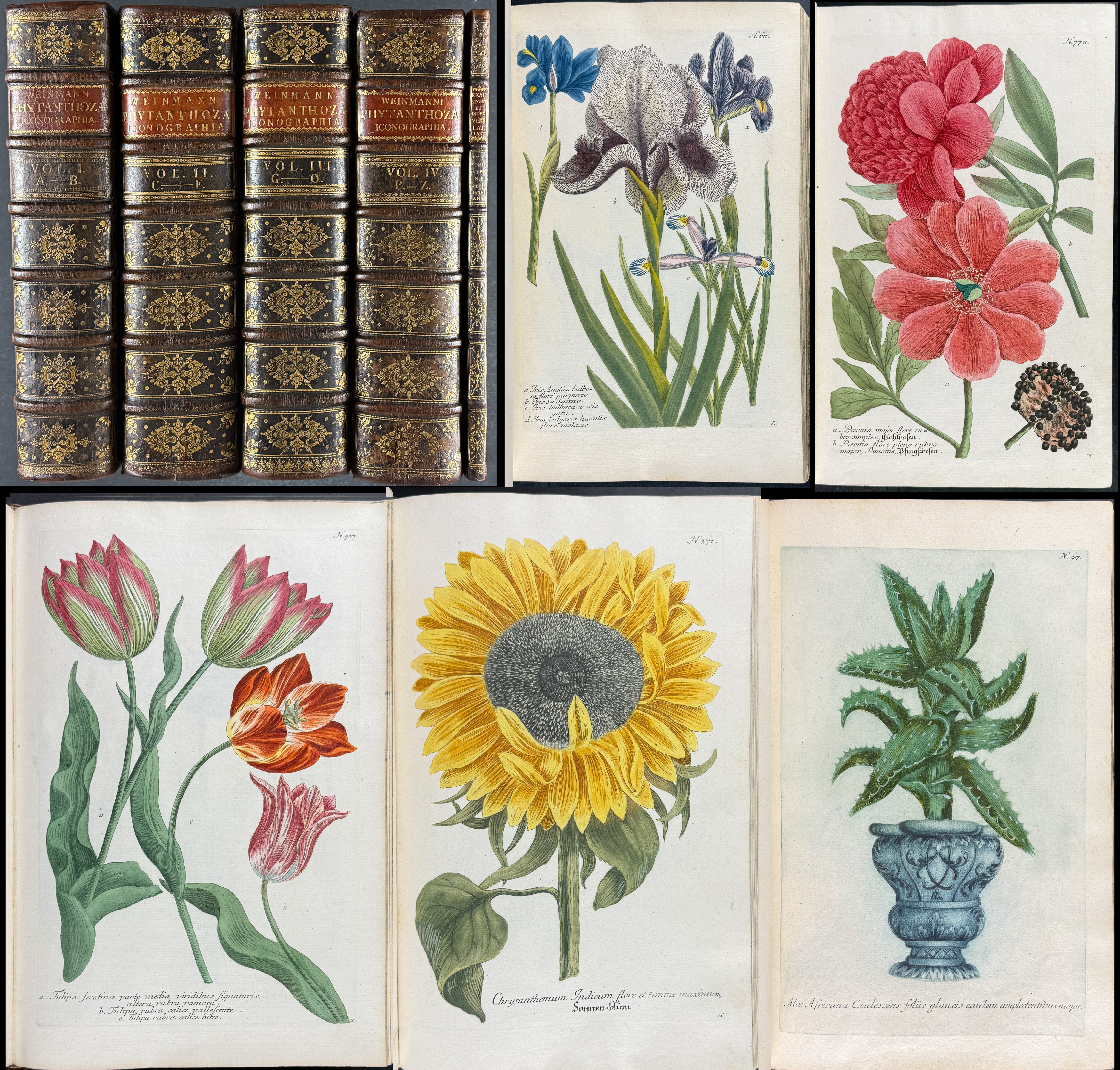
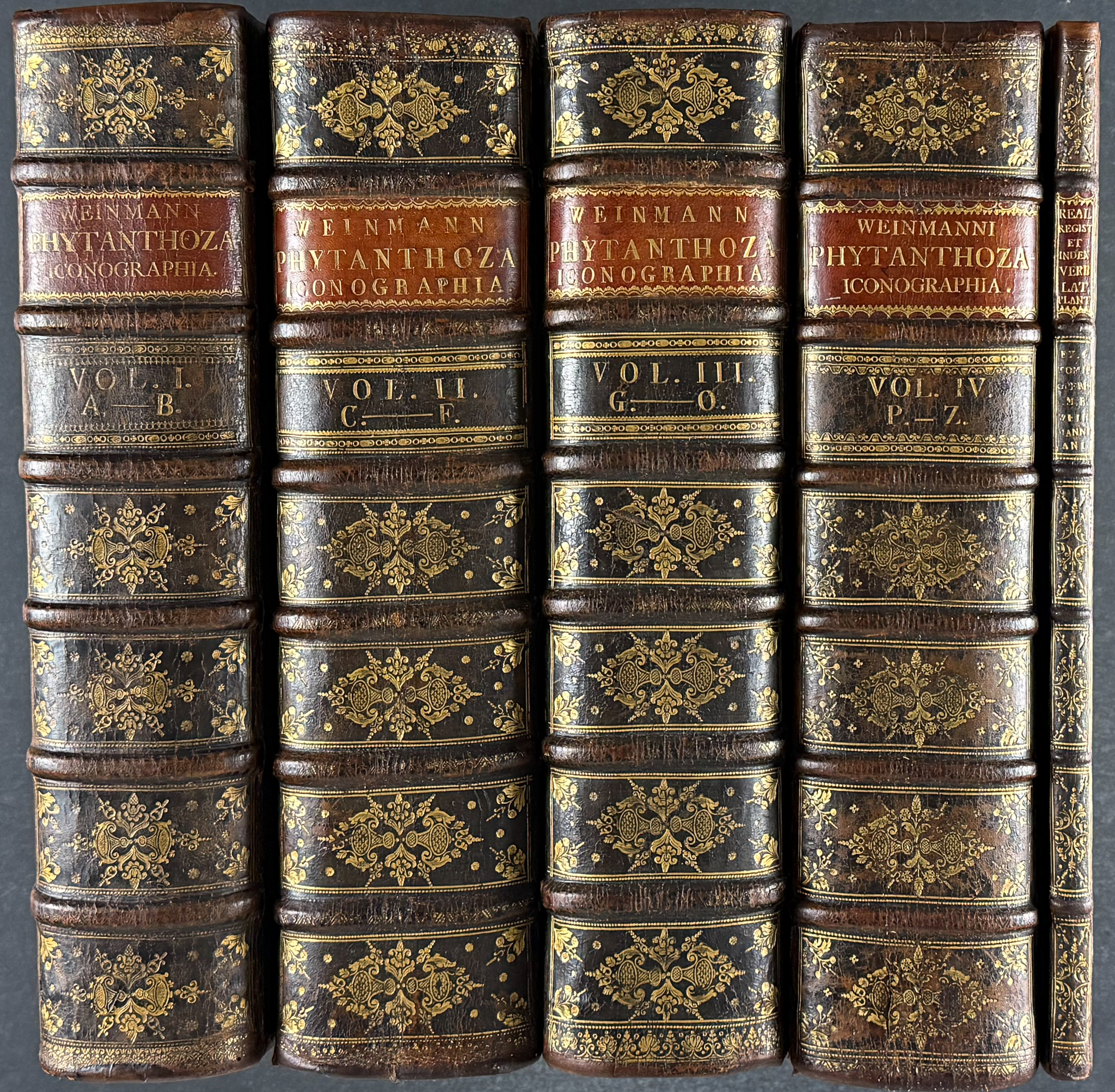
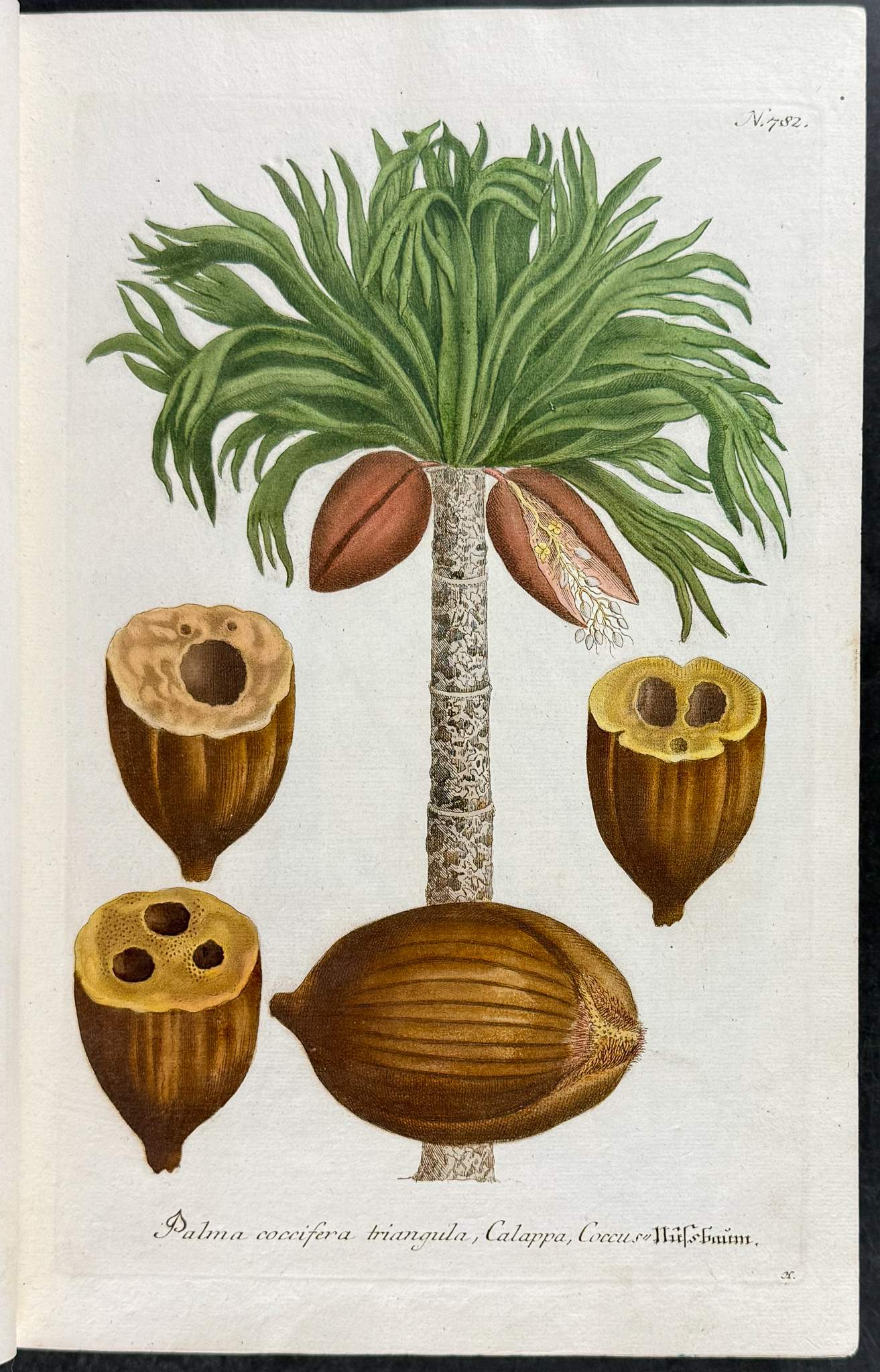
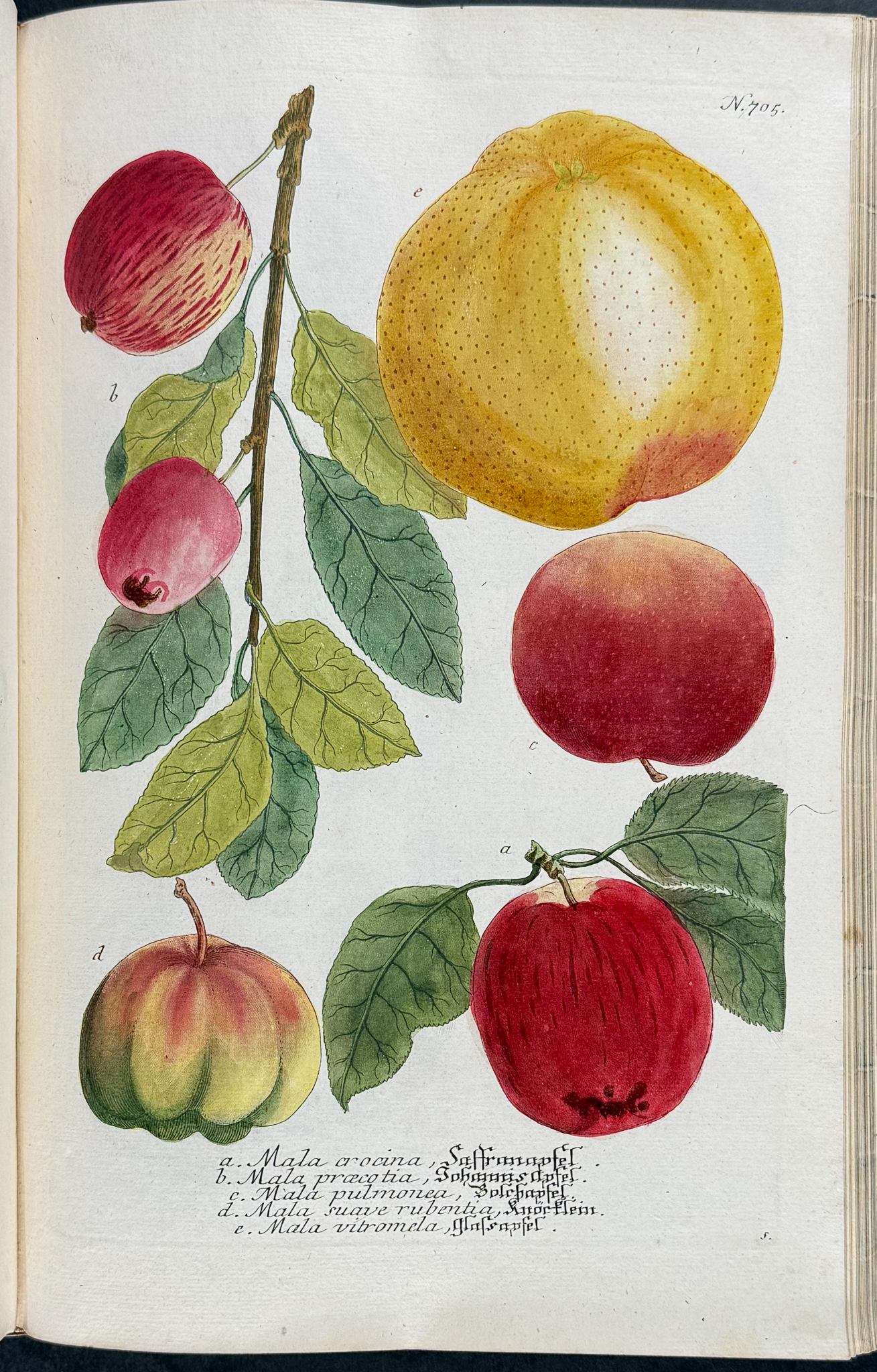
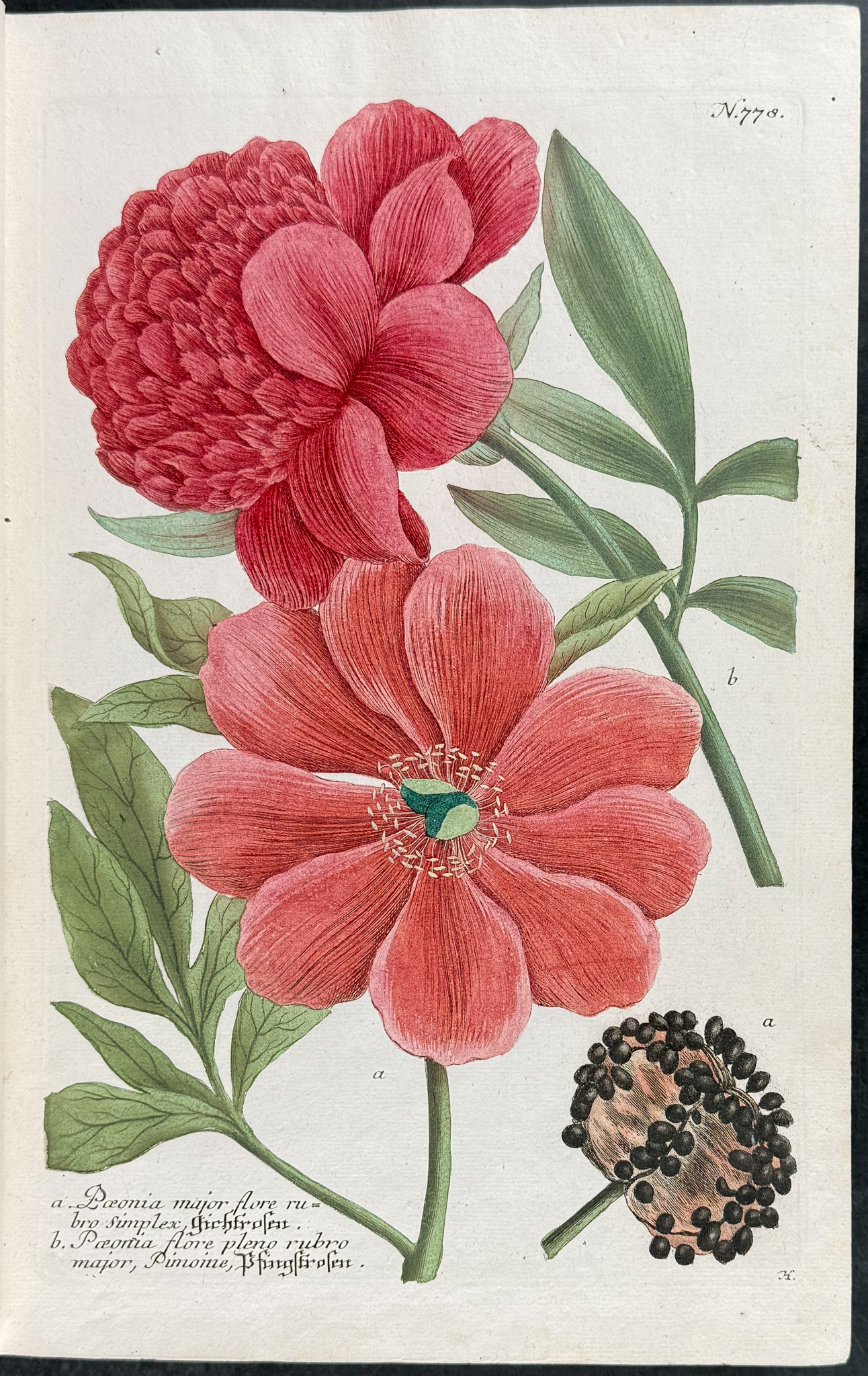
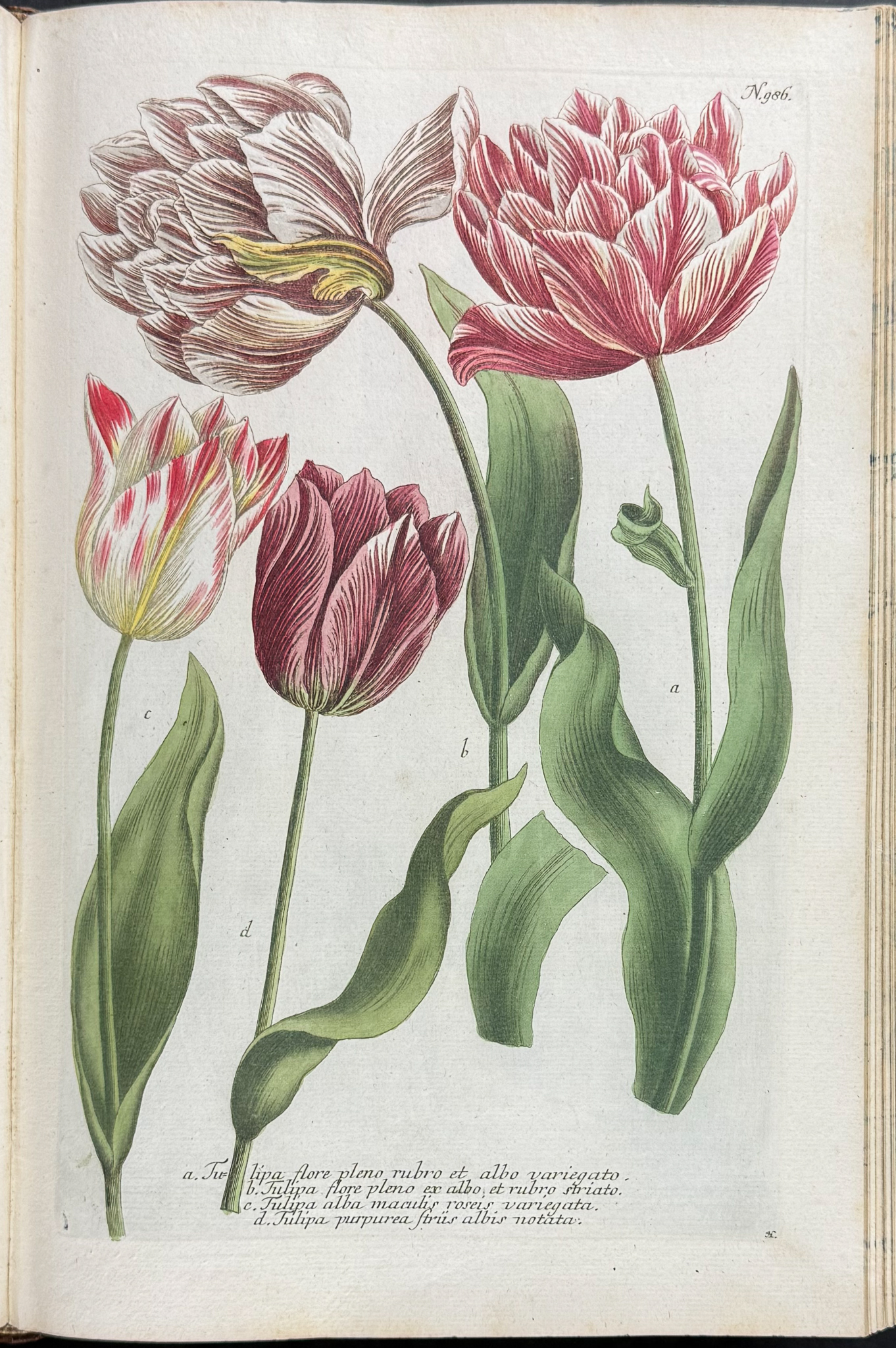
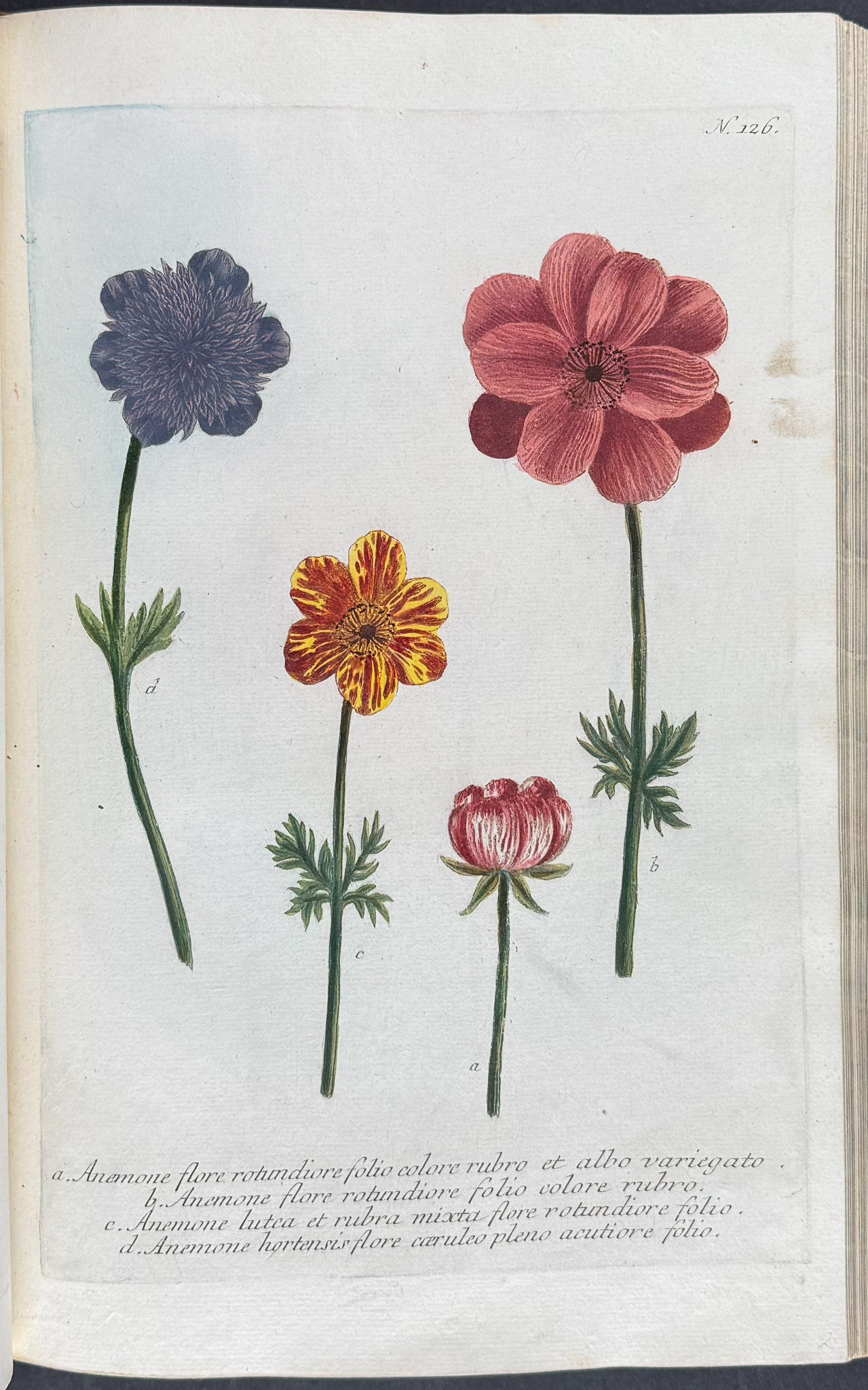
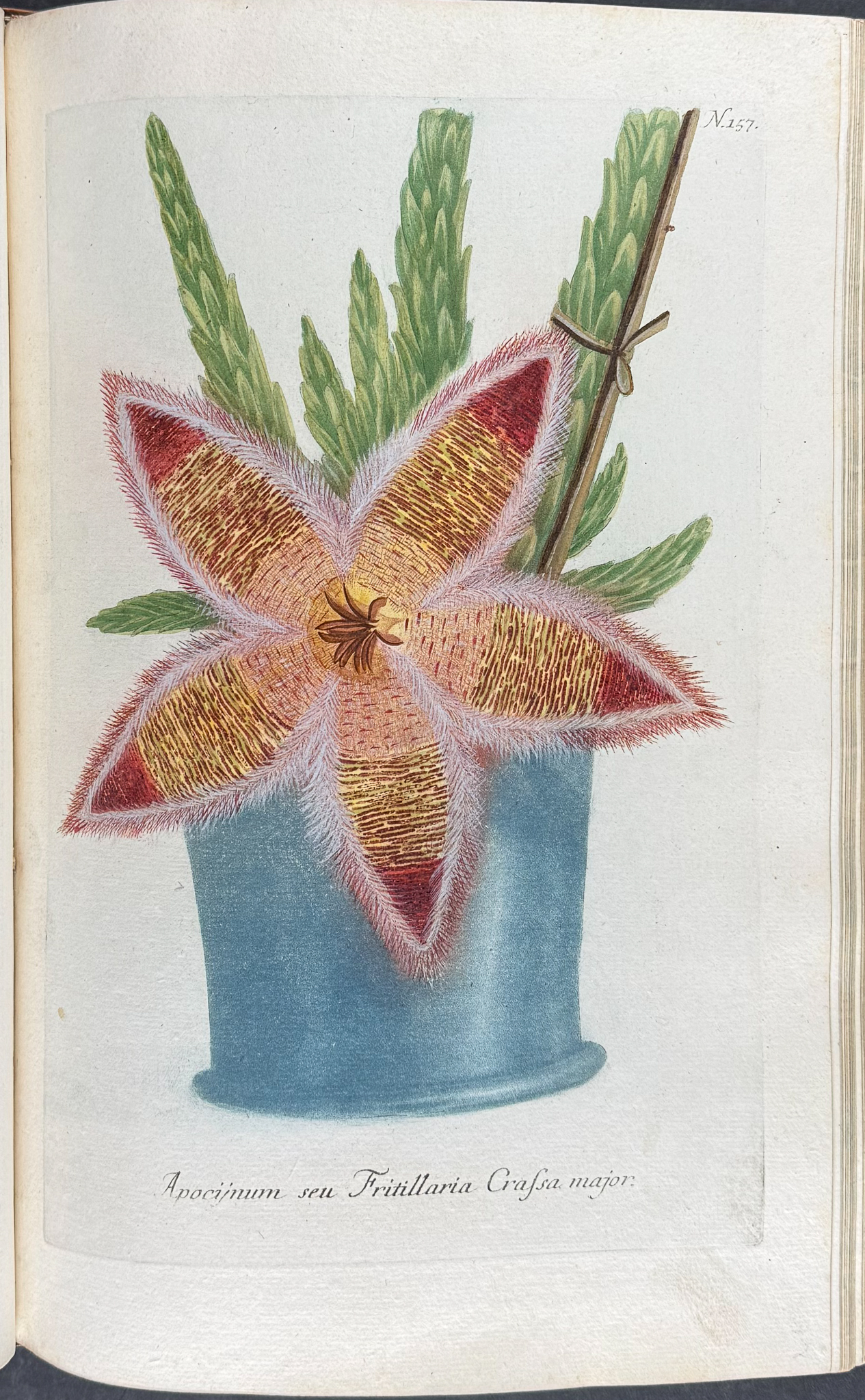
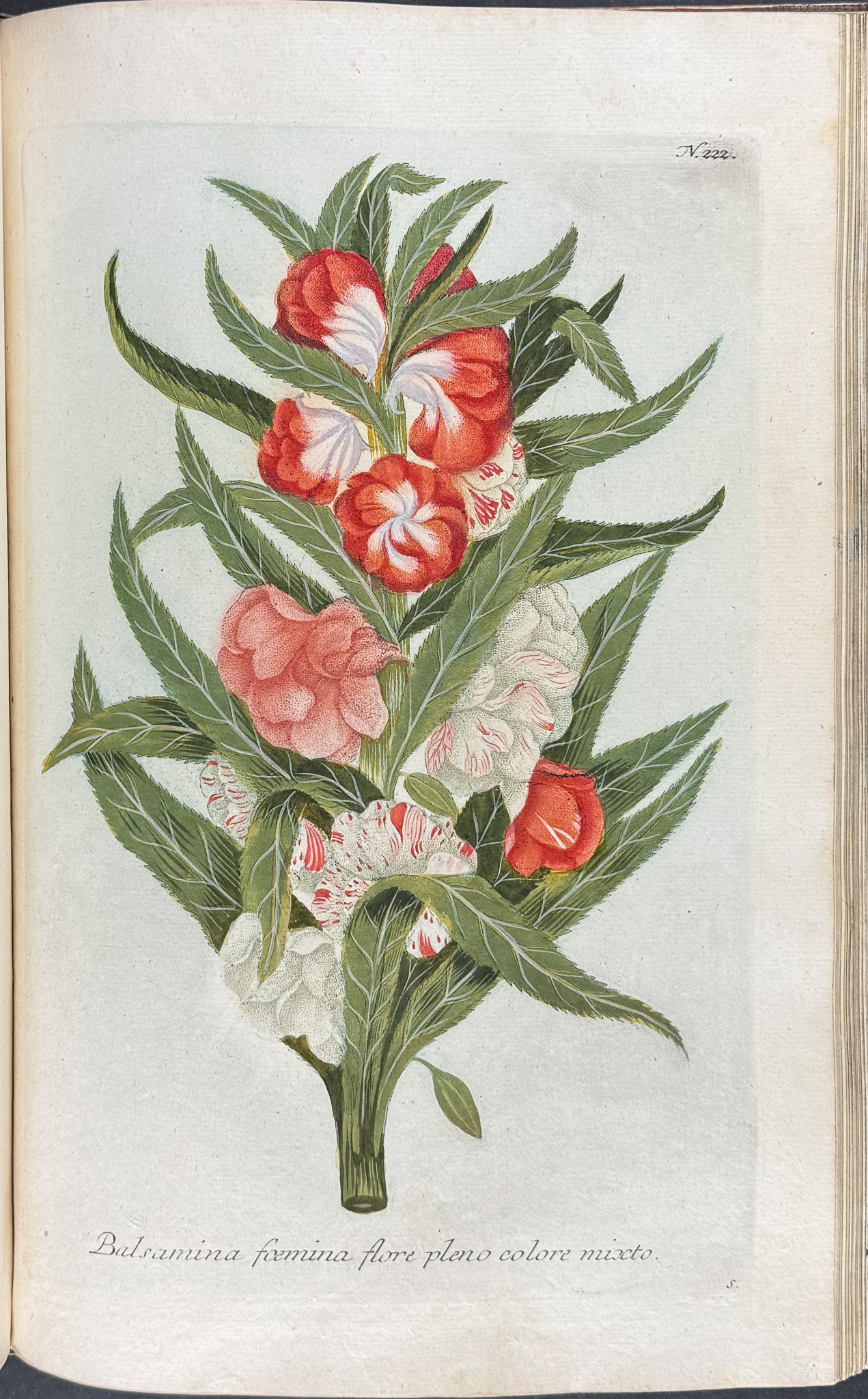
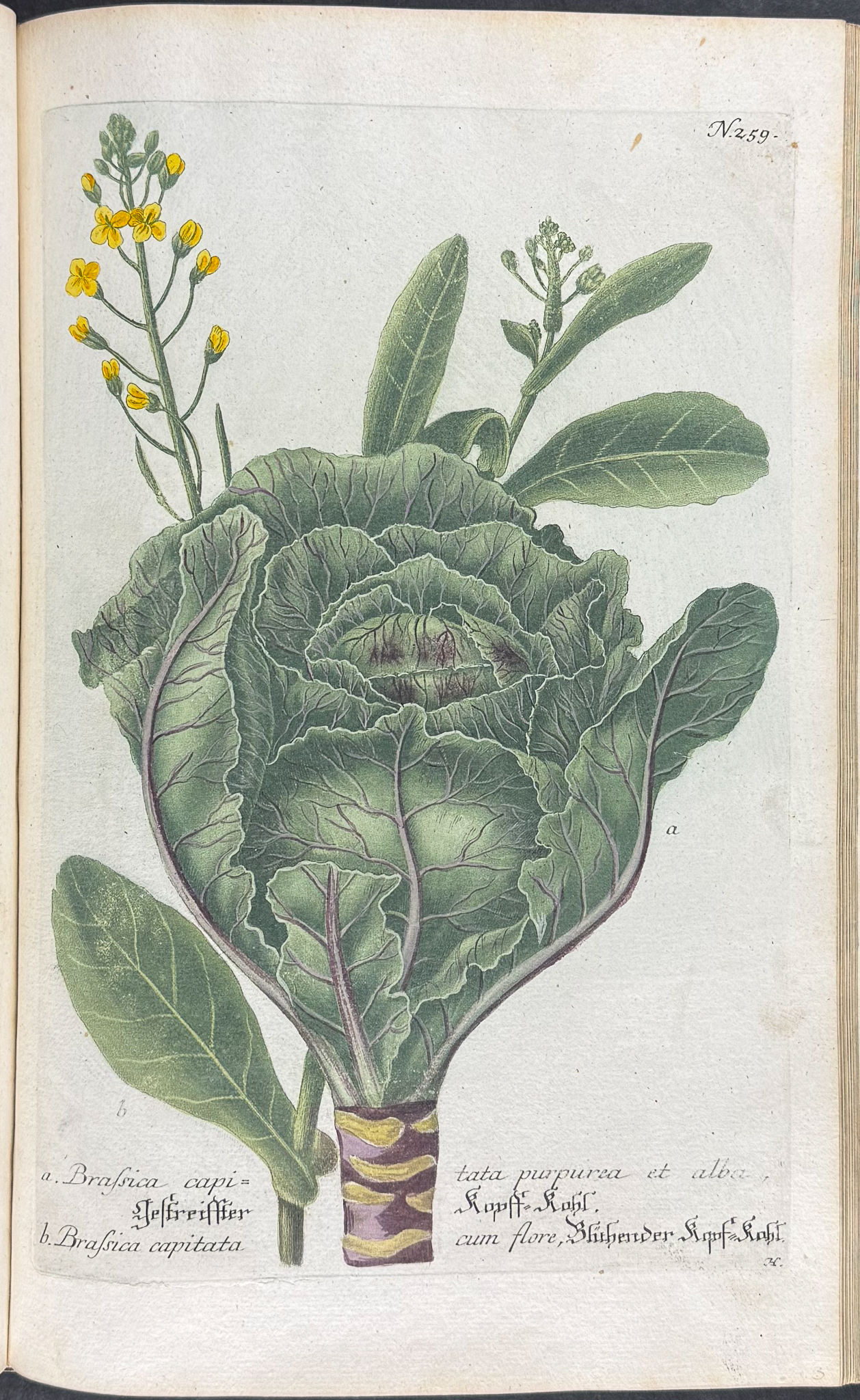
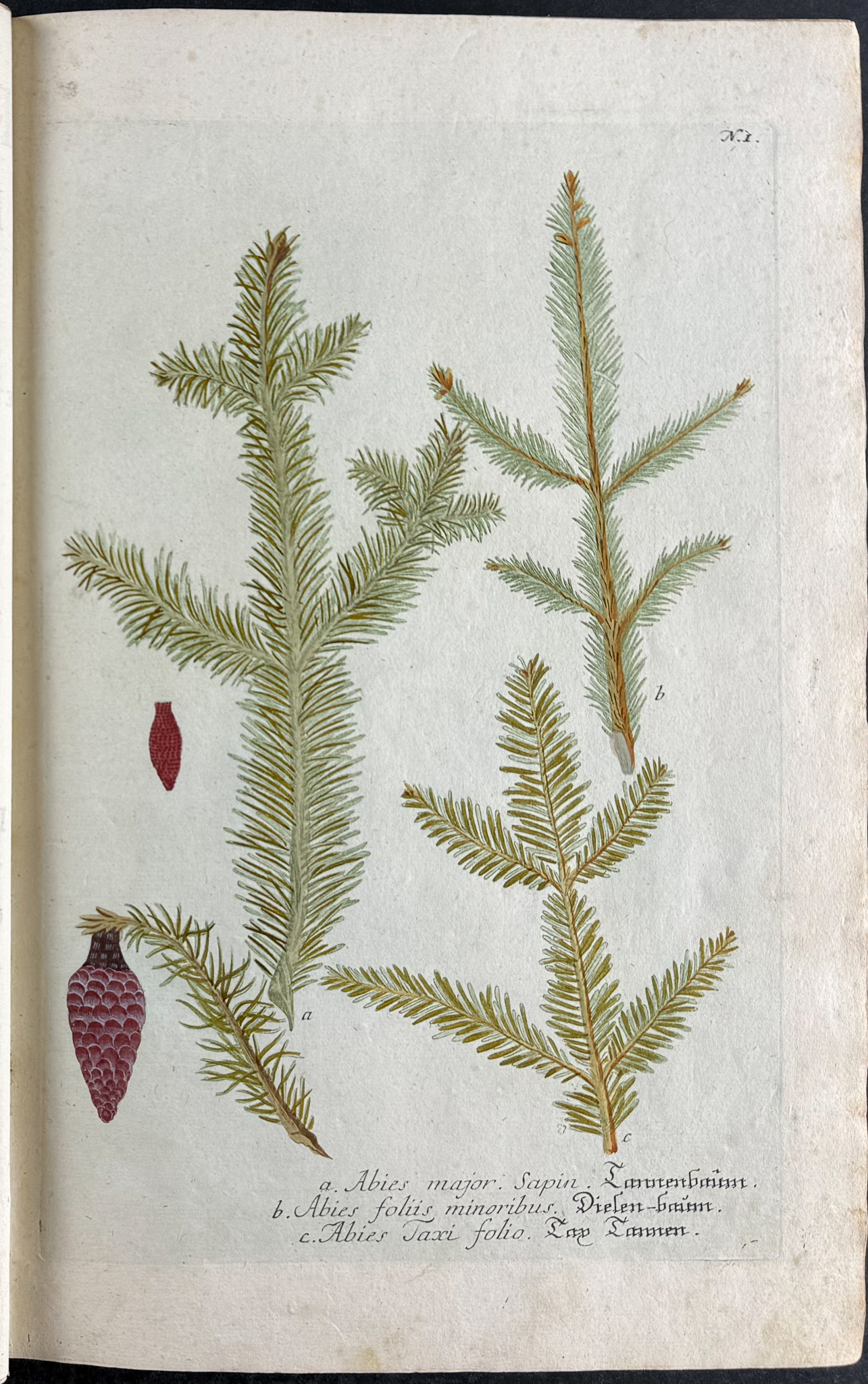
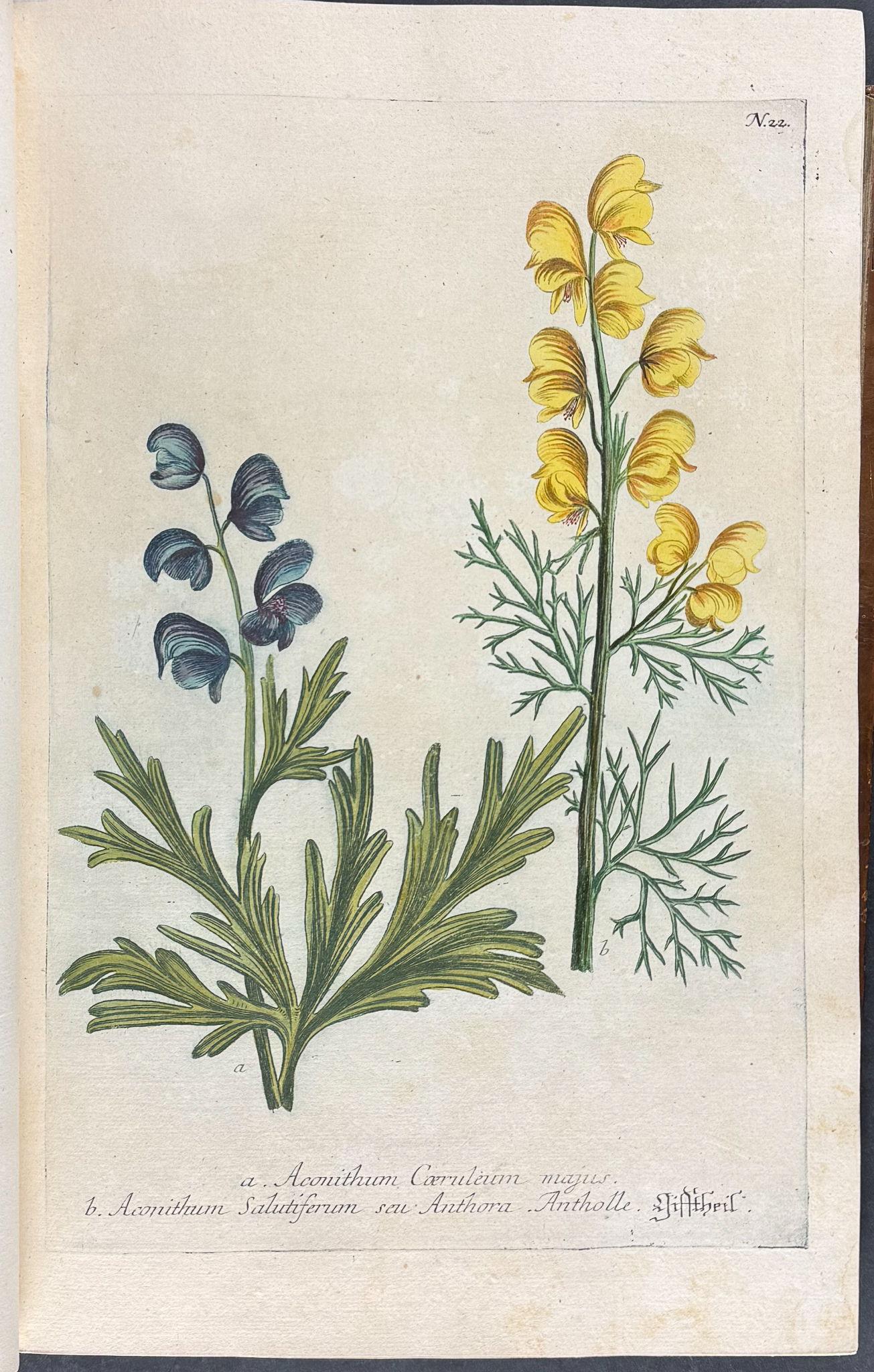
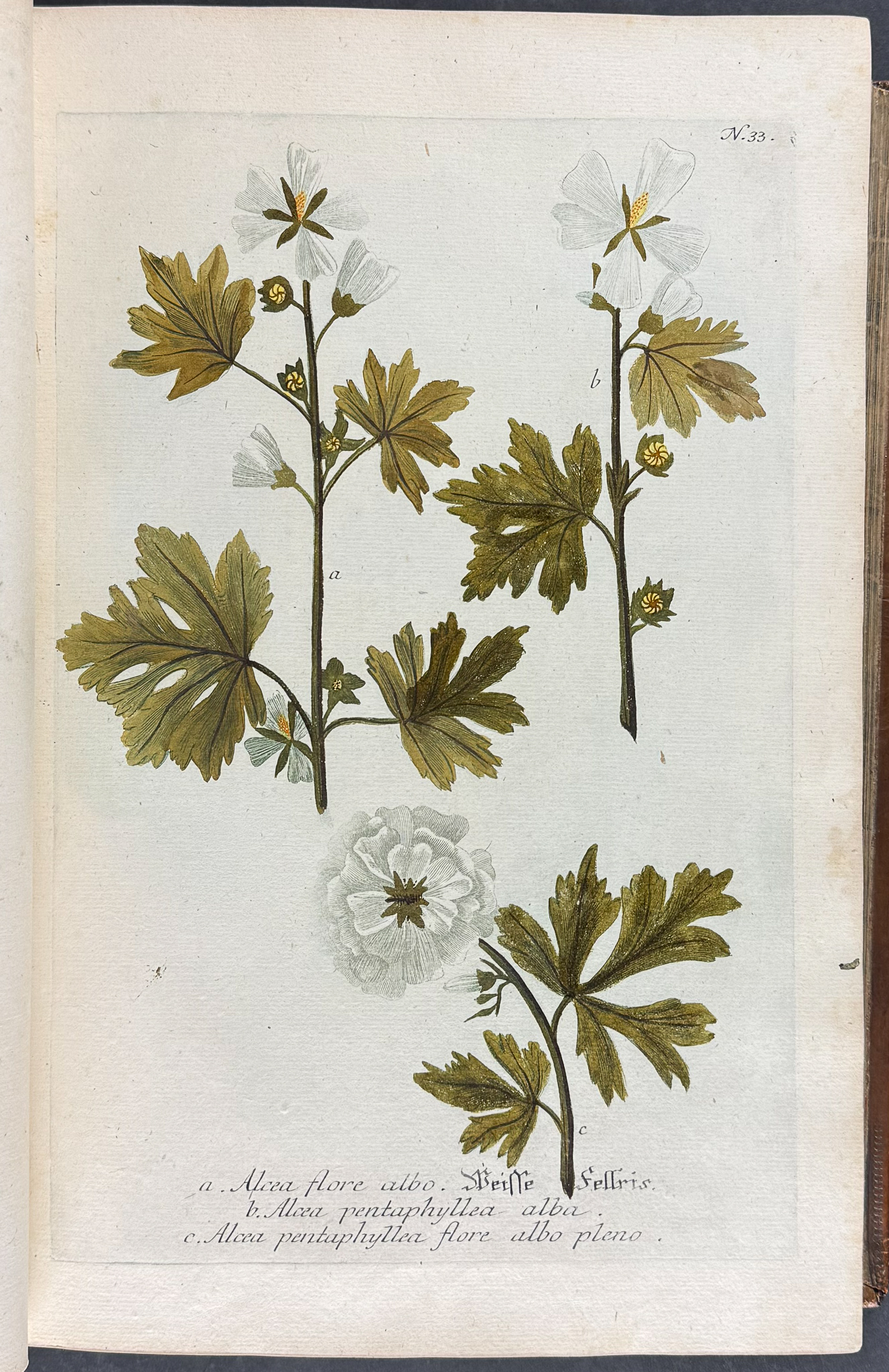
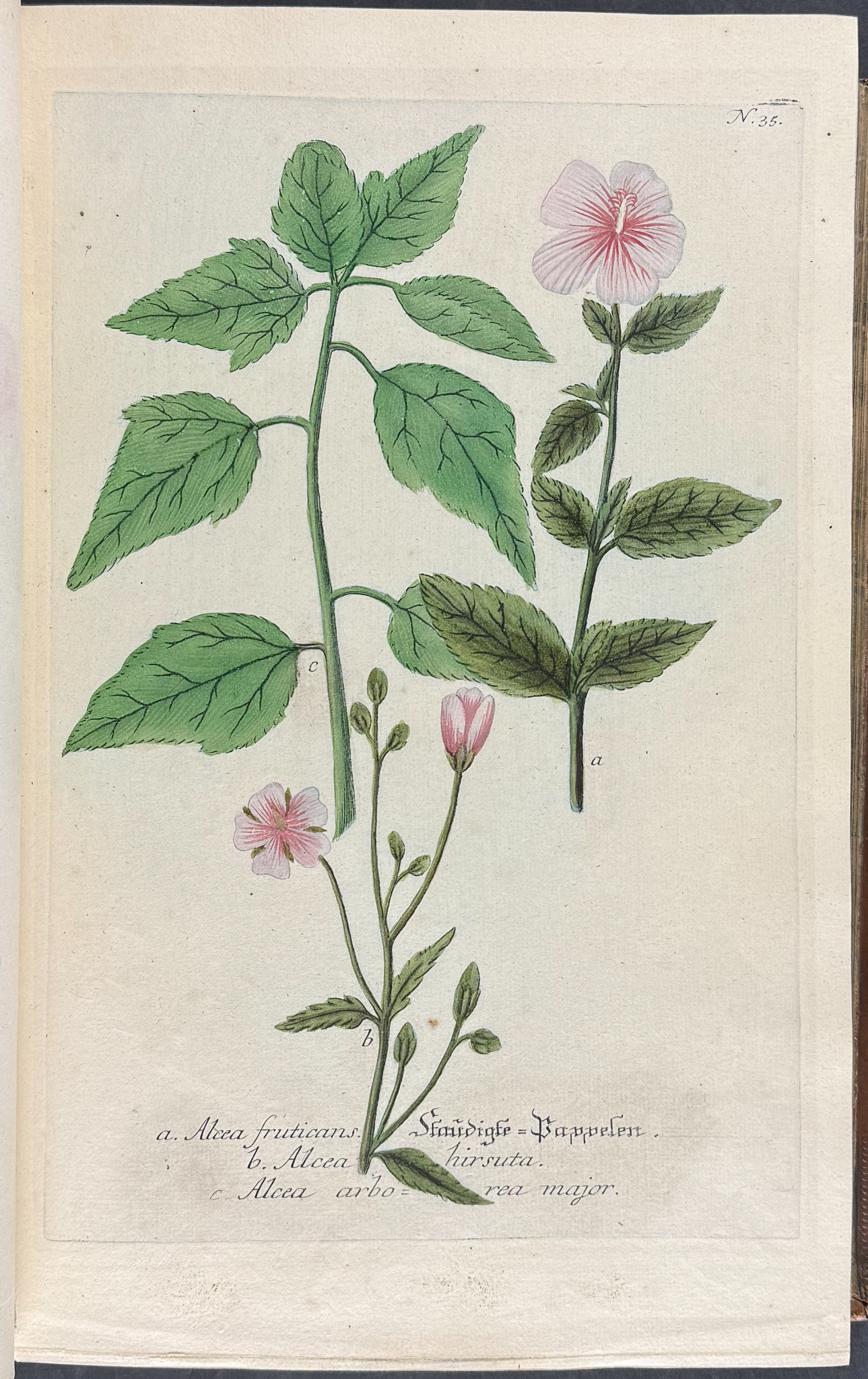
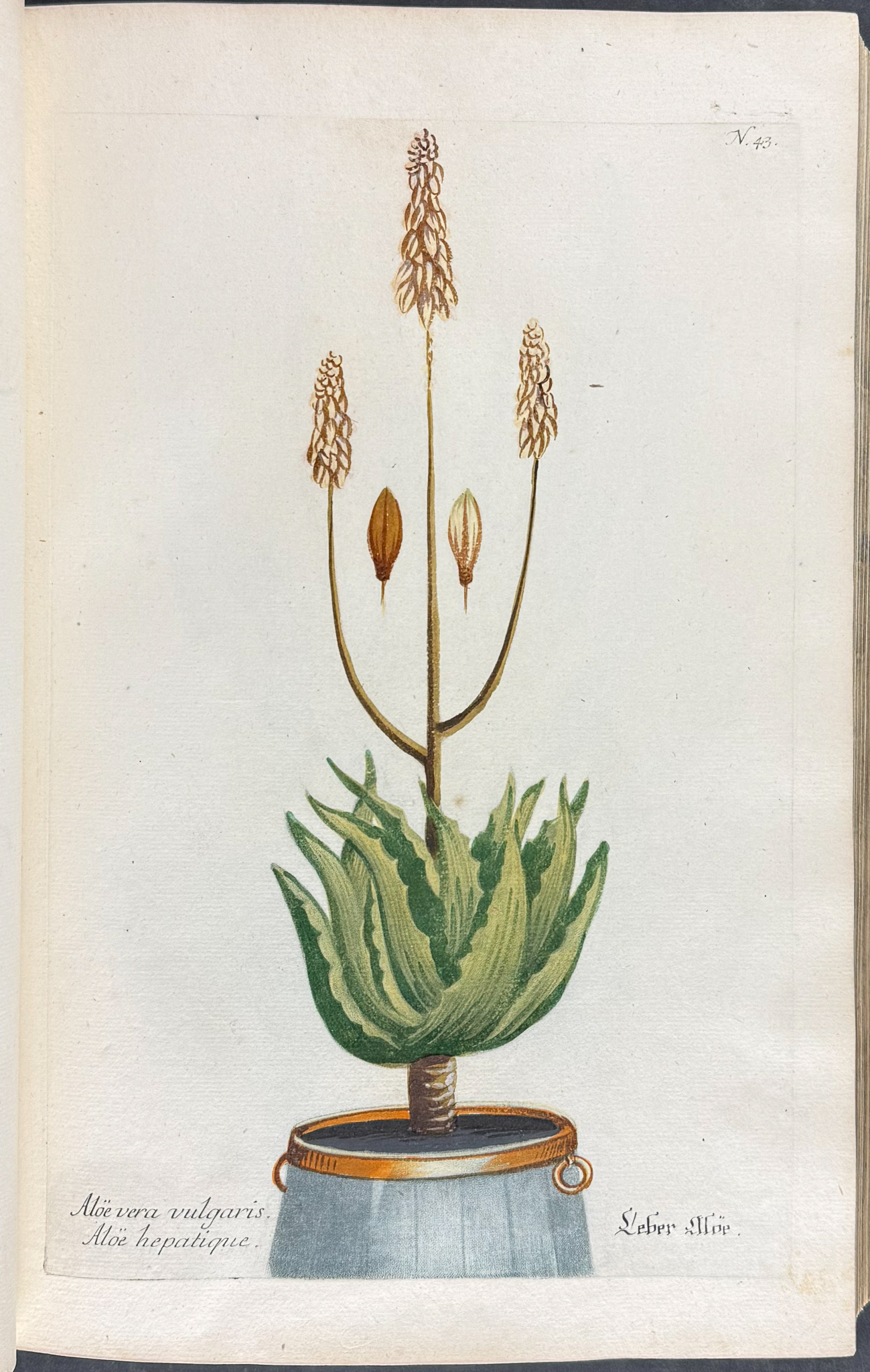
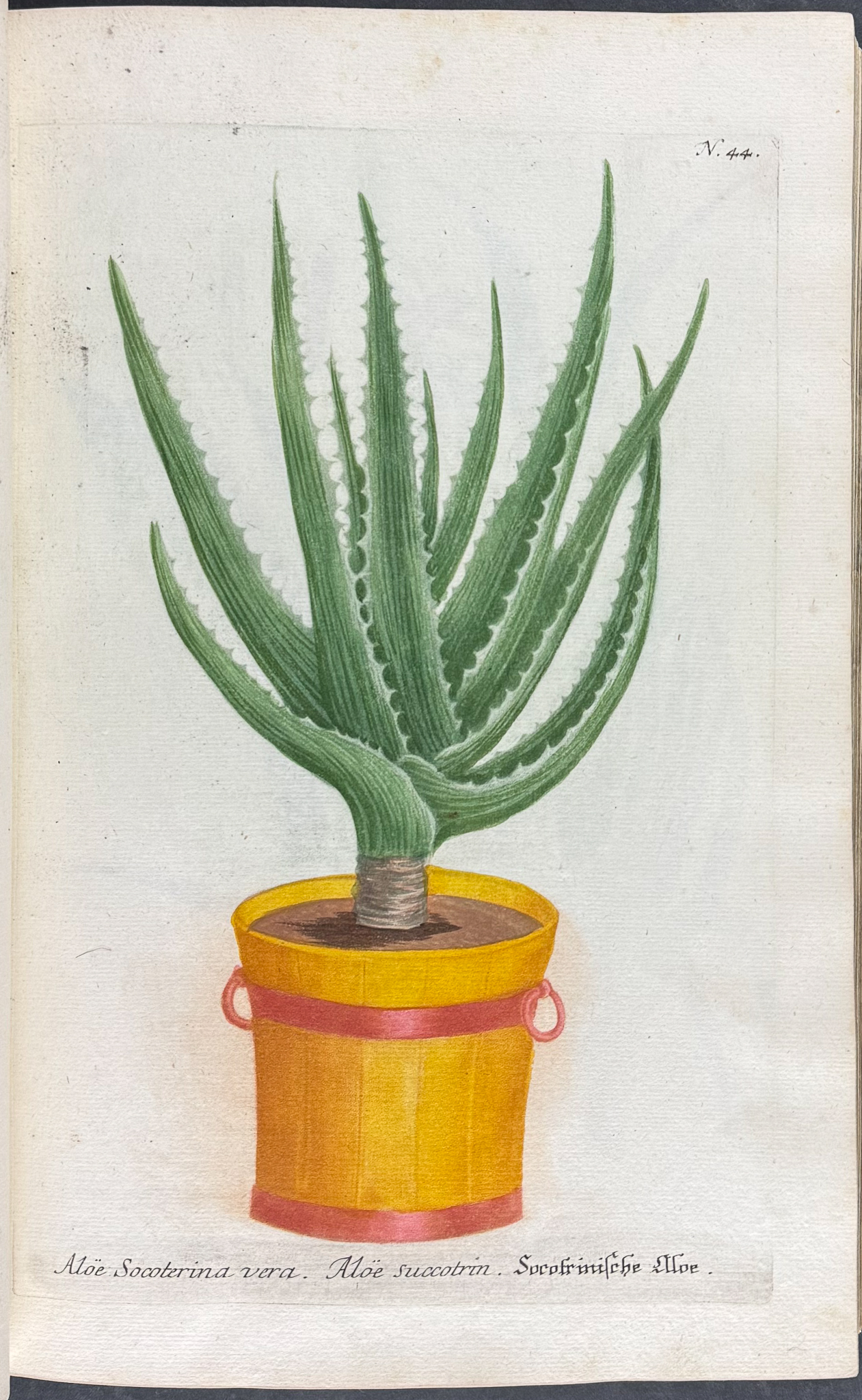
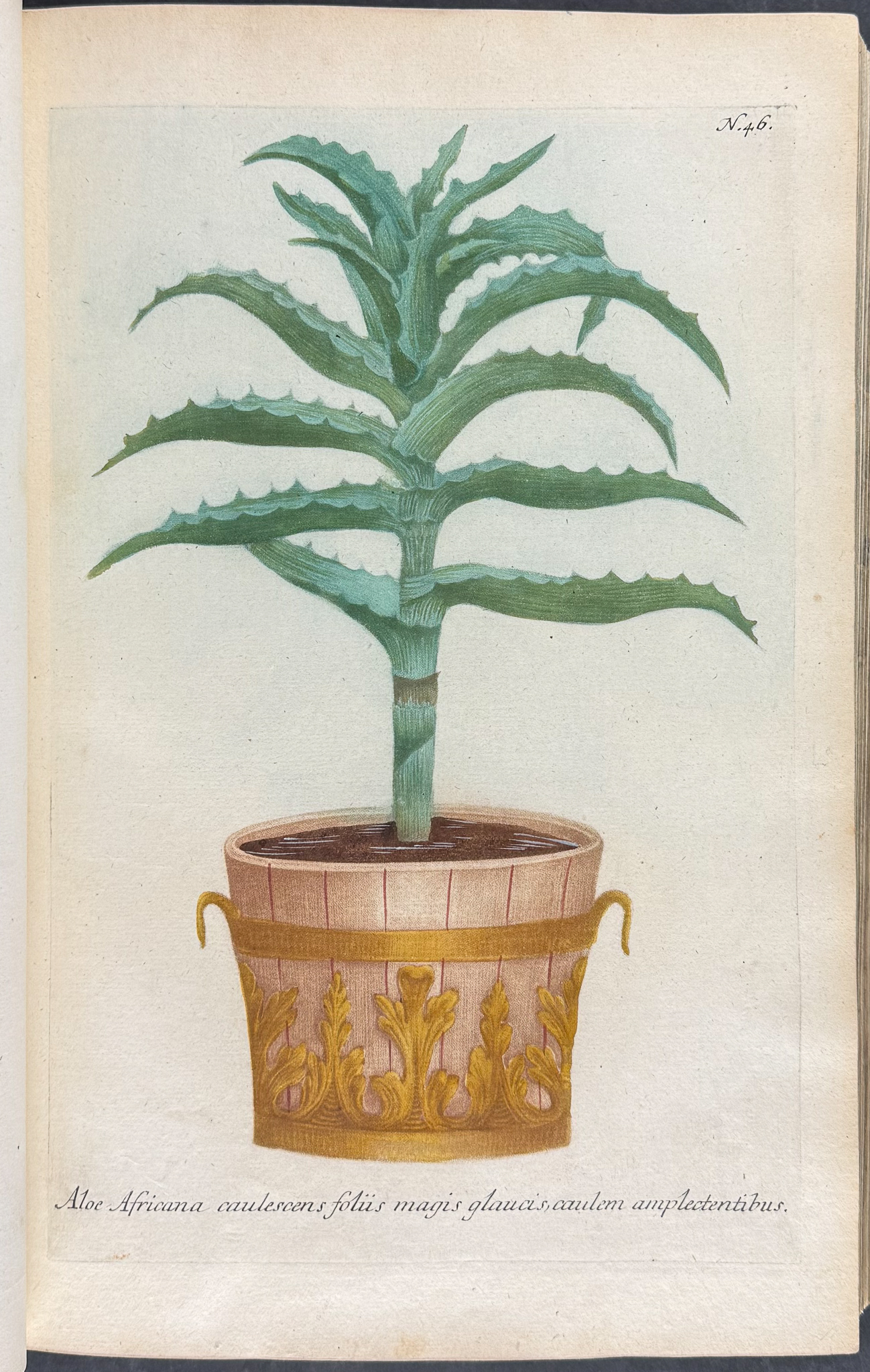
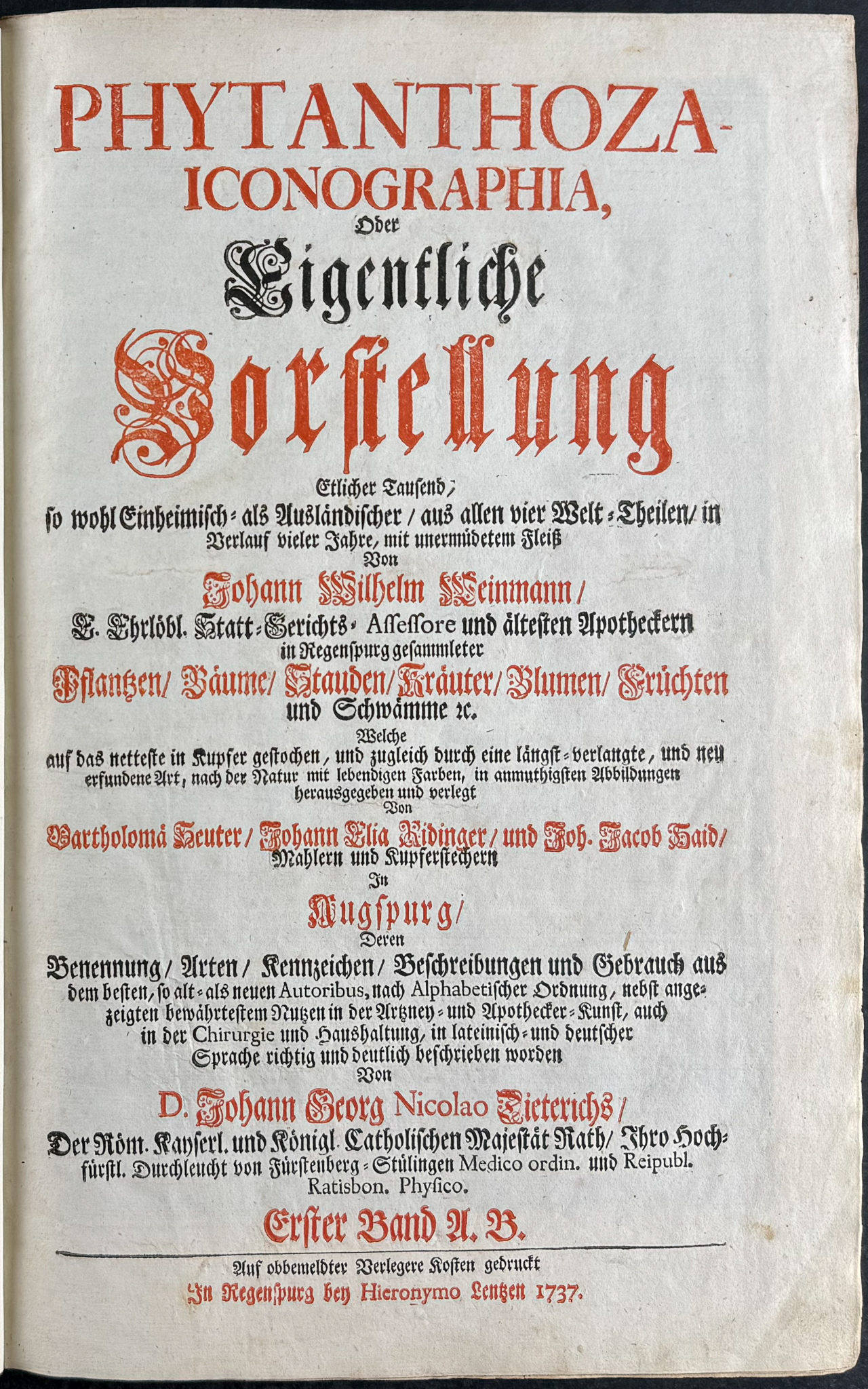
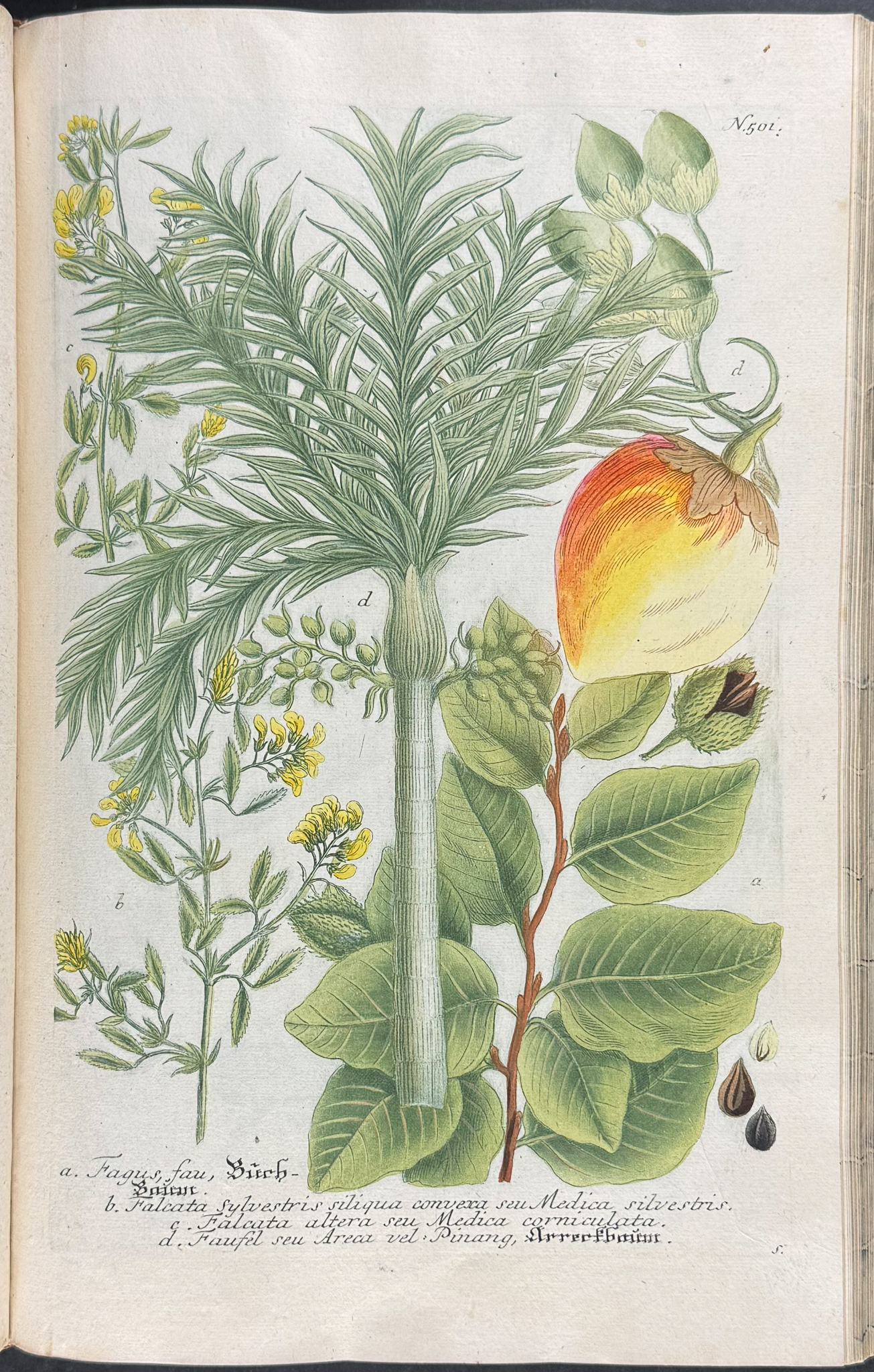
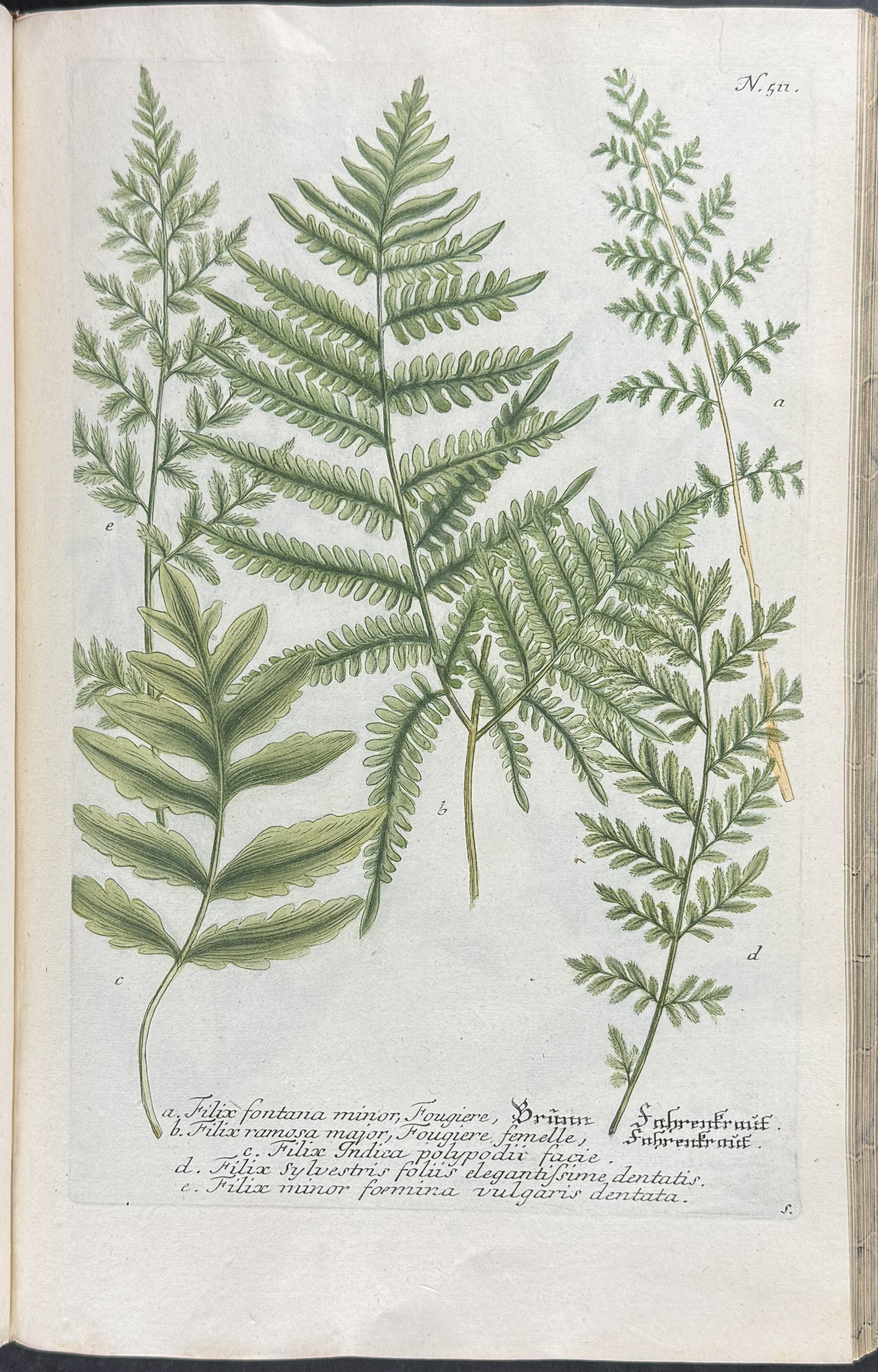
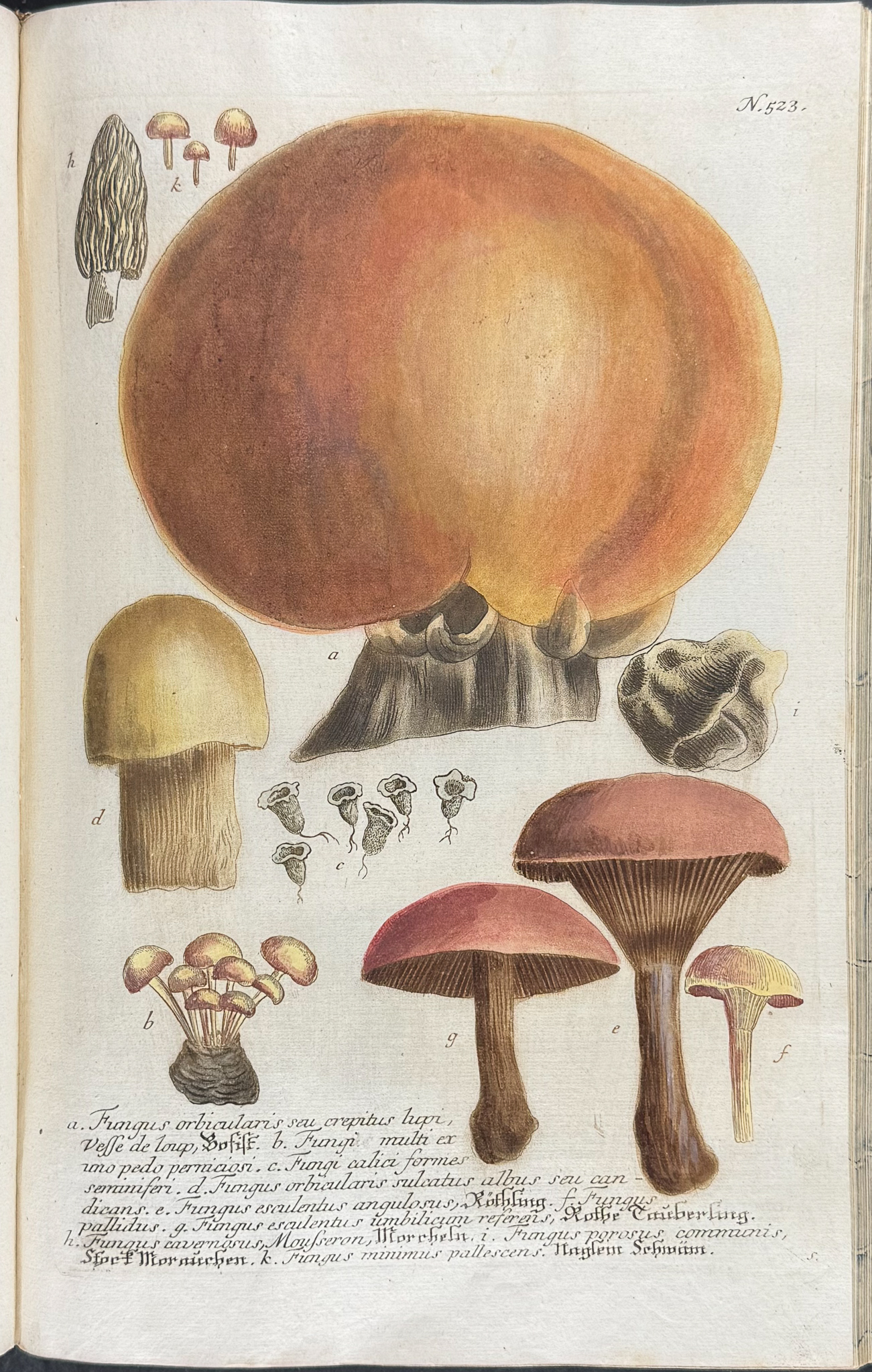
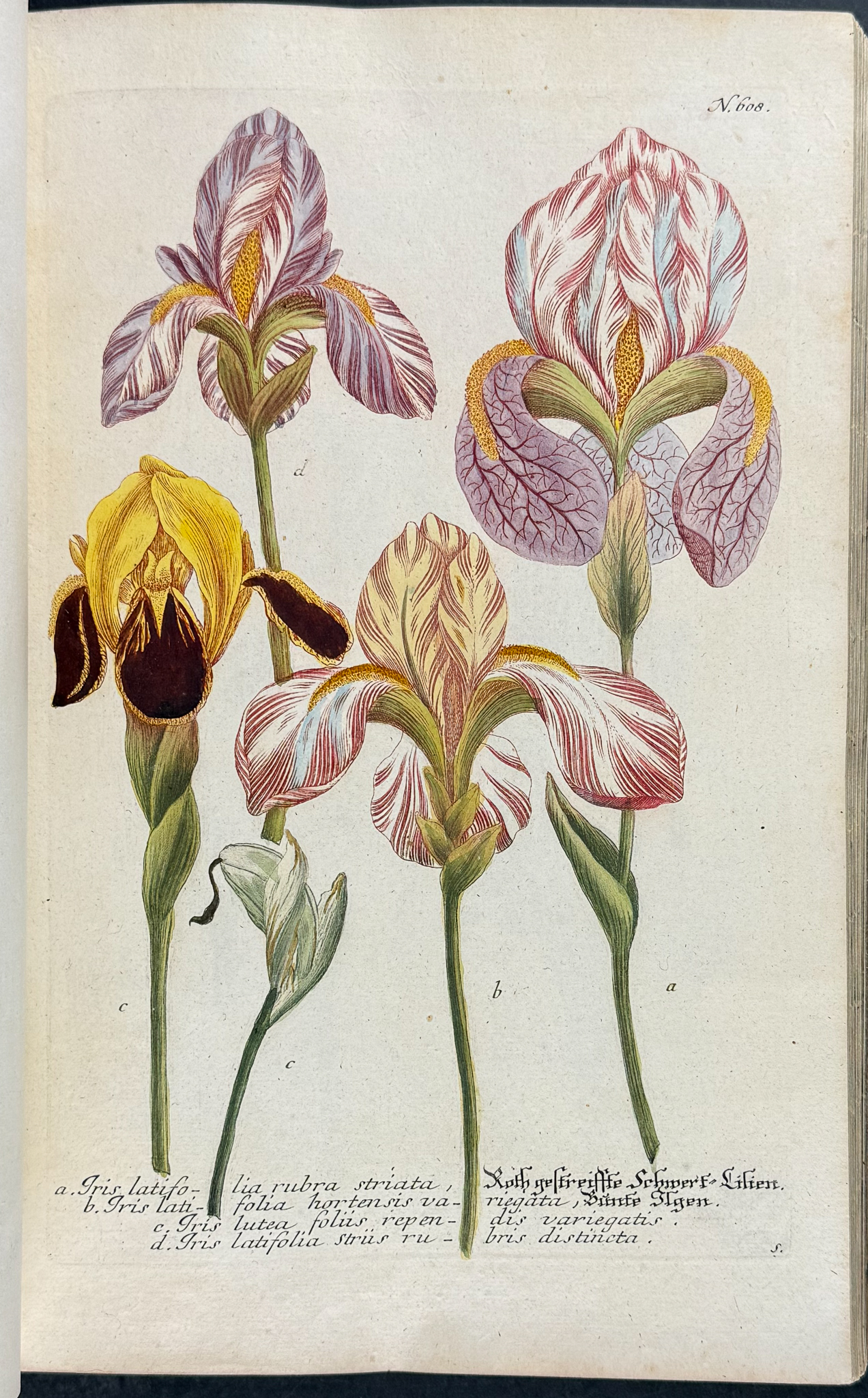
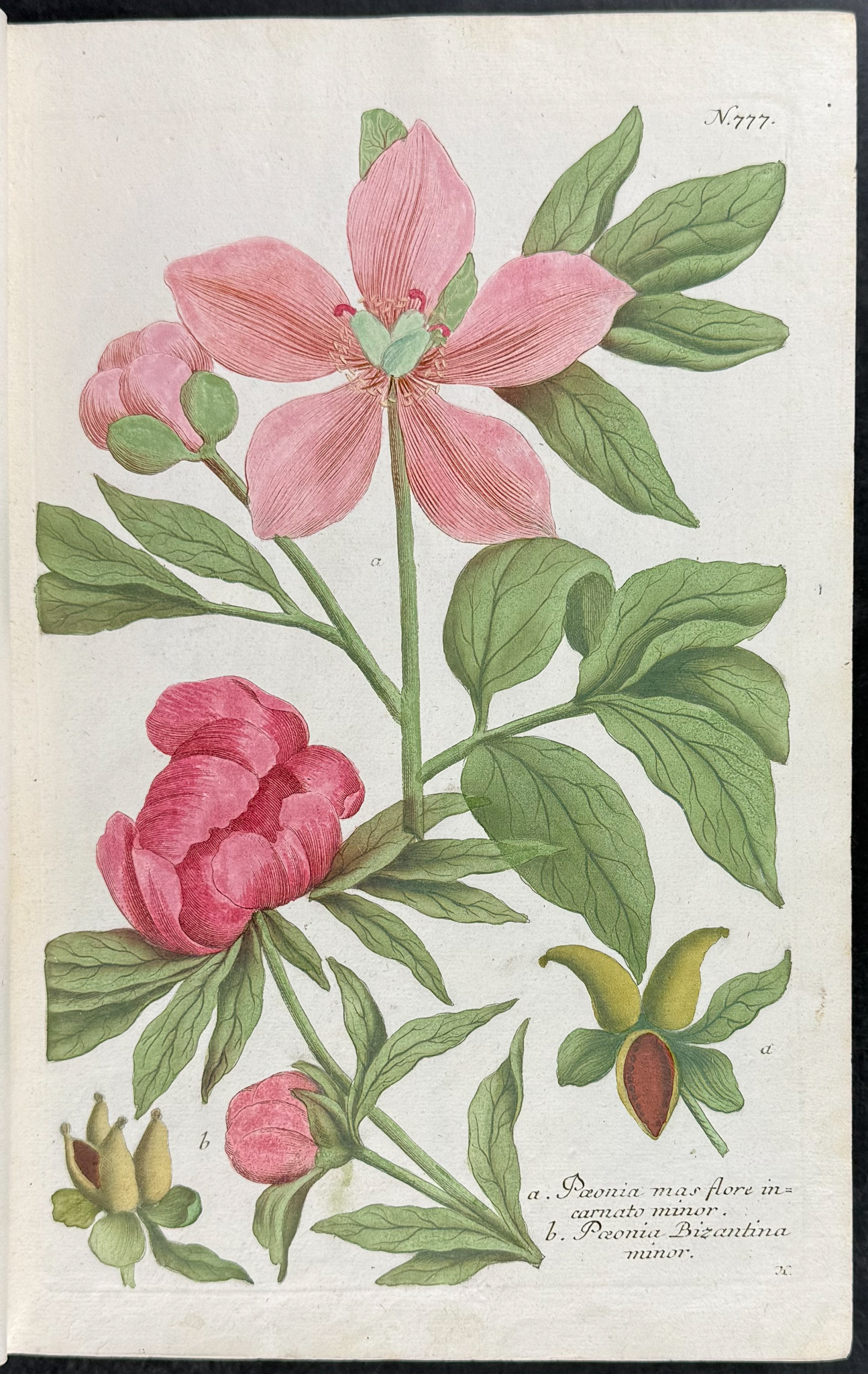
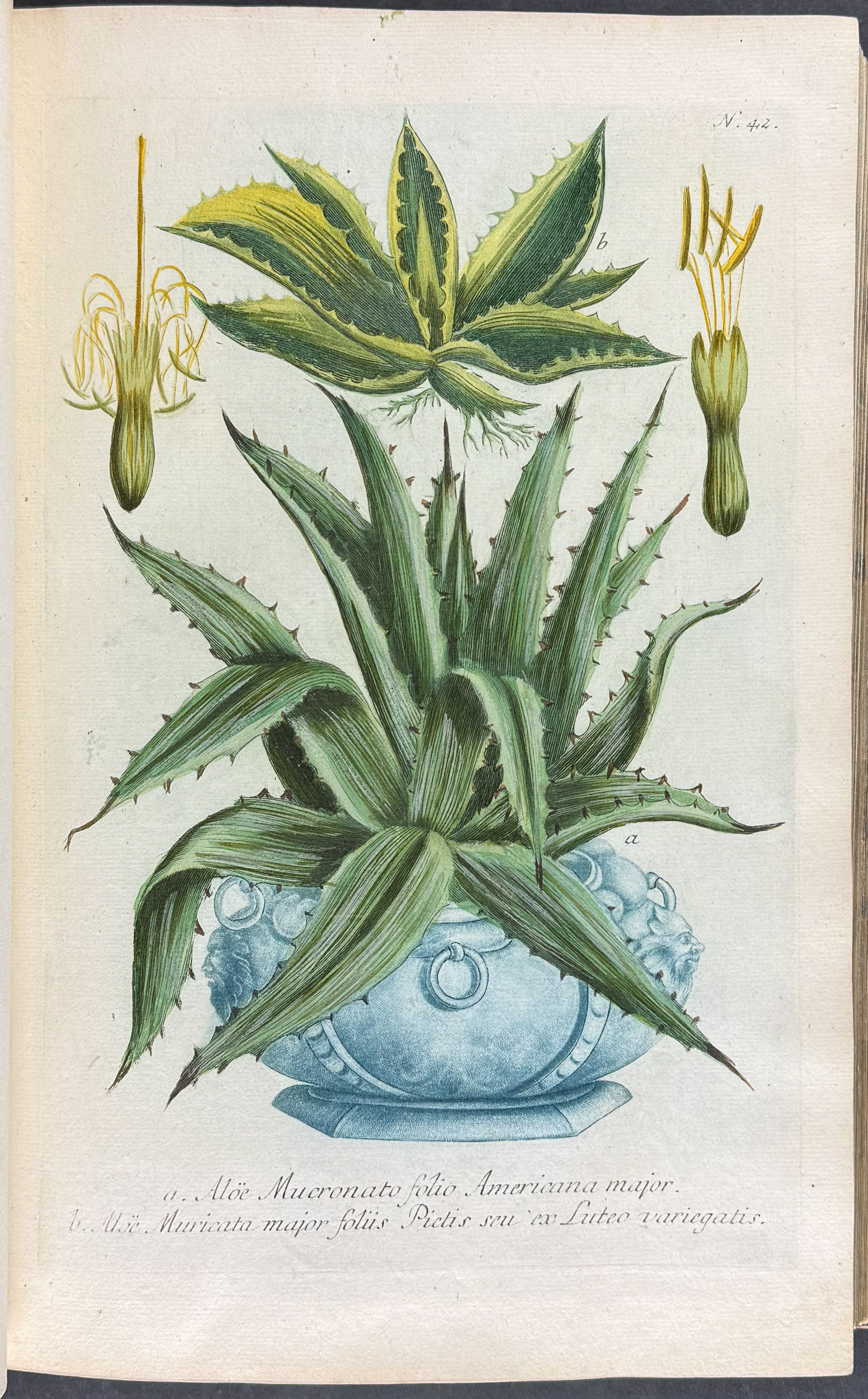
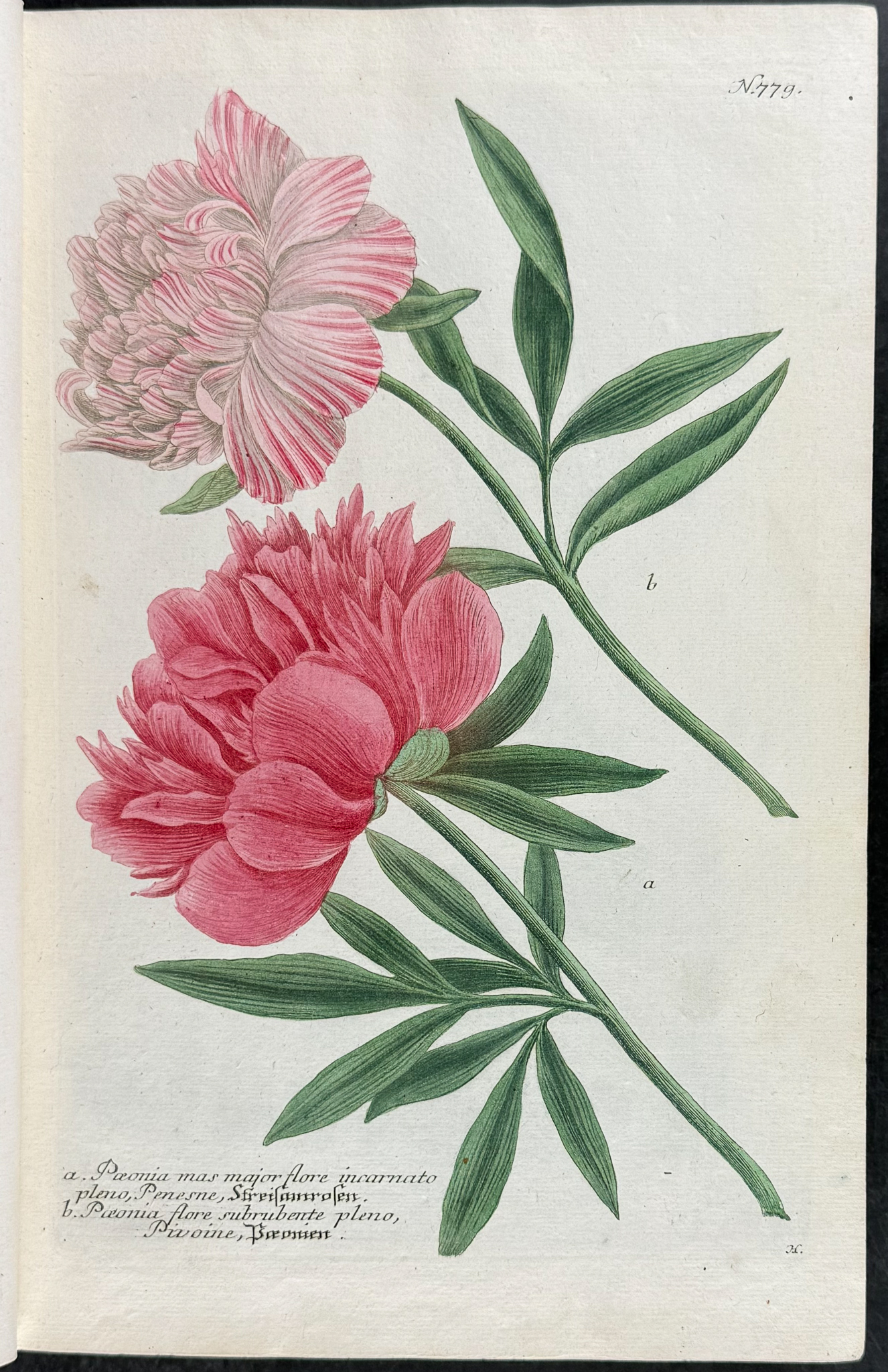
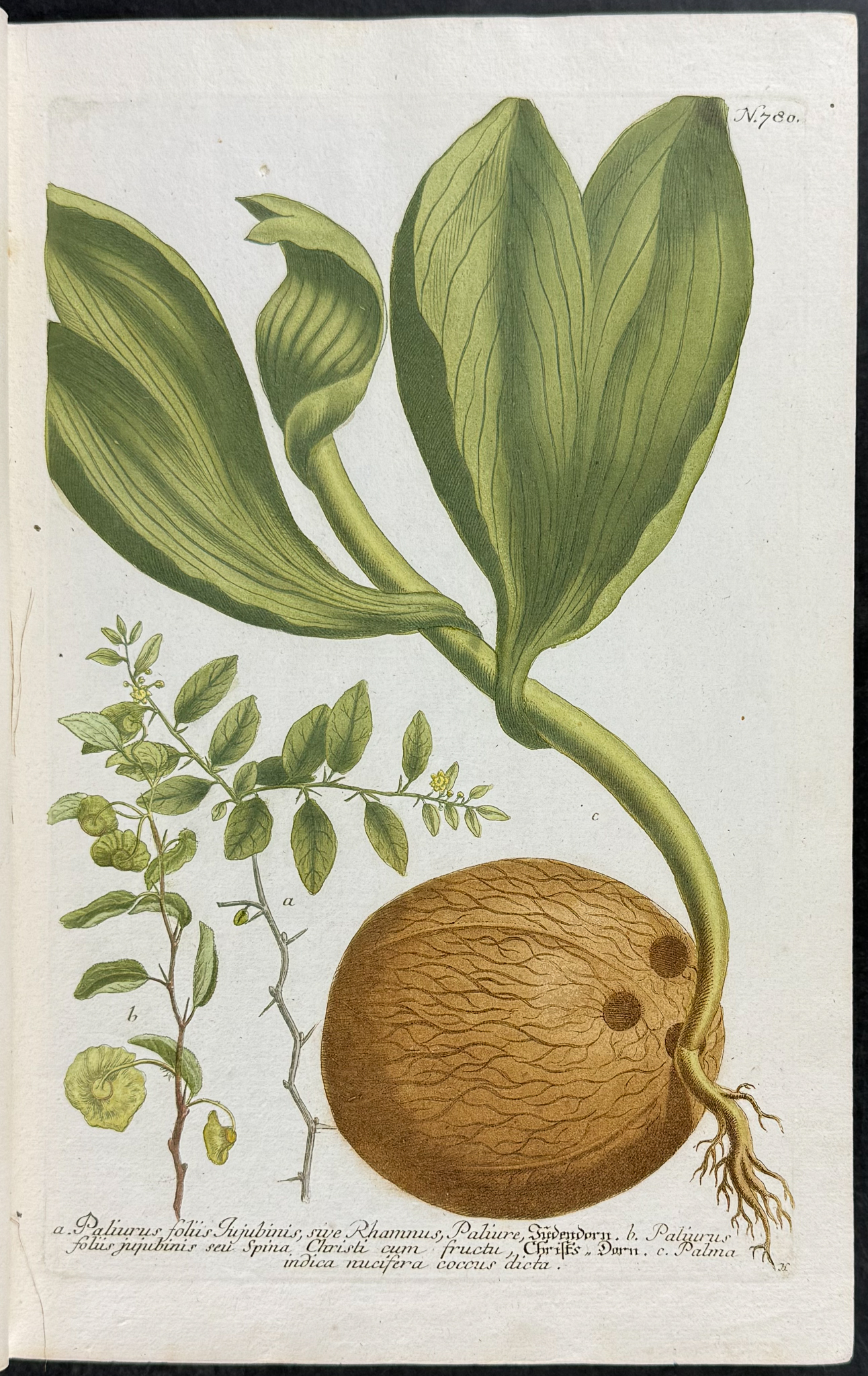
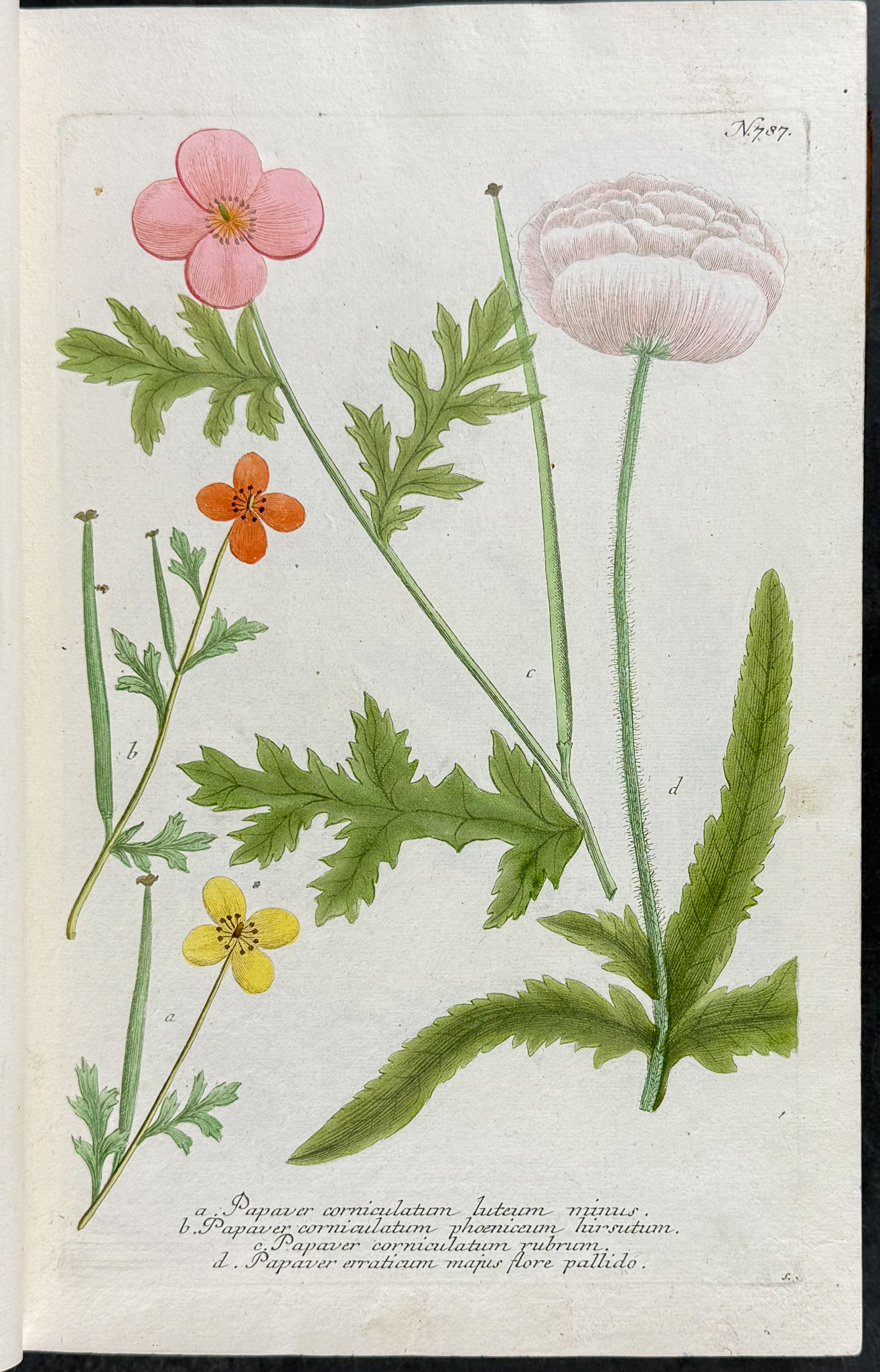
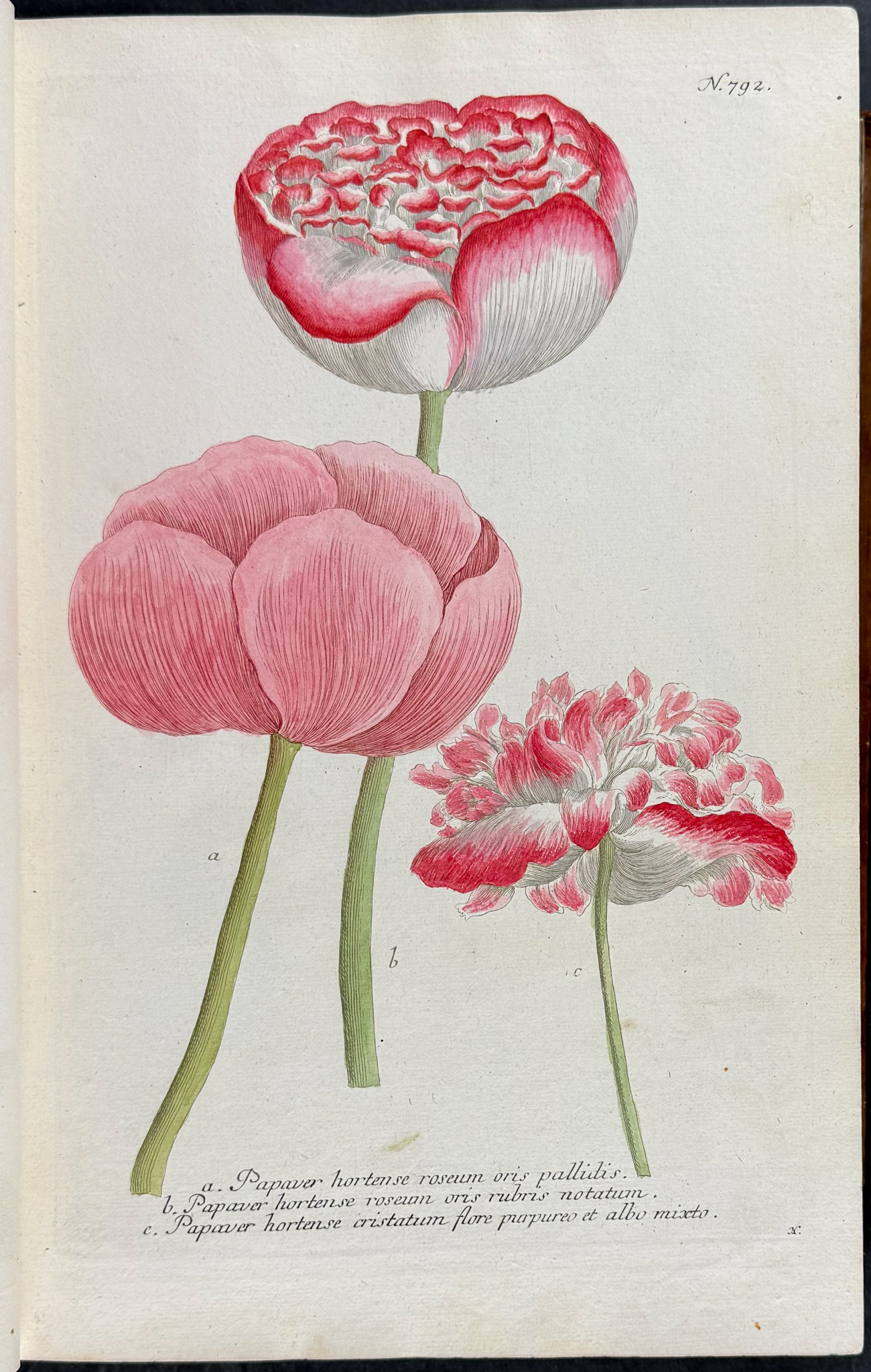
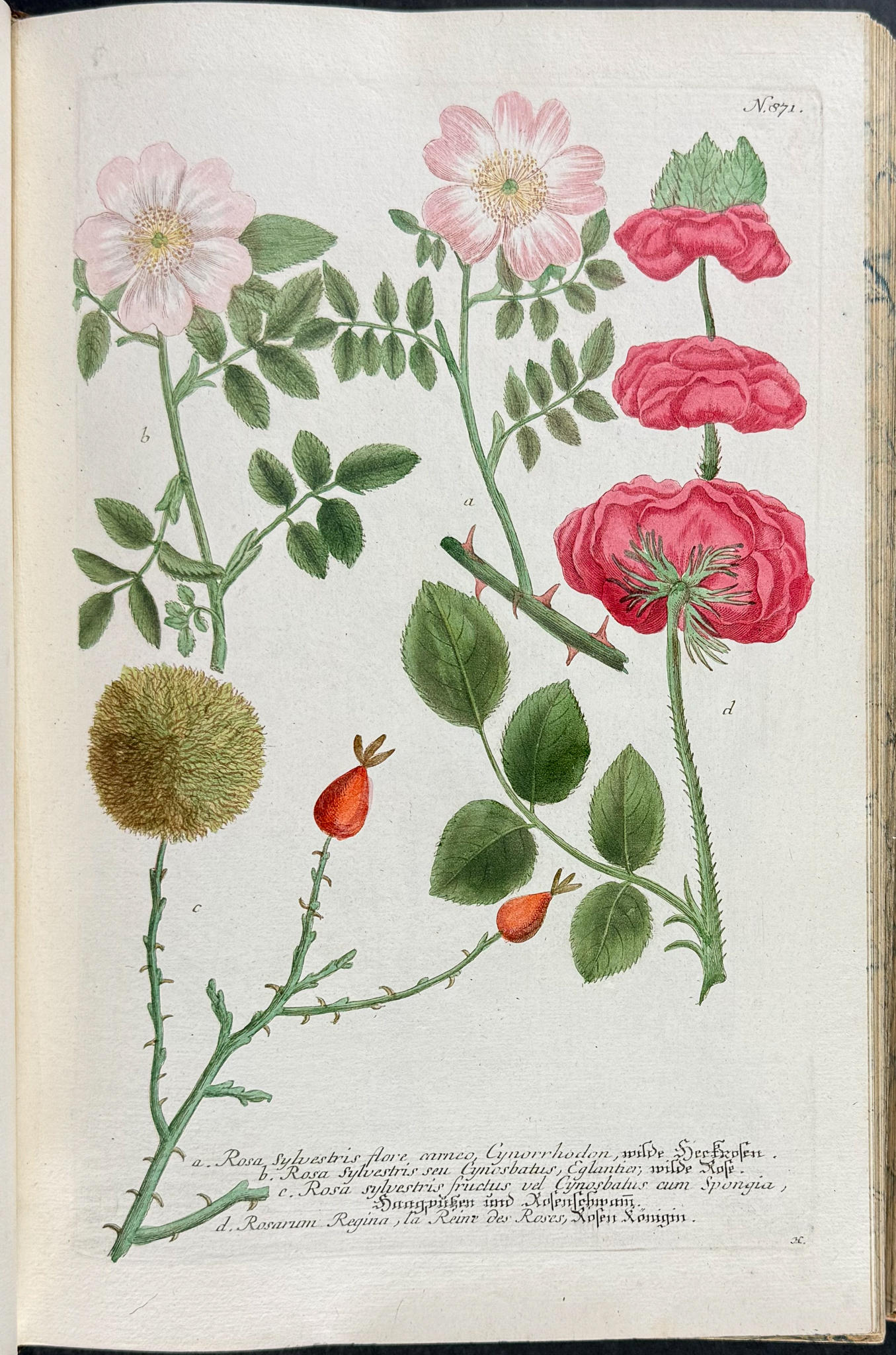
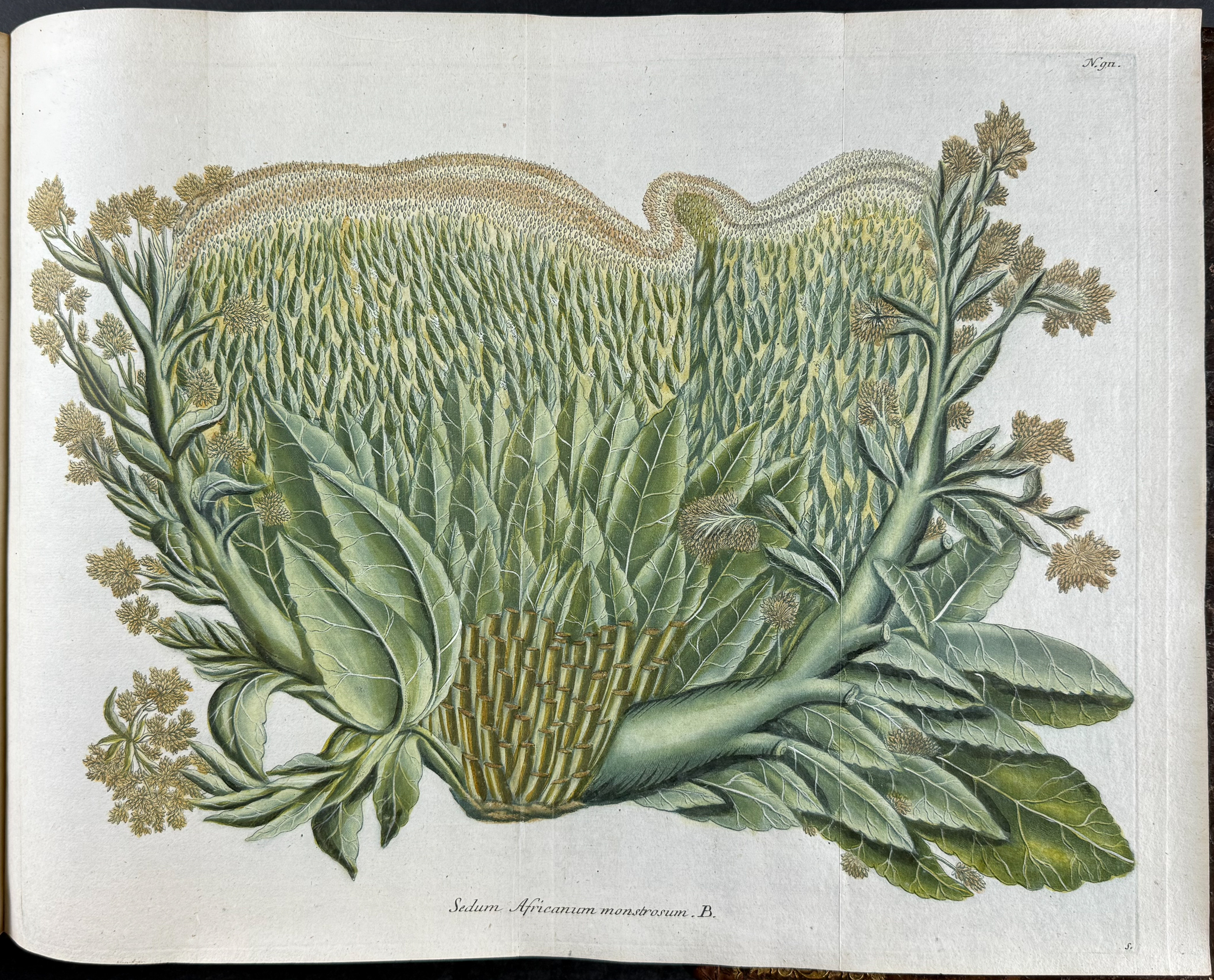
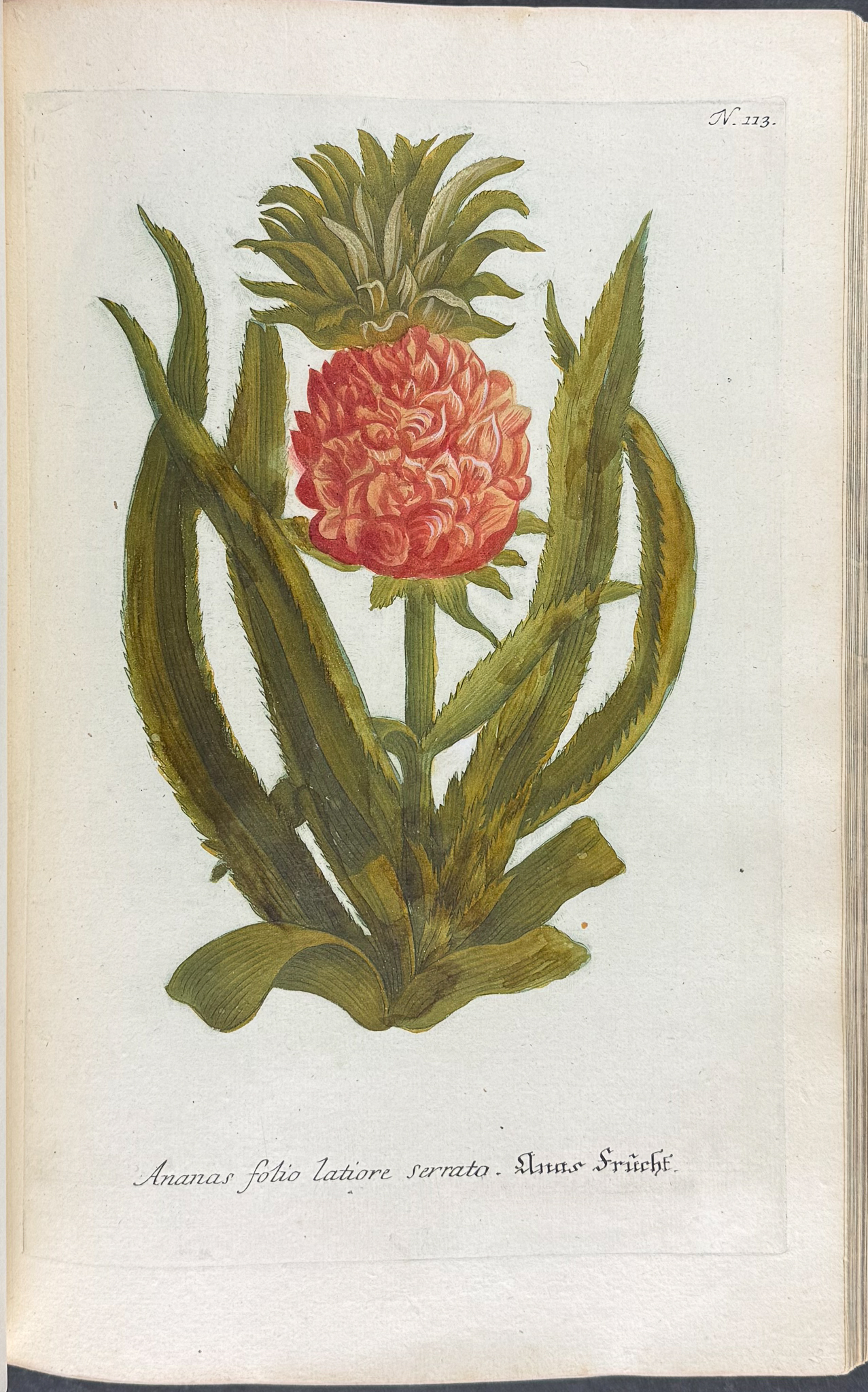
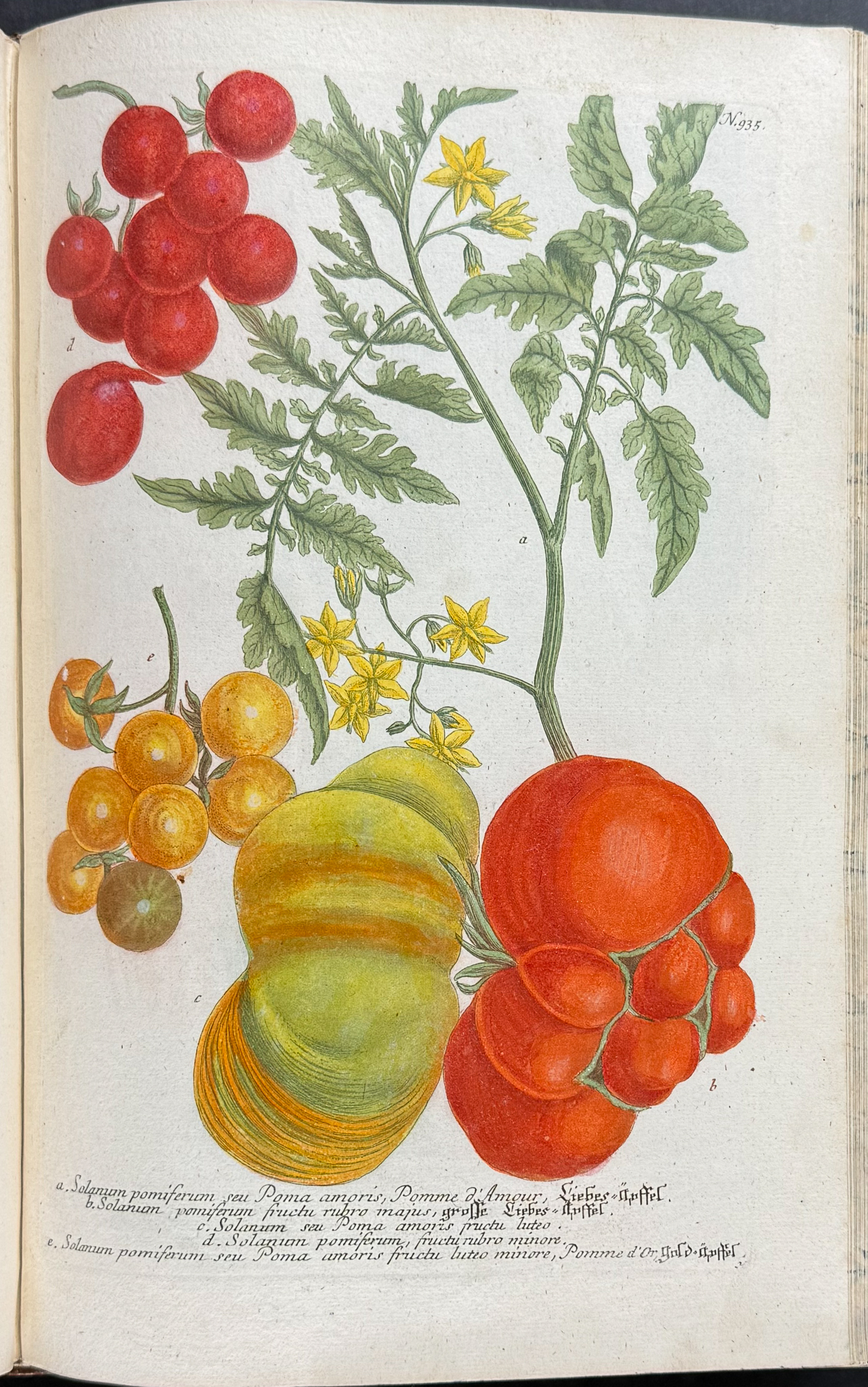
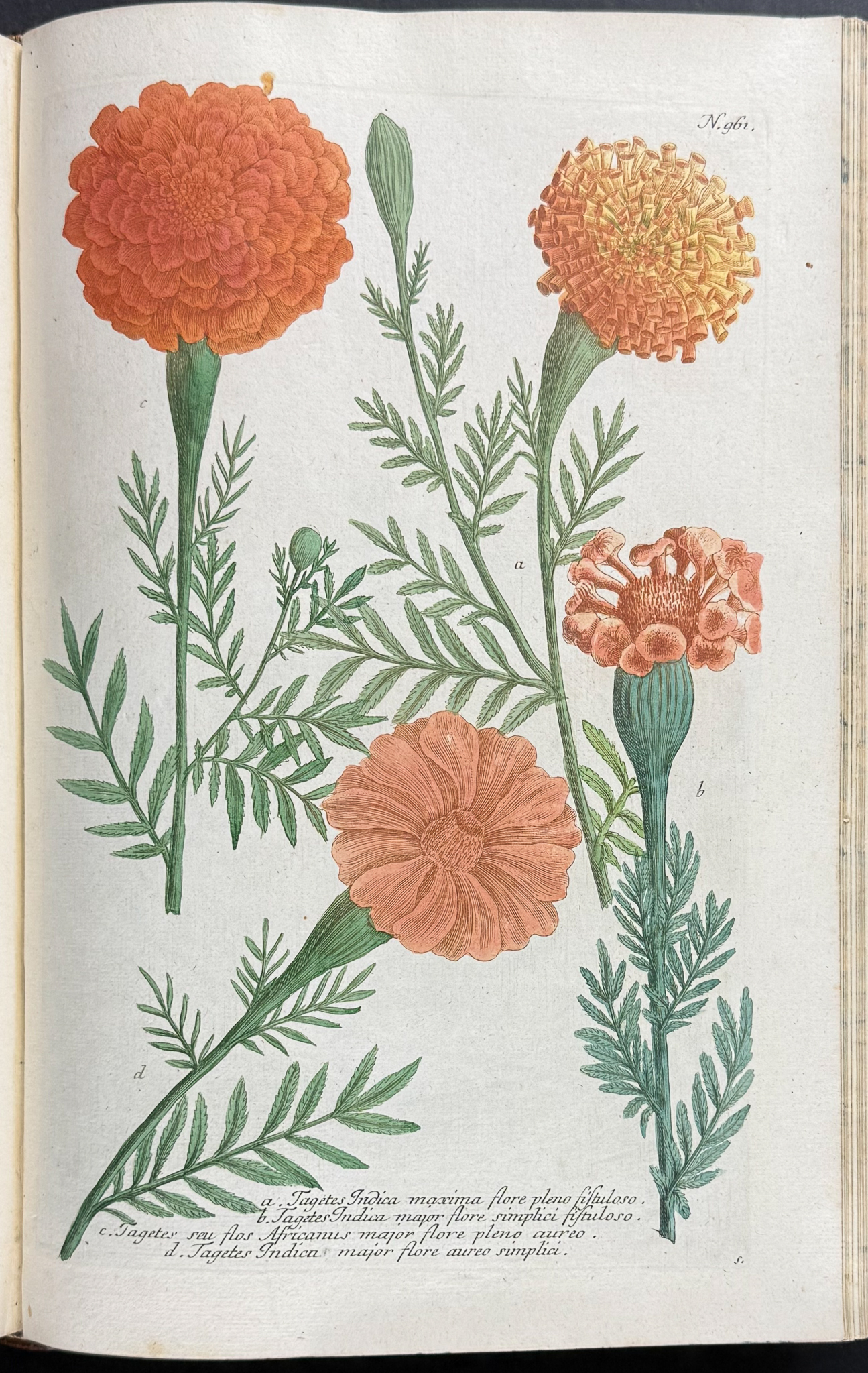
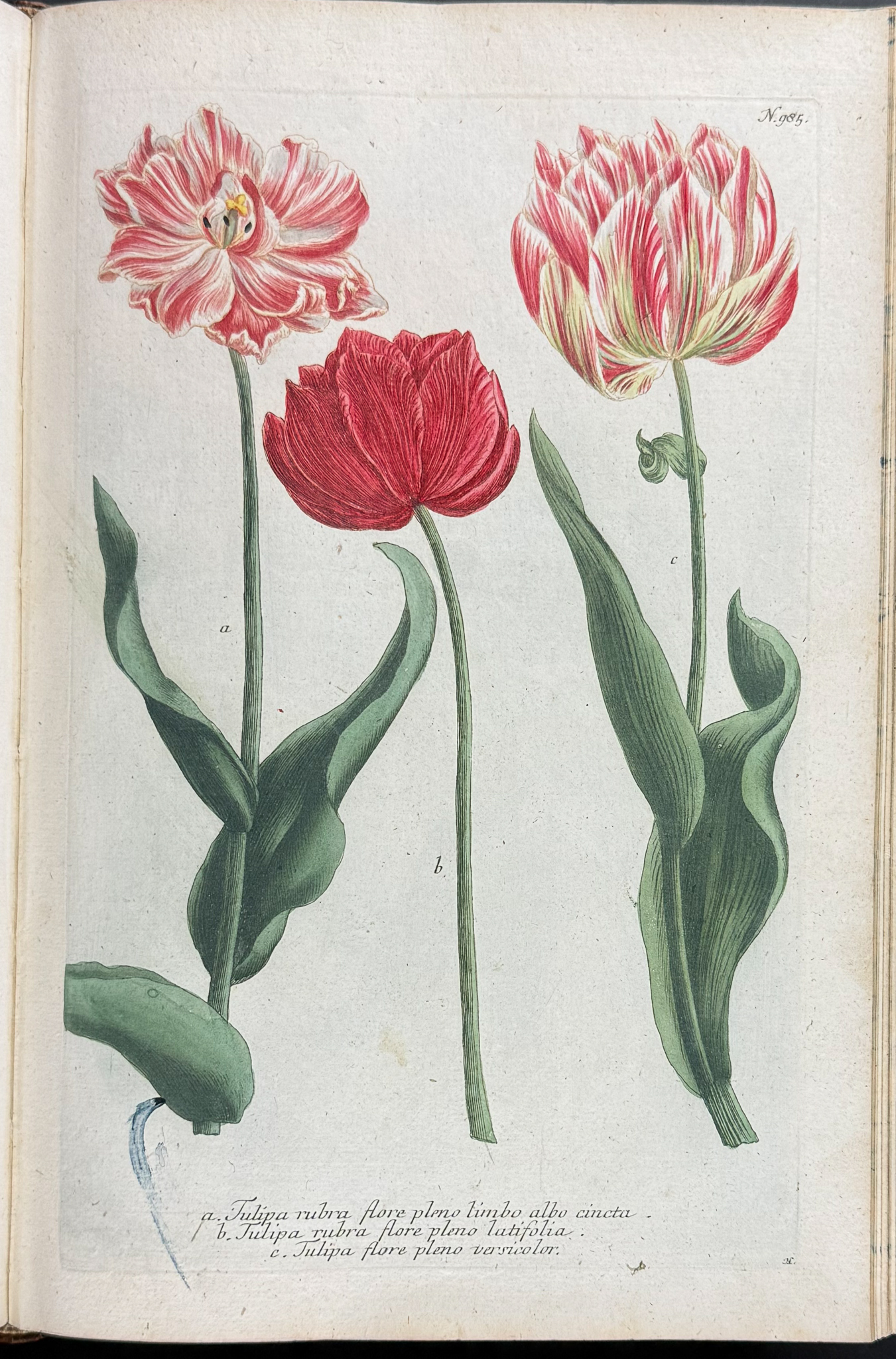
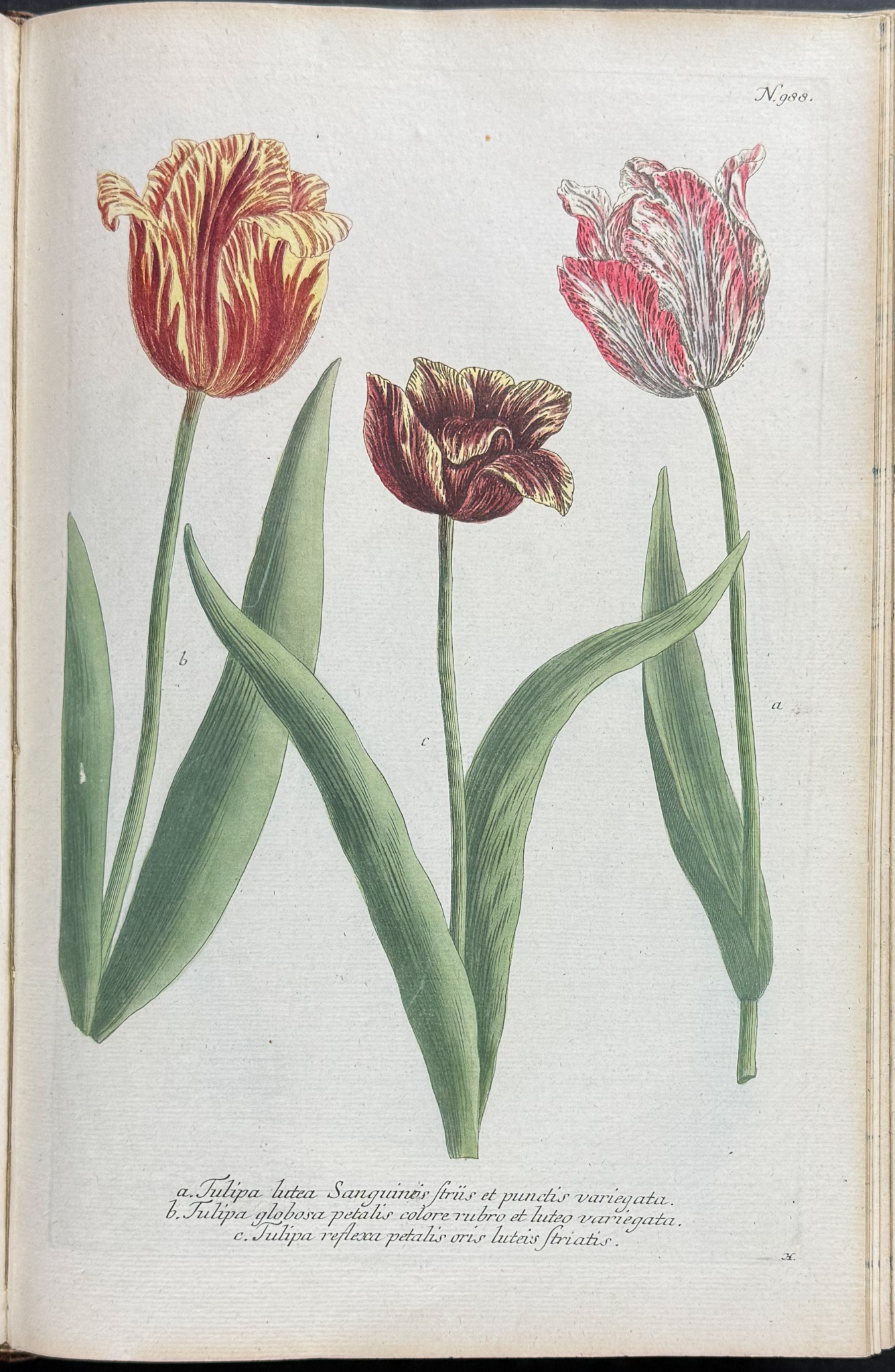
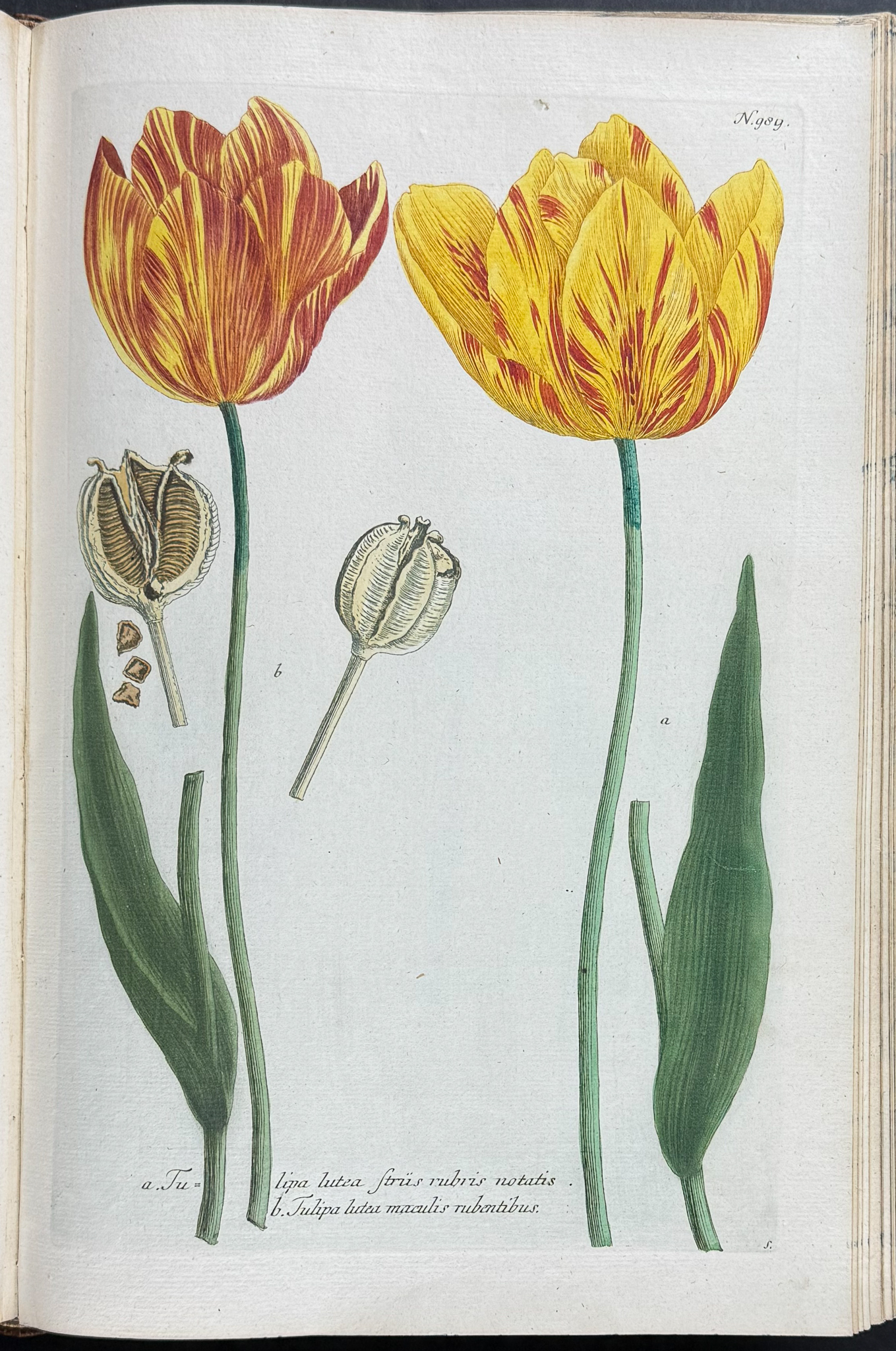
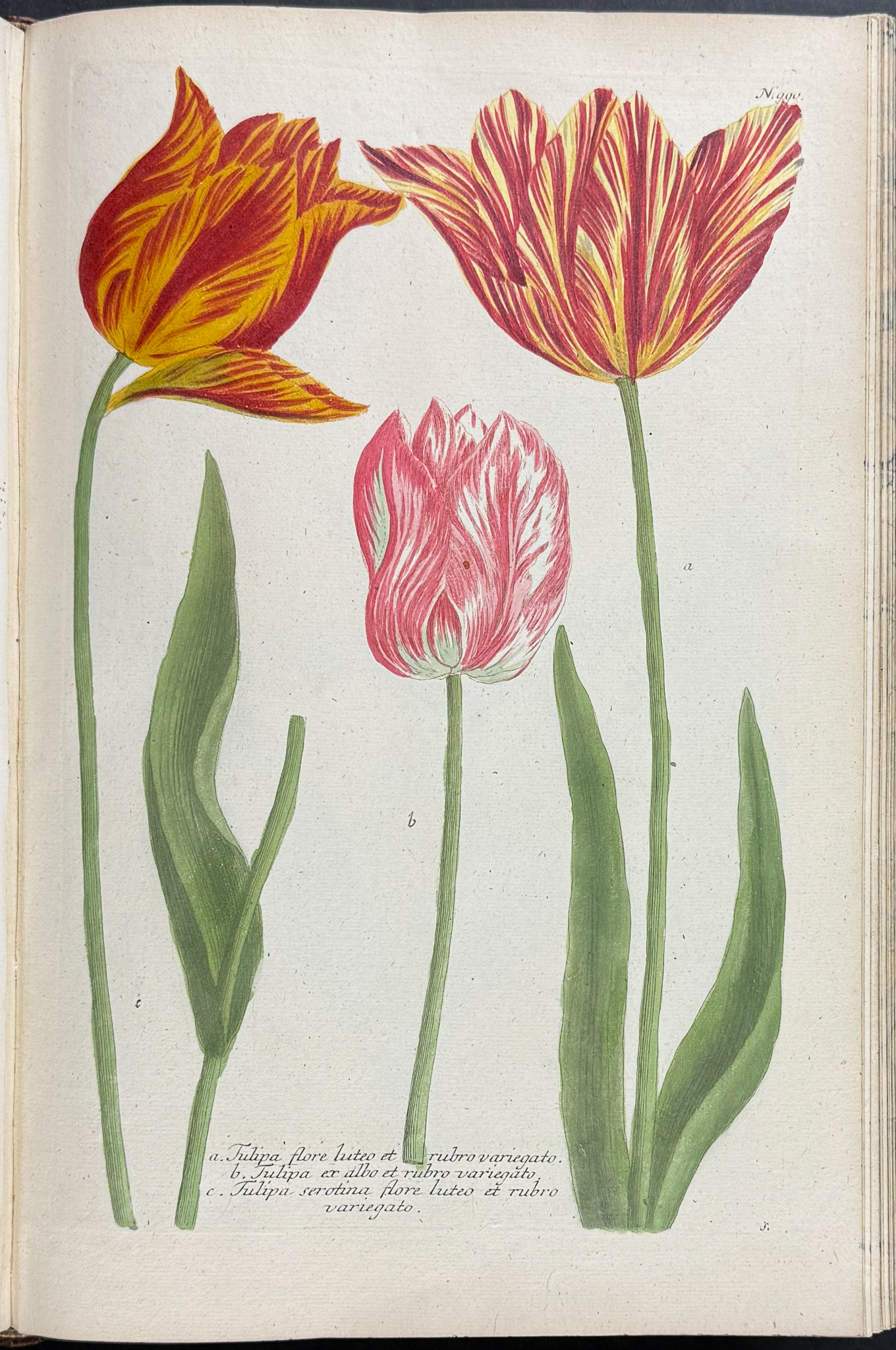
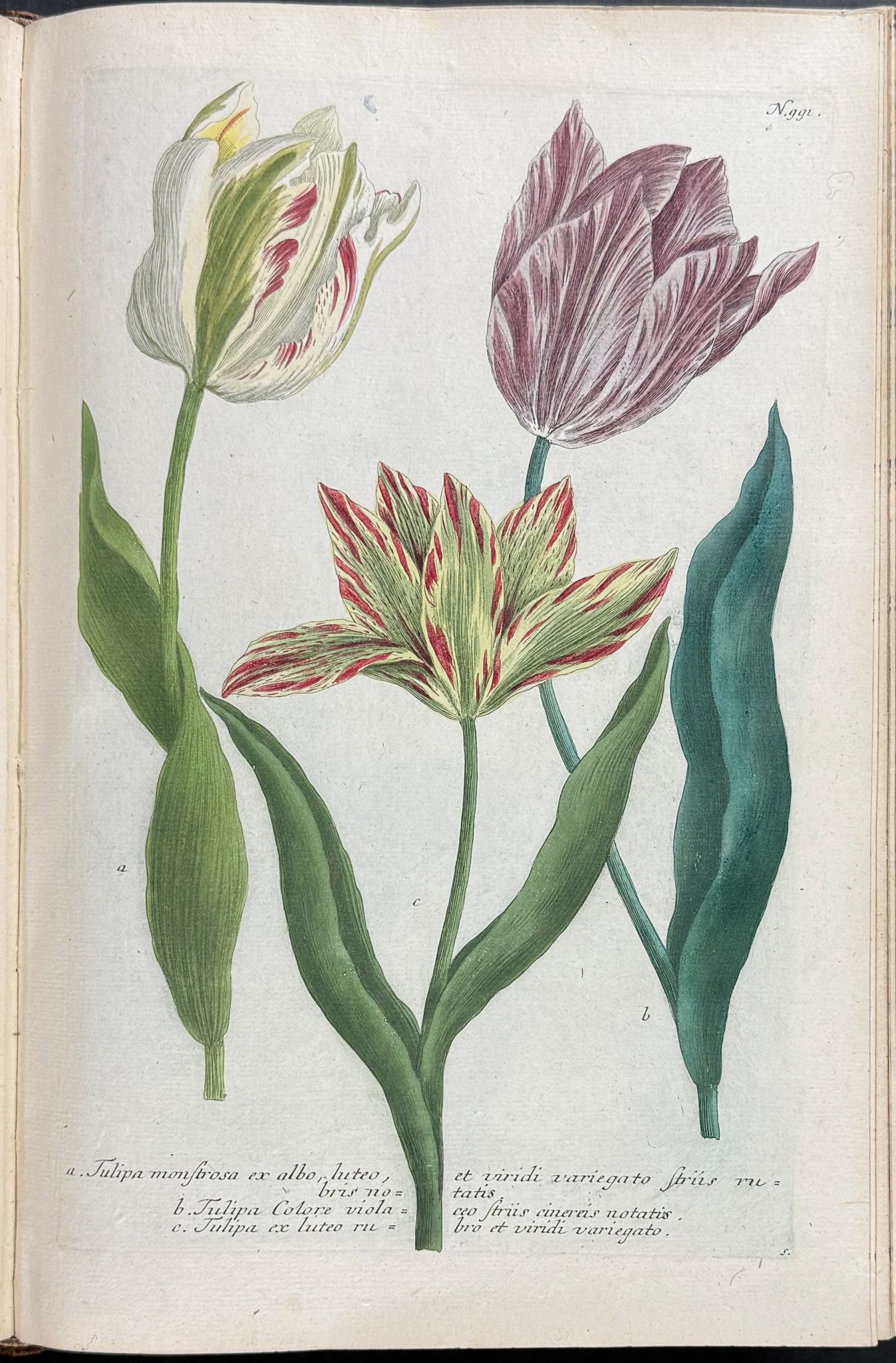
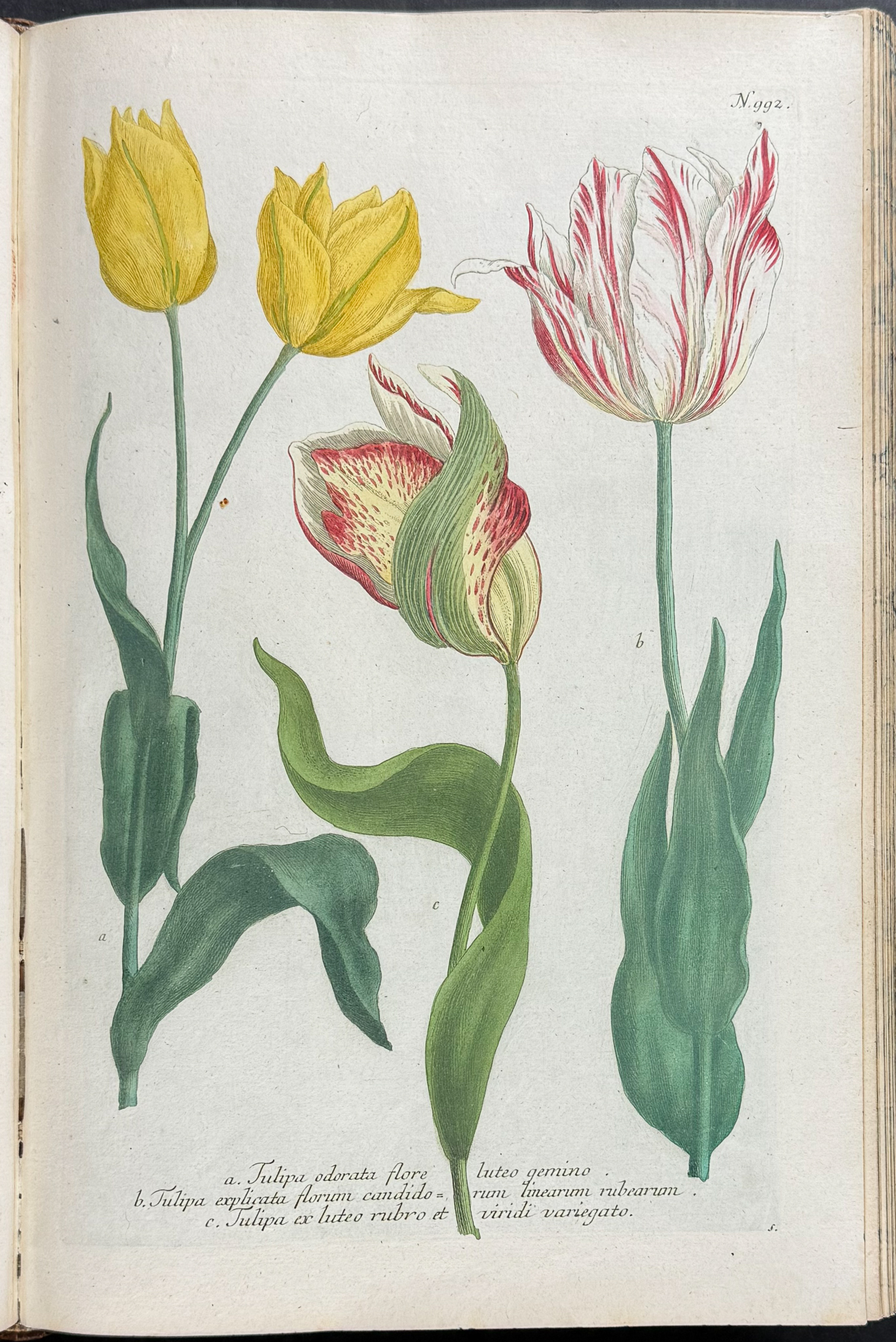
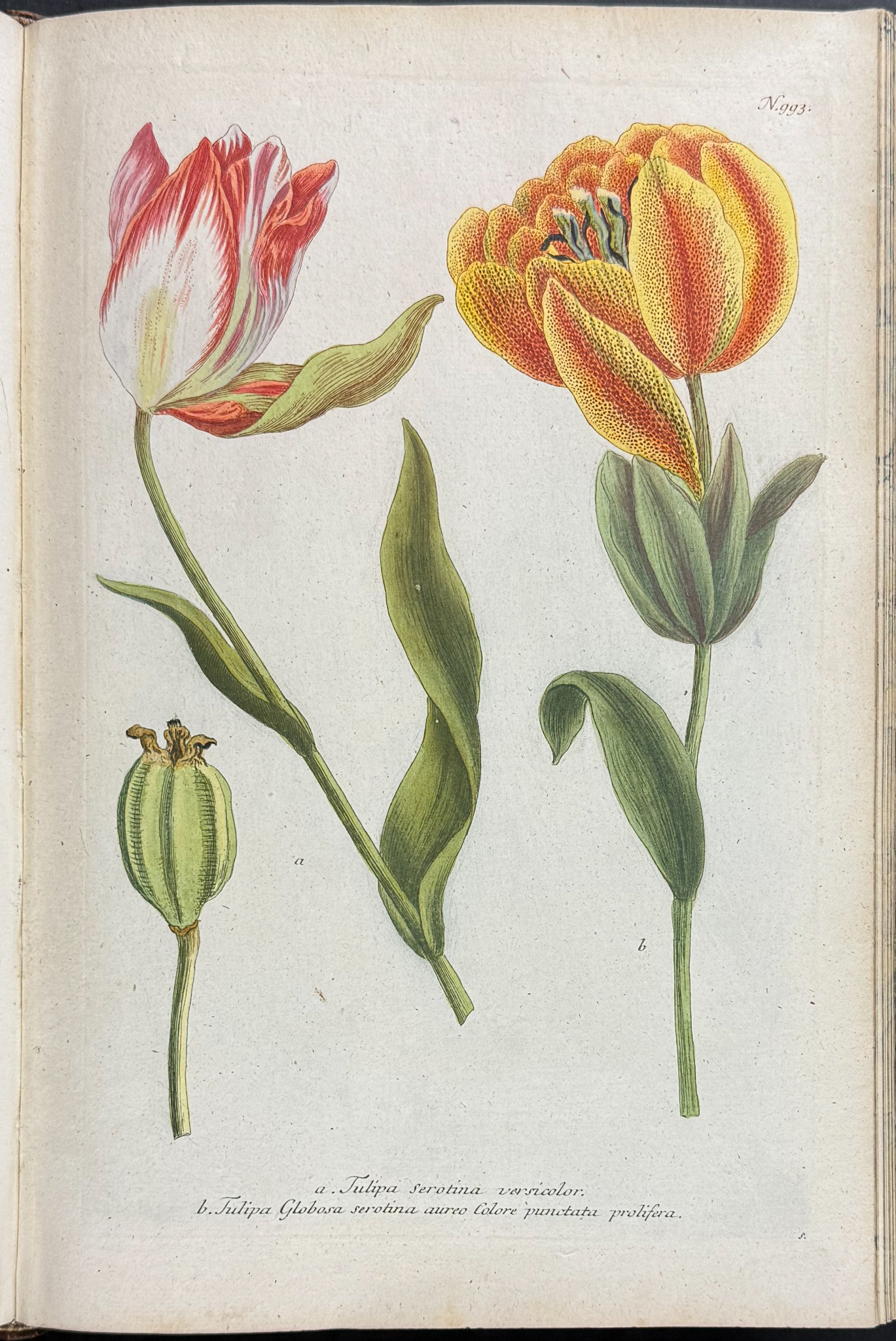
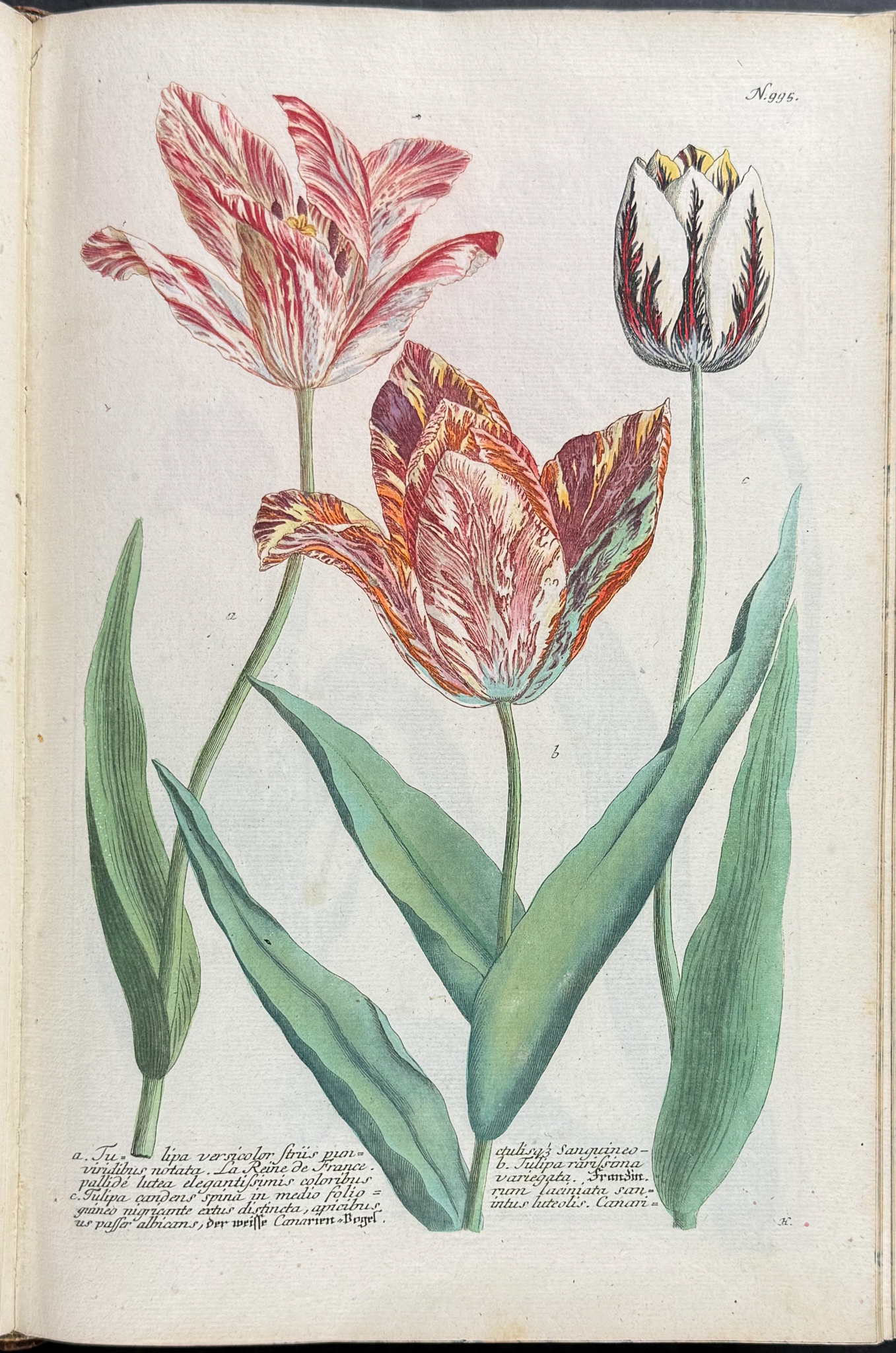
This stunning and complete work is Johann Weinmann’s
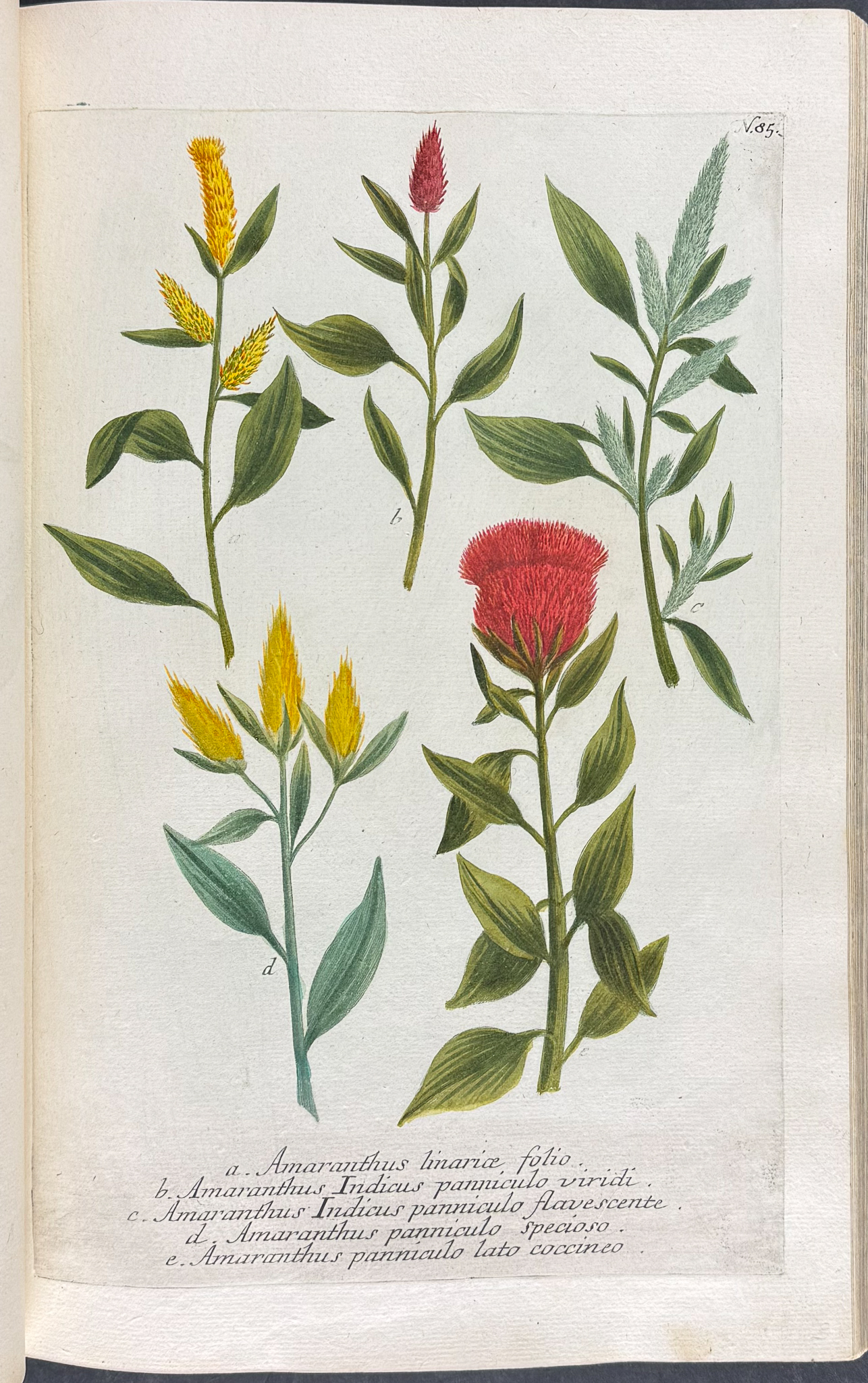
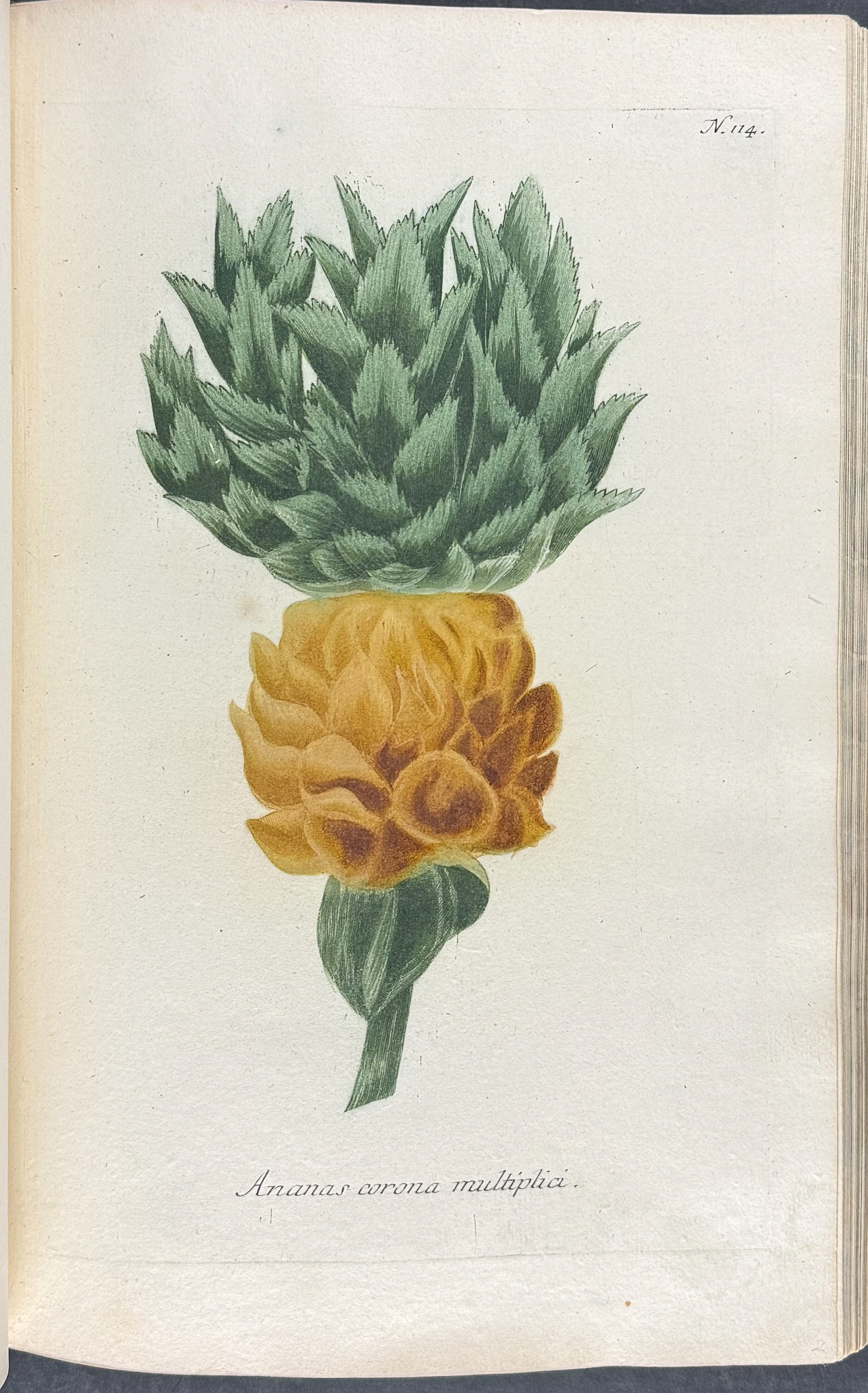
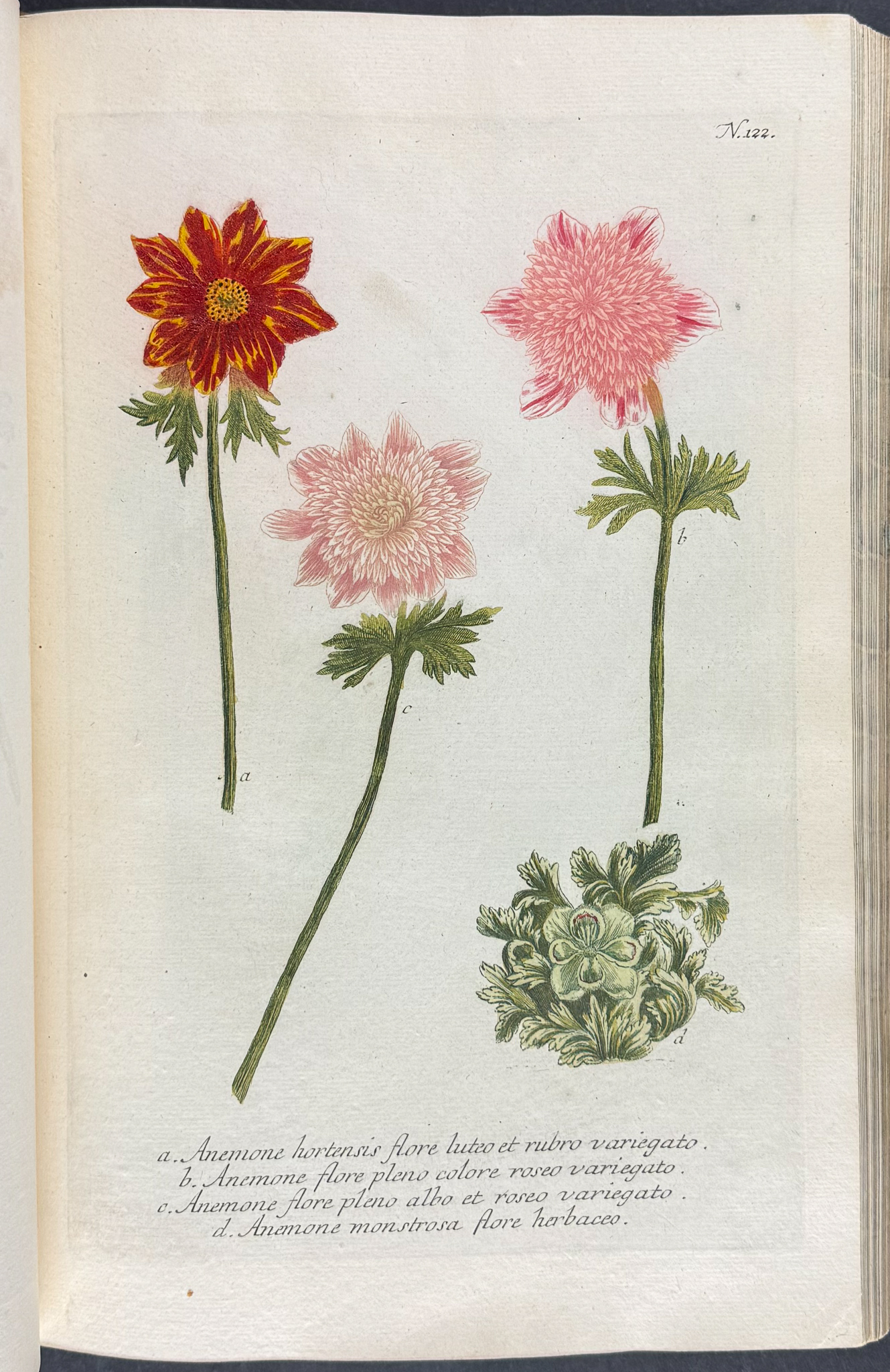
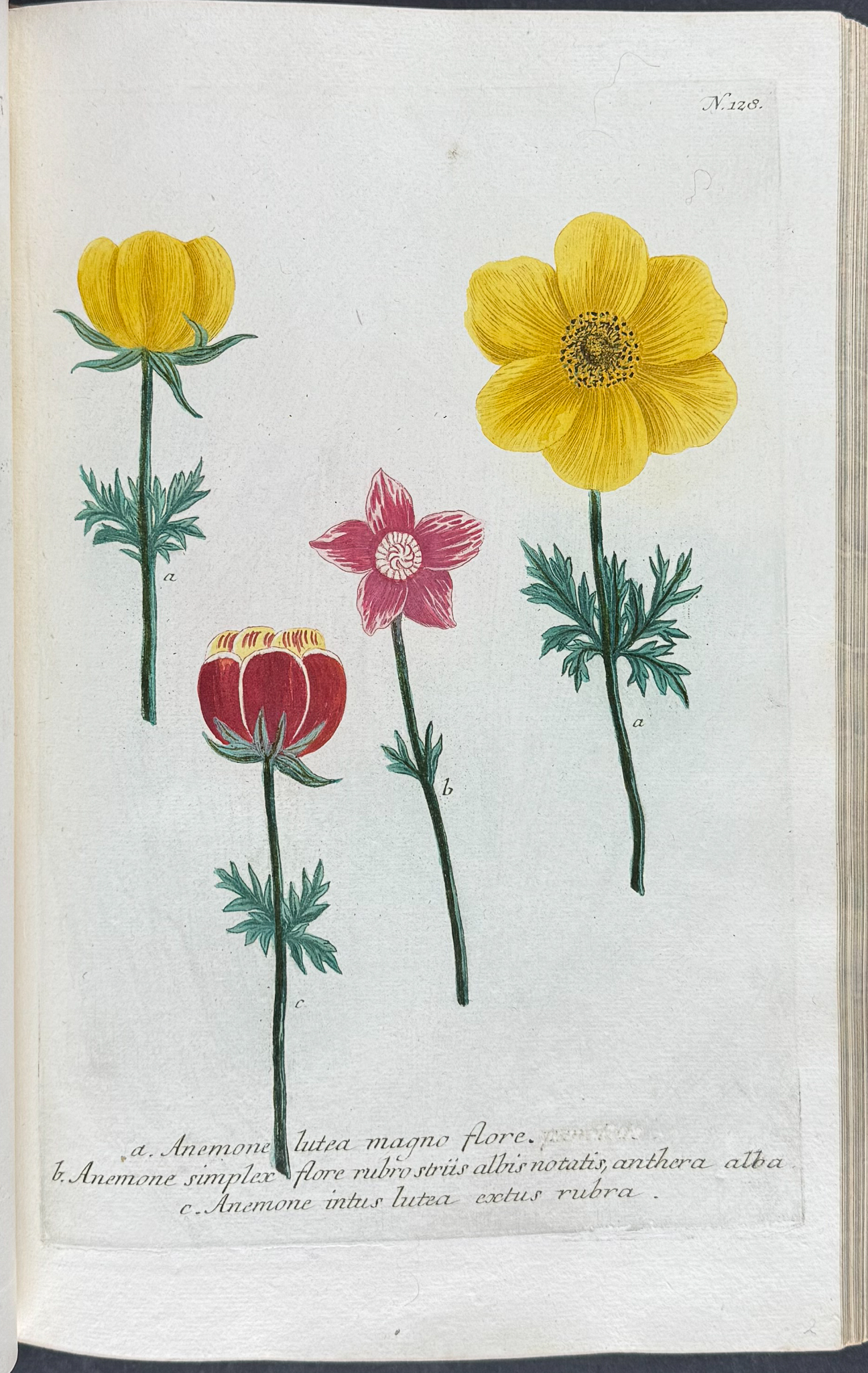
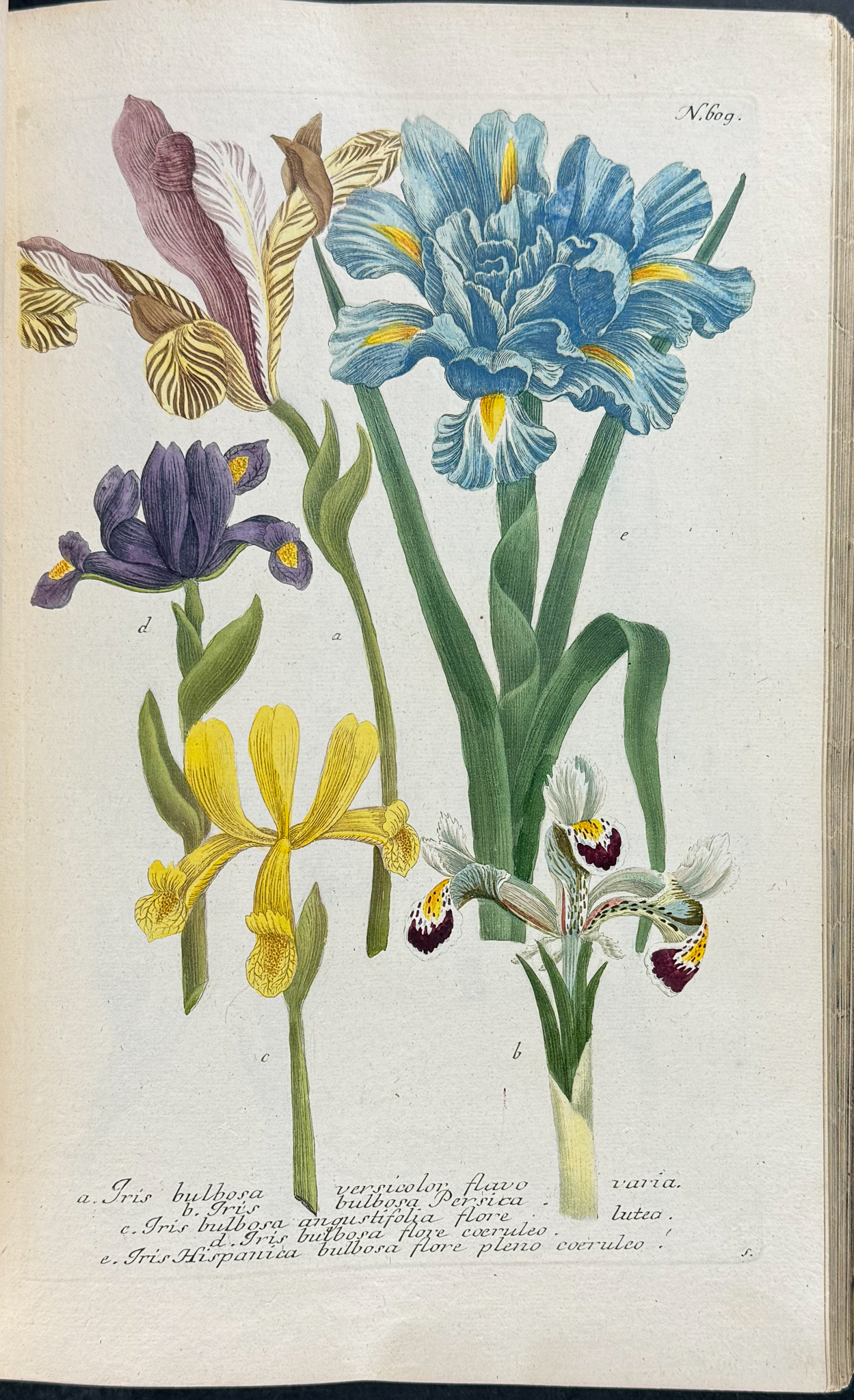
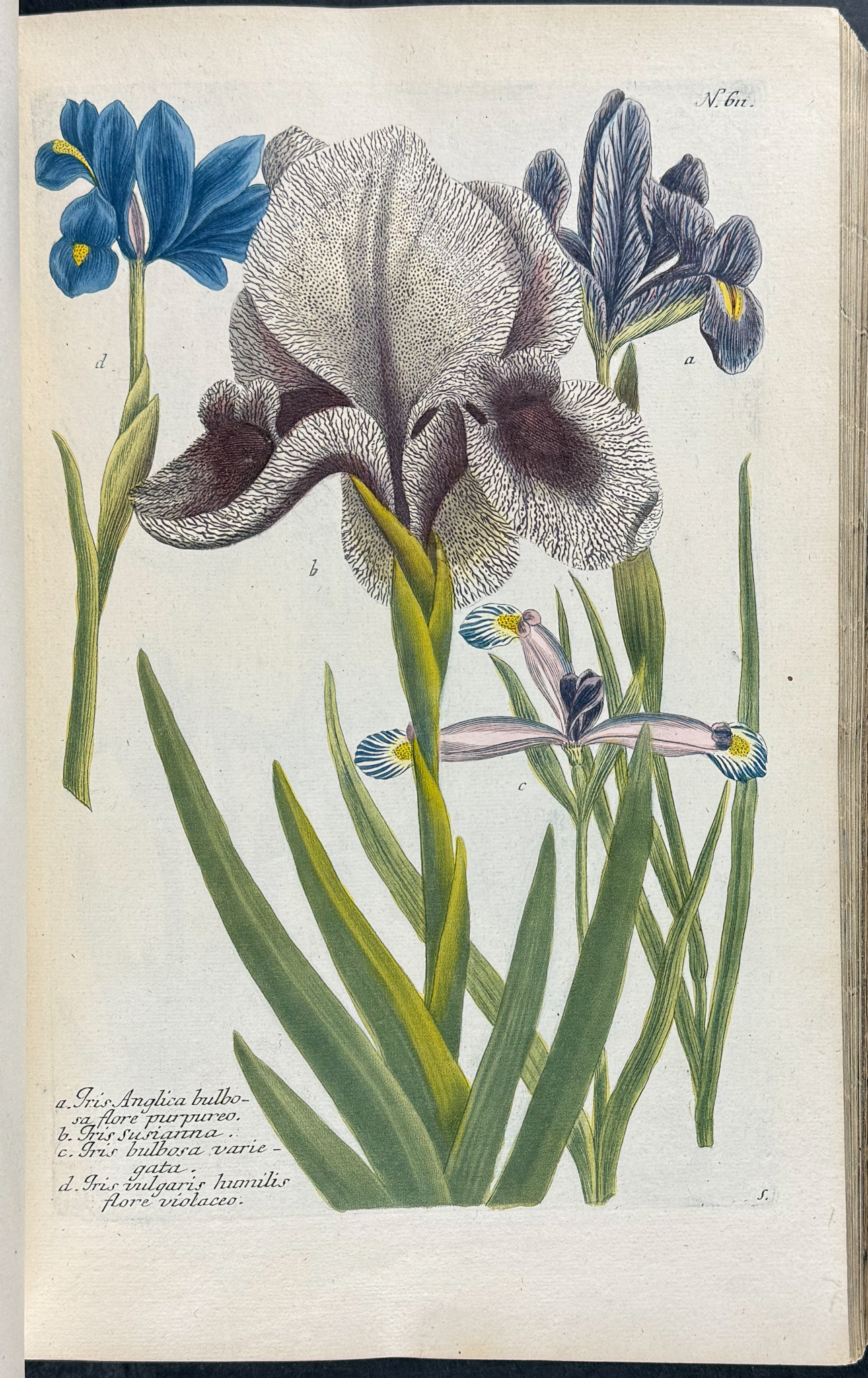
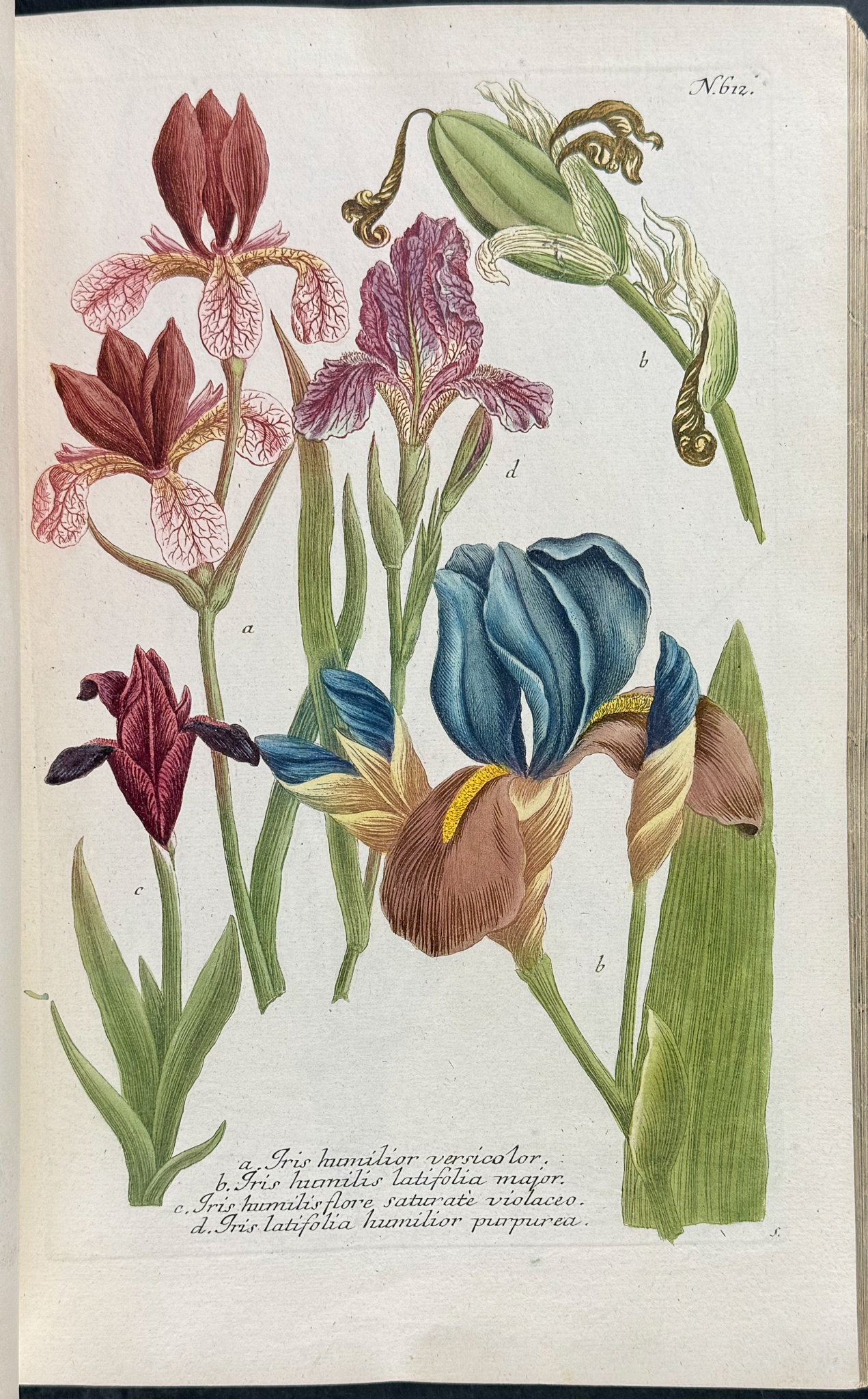
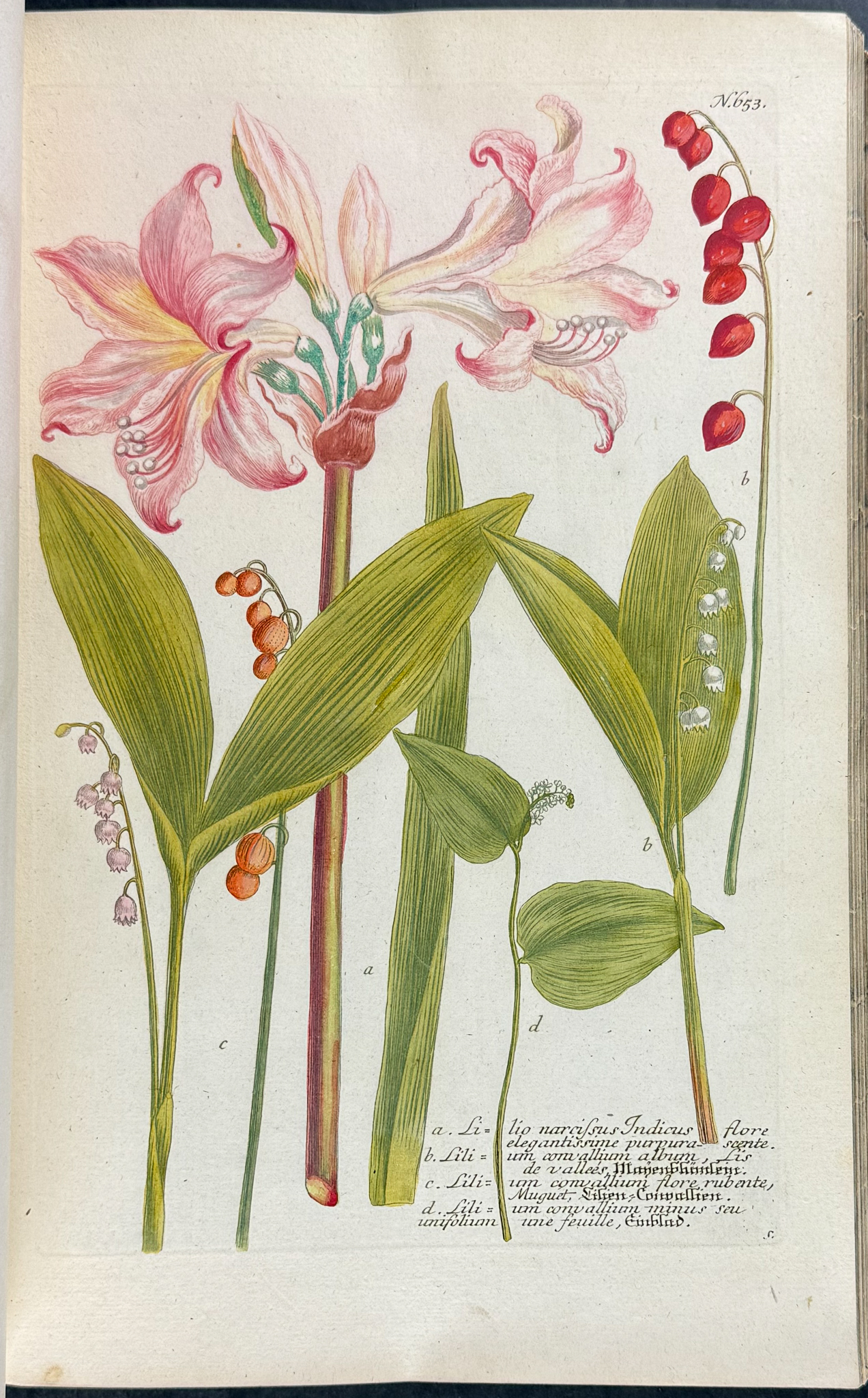
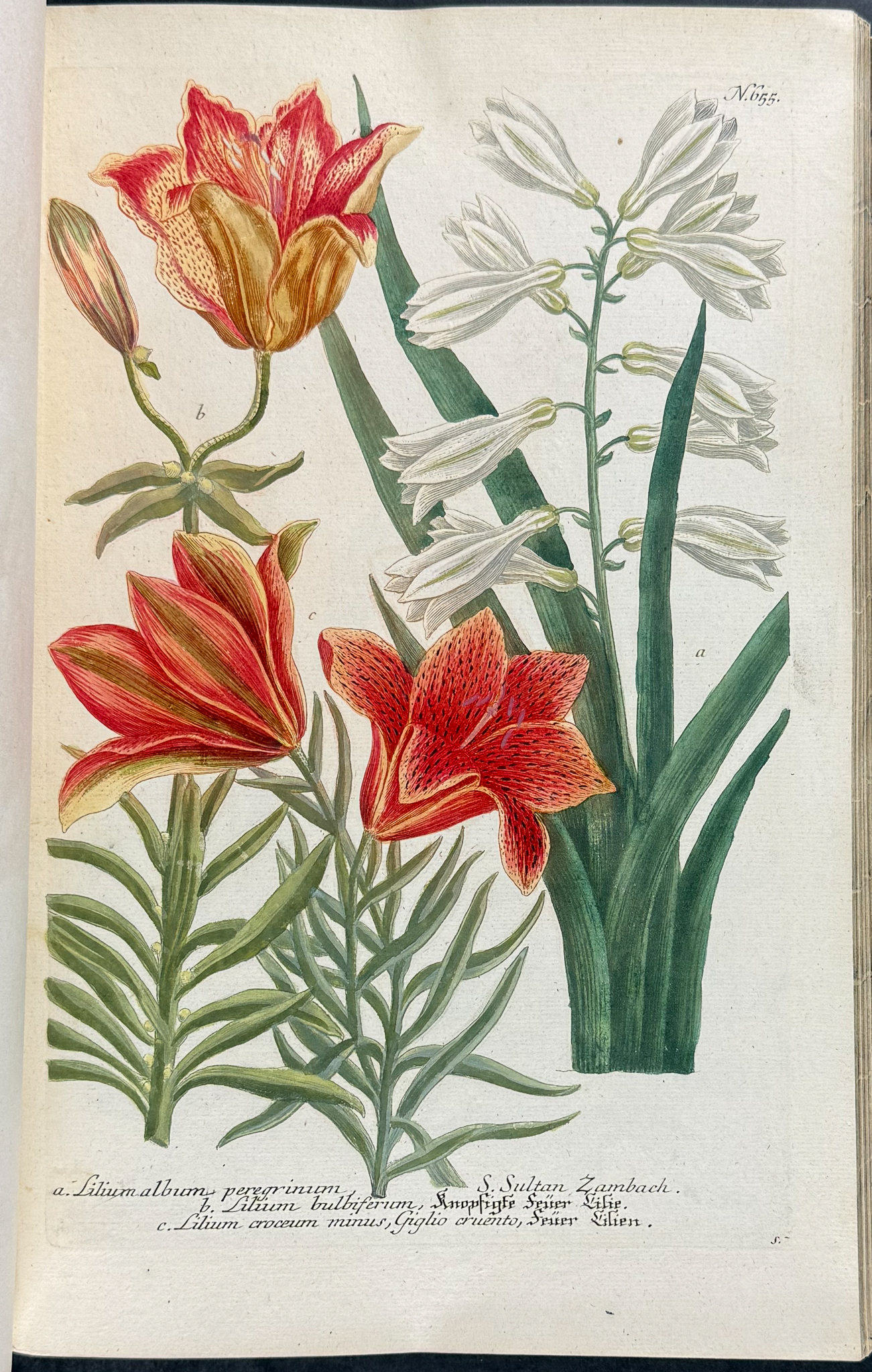
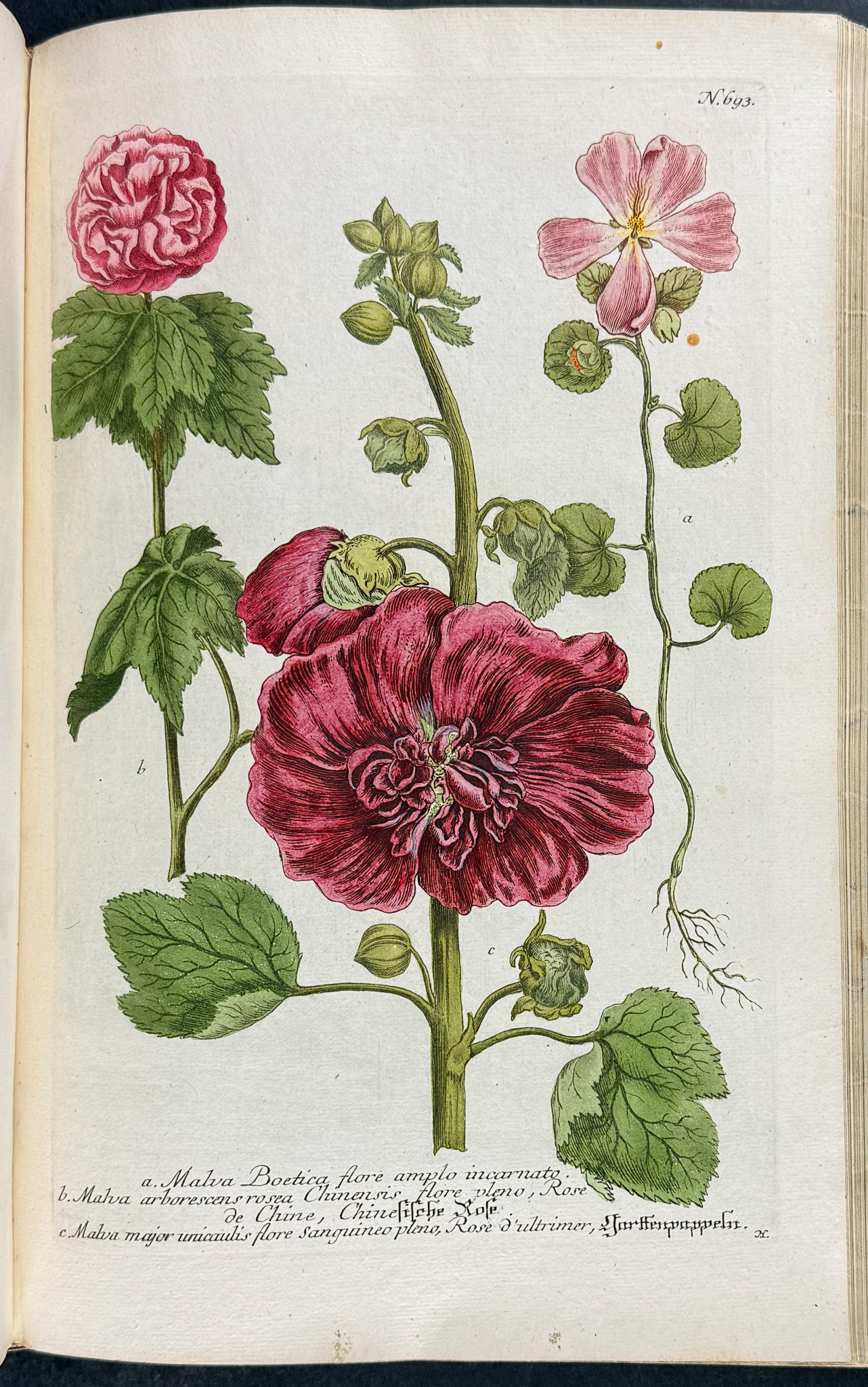
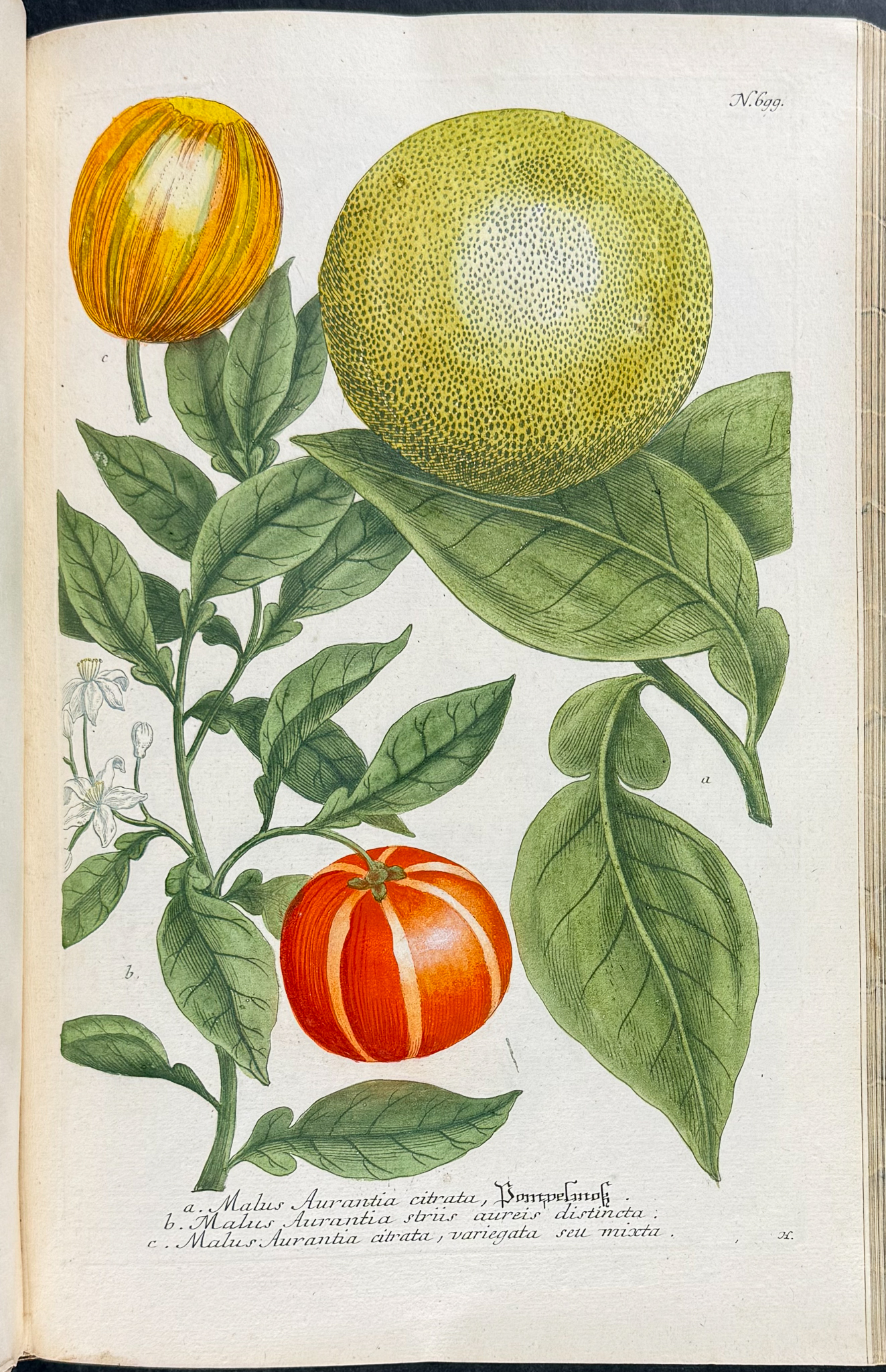
Phytanthoza Iconographia, sive conspectus aliquot millium, tam indigenarum quam exoticarum, ex quatuor mundi partibus… plantarum, arborum, fruticum, florum, fructuum, fungorum, &c. [German title:] Phythanthoza Iconographia, oder eigentliche Vorstellung etlicher Tausend so wohl einheimisch-als ausländischer aus allen vier Welt-Theilen, in Verlauf vieler Jahr mit unermüdetem Fleisz… Pflanzen, Baüme, Stauden, Kraüter, Blumen, Früchte und Schwämme… The work was published between 1737 and 1745 in Regensberg by H. Lentzen with vol 4 published by H. G. Neubauer.
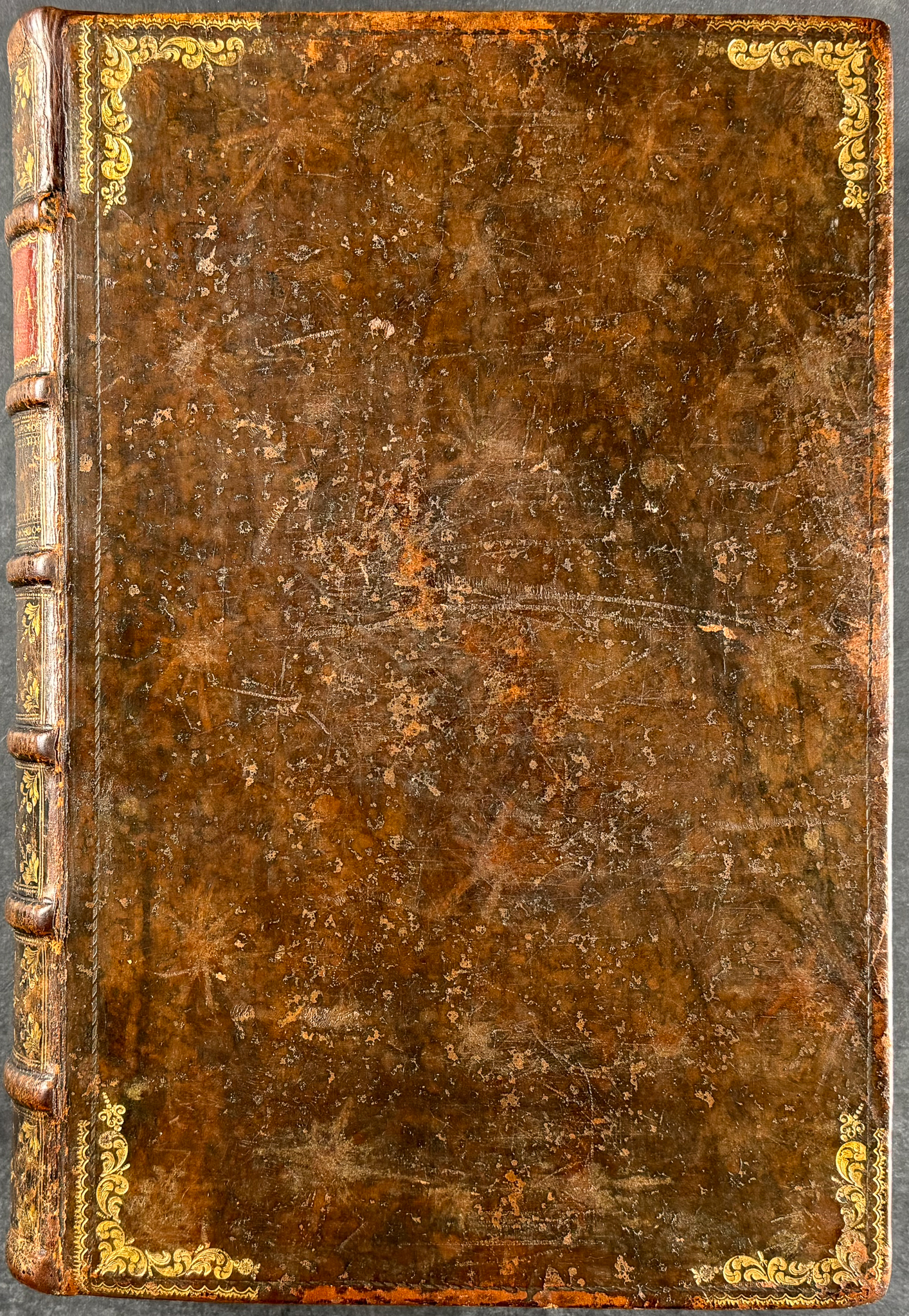
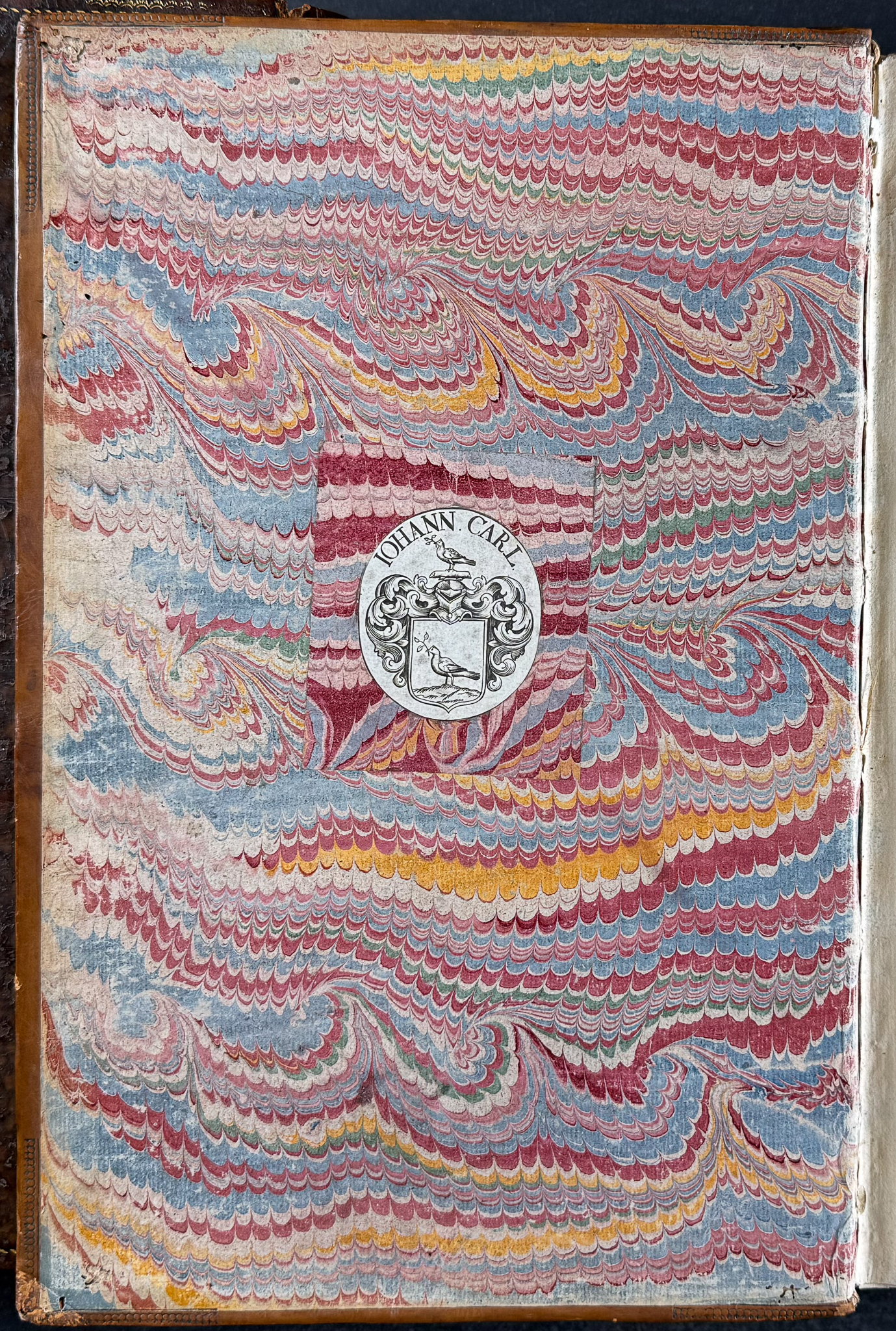
This is perhaps the finest we’ve seen this particular work without the foxing or toning that can be common to the plates. Attractively bound in contemporary German binding.
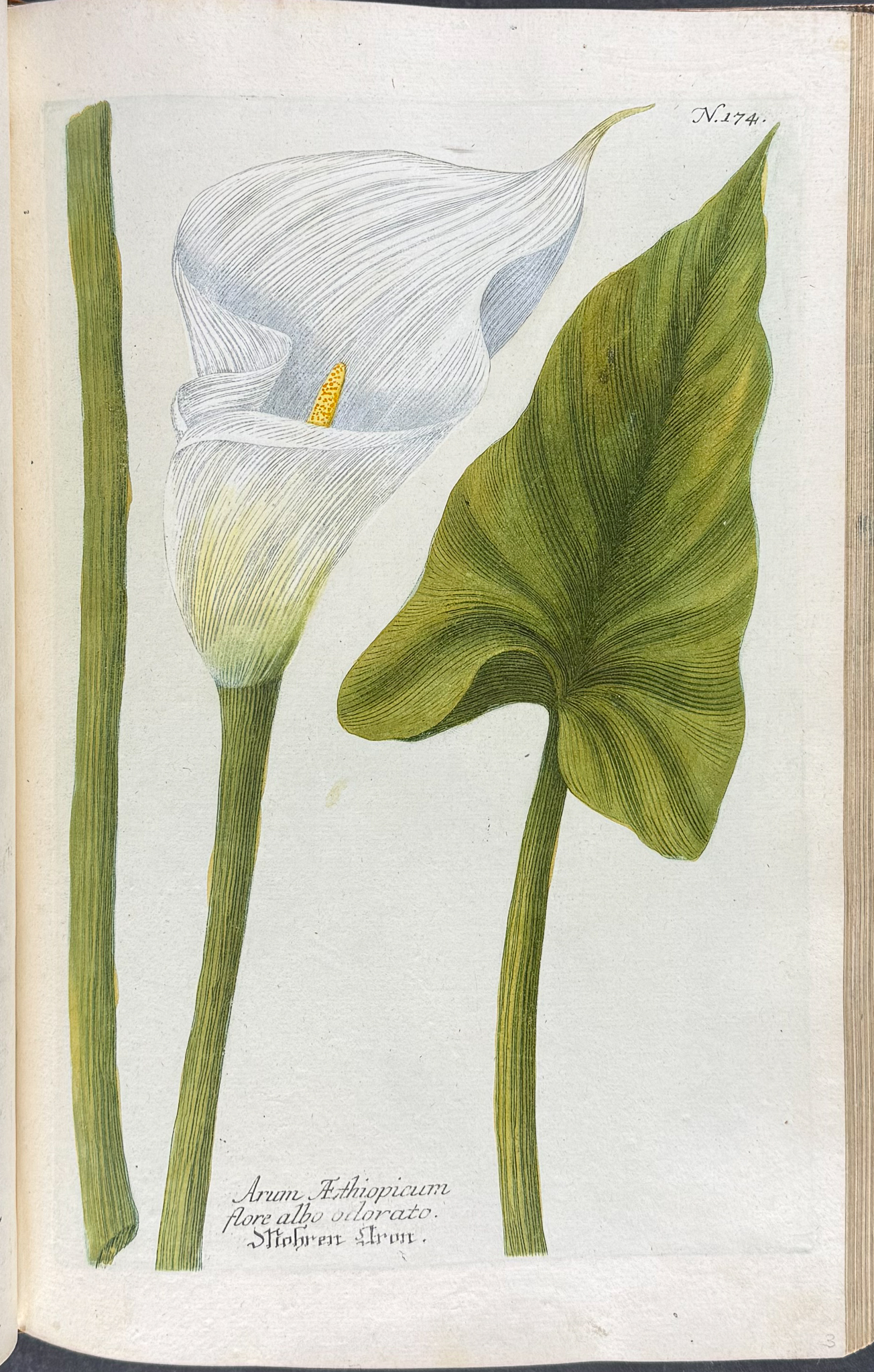
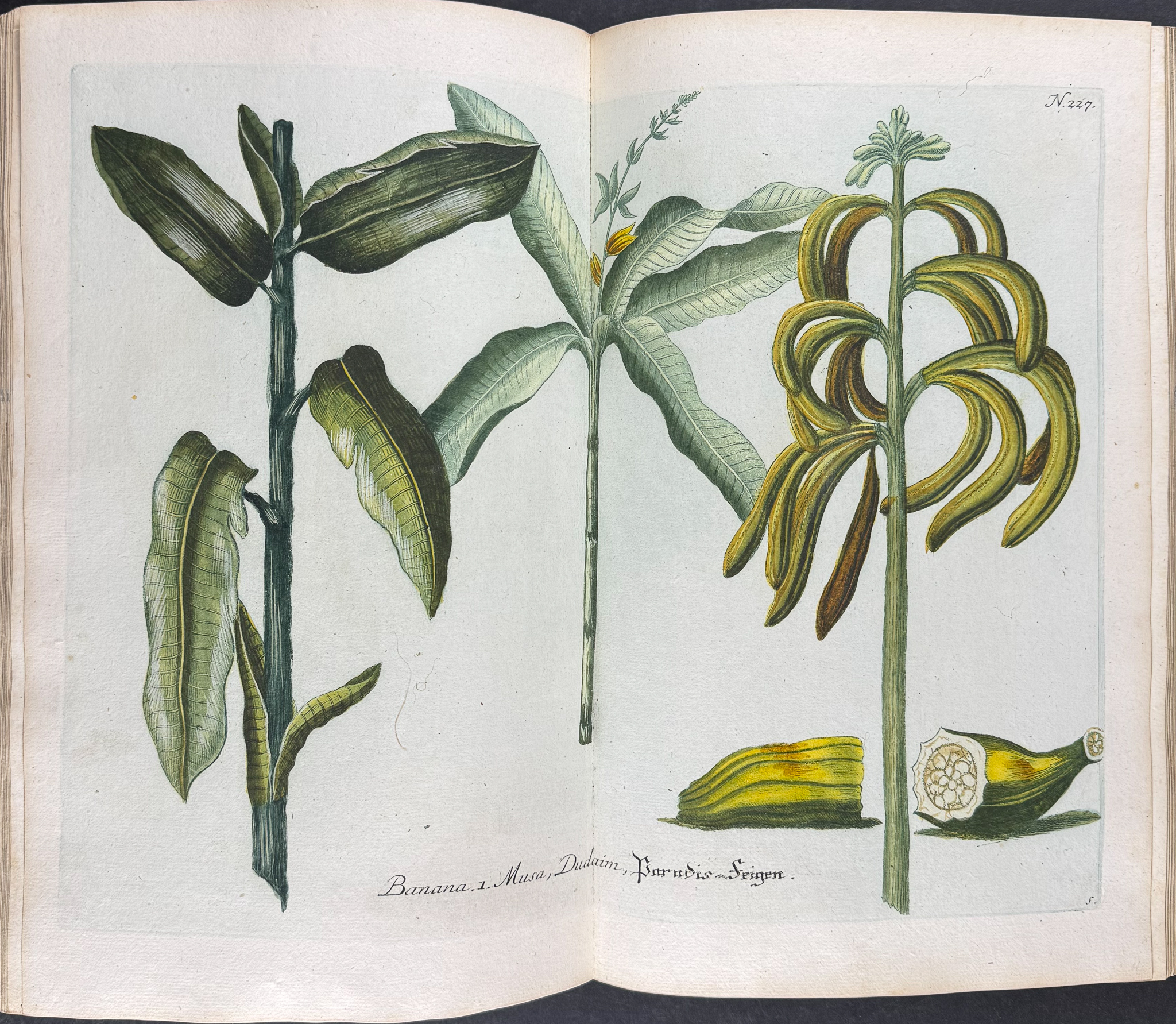
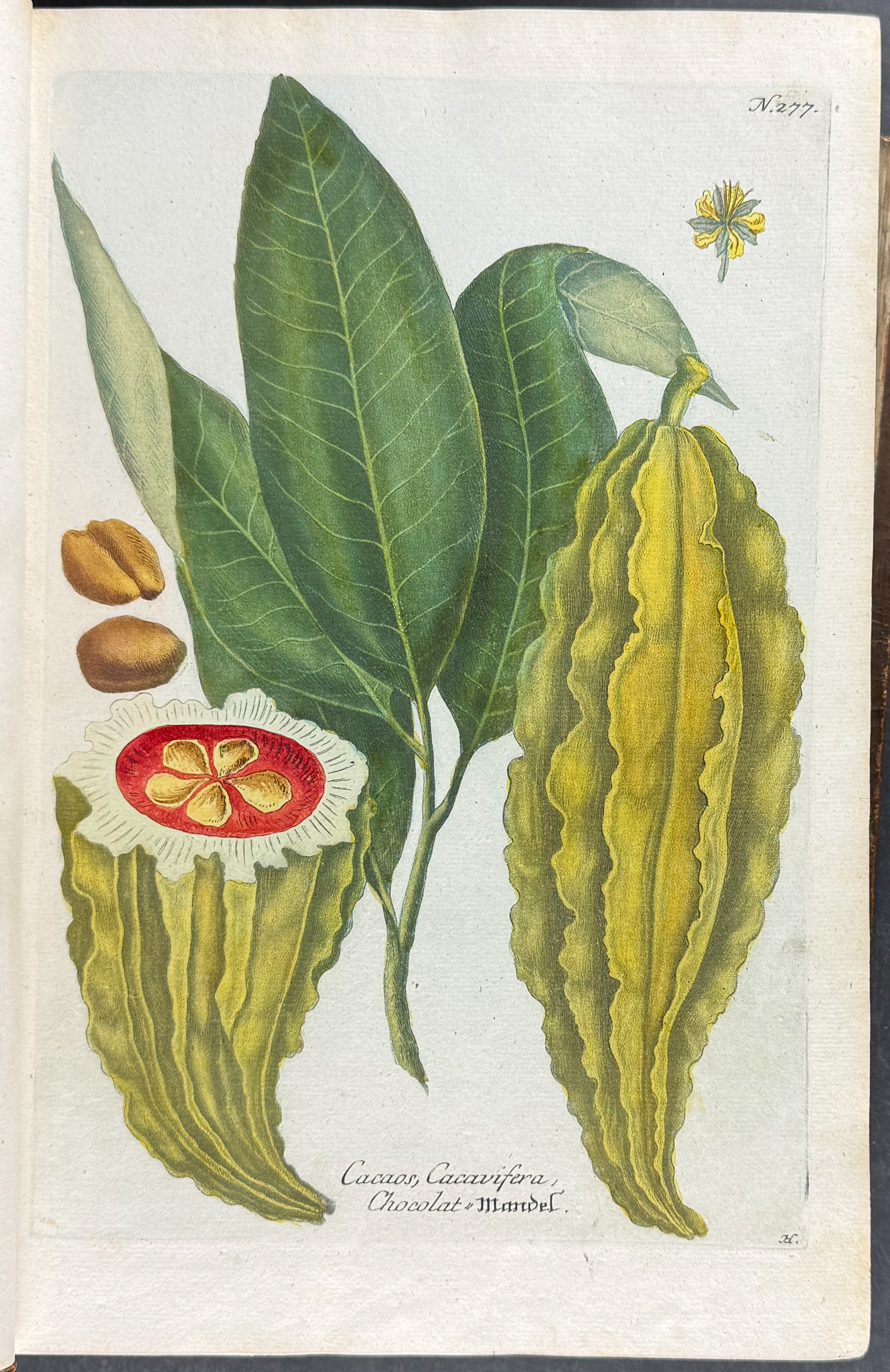
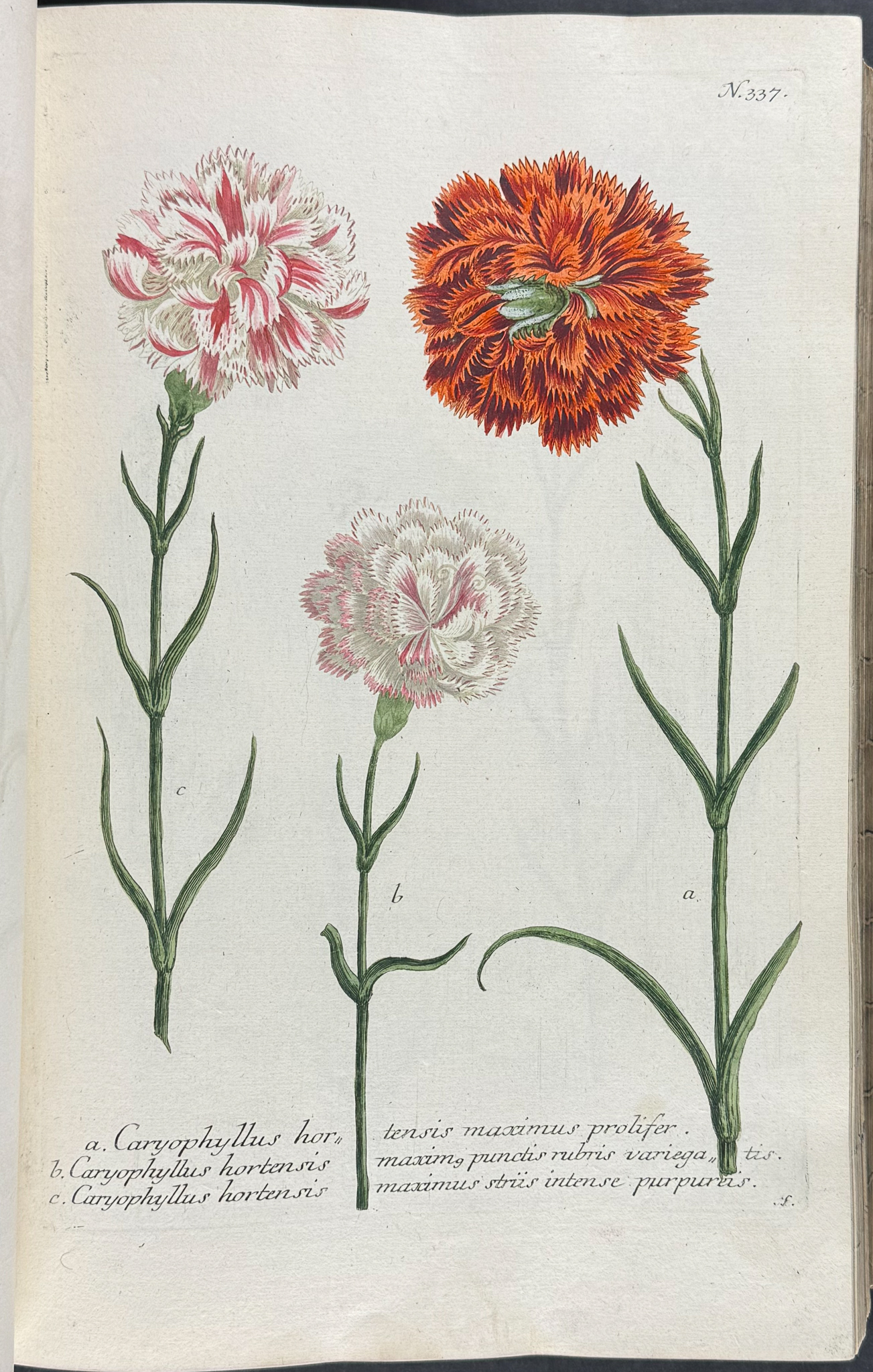
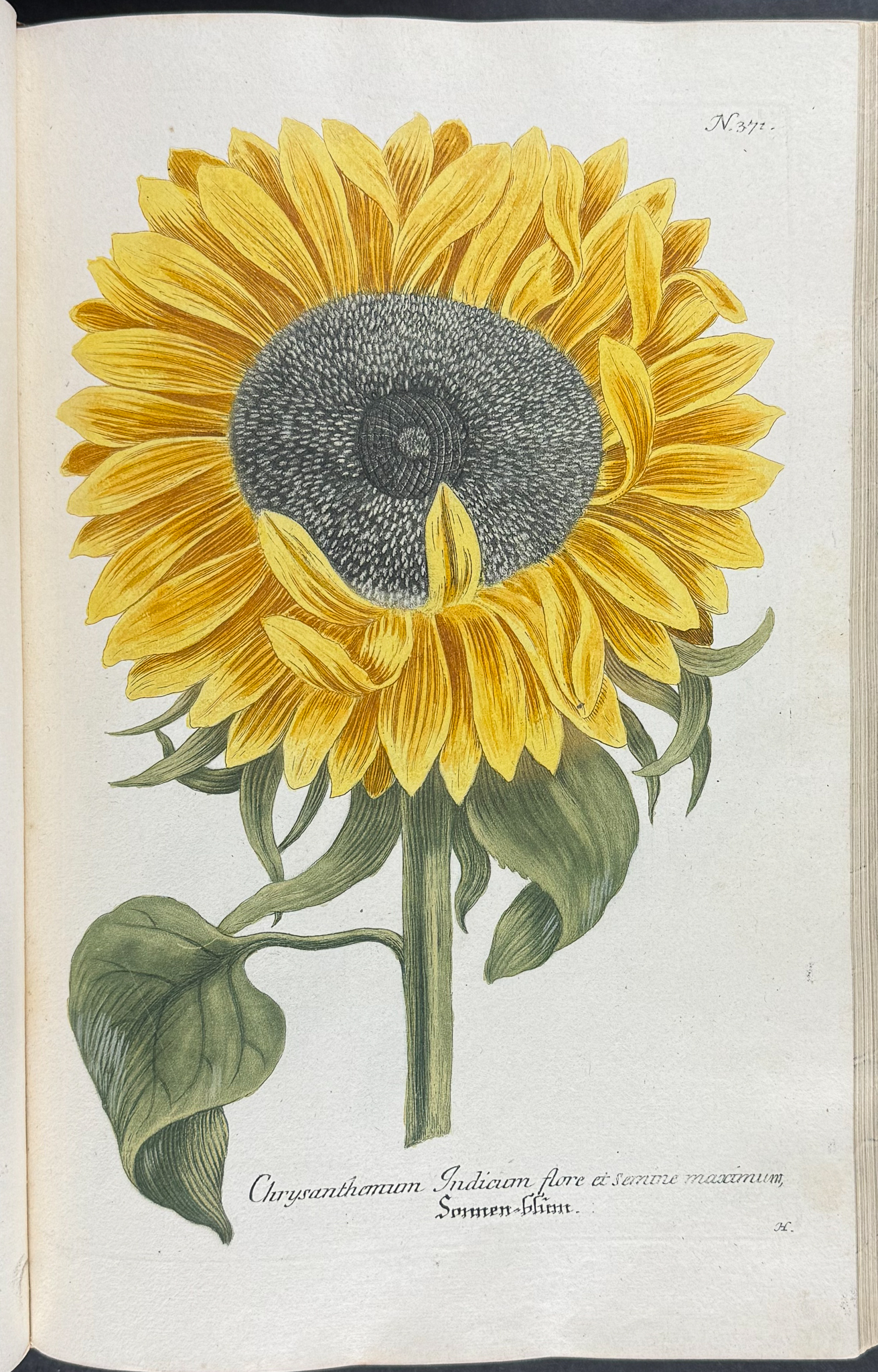
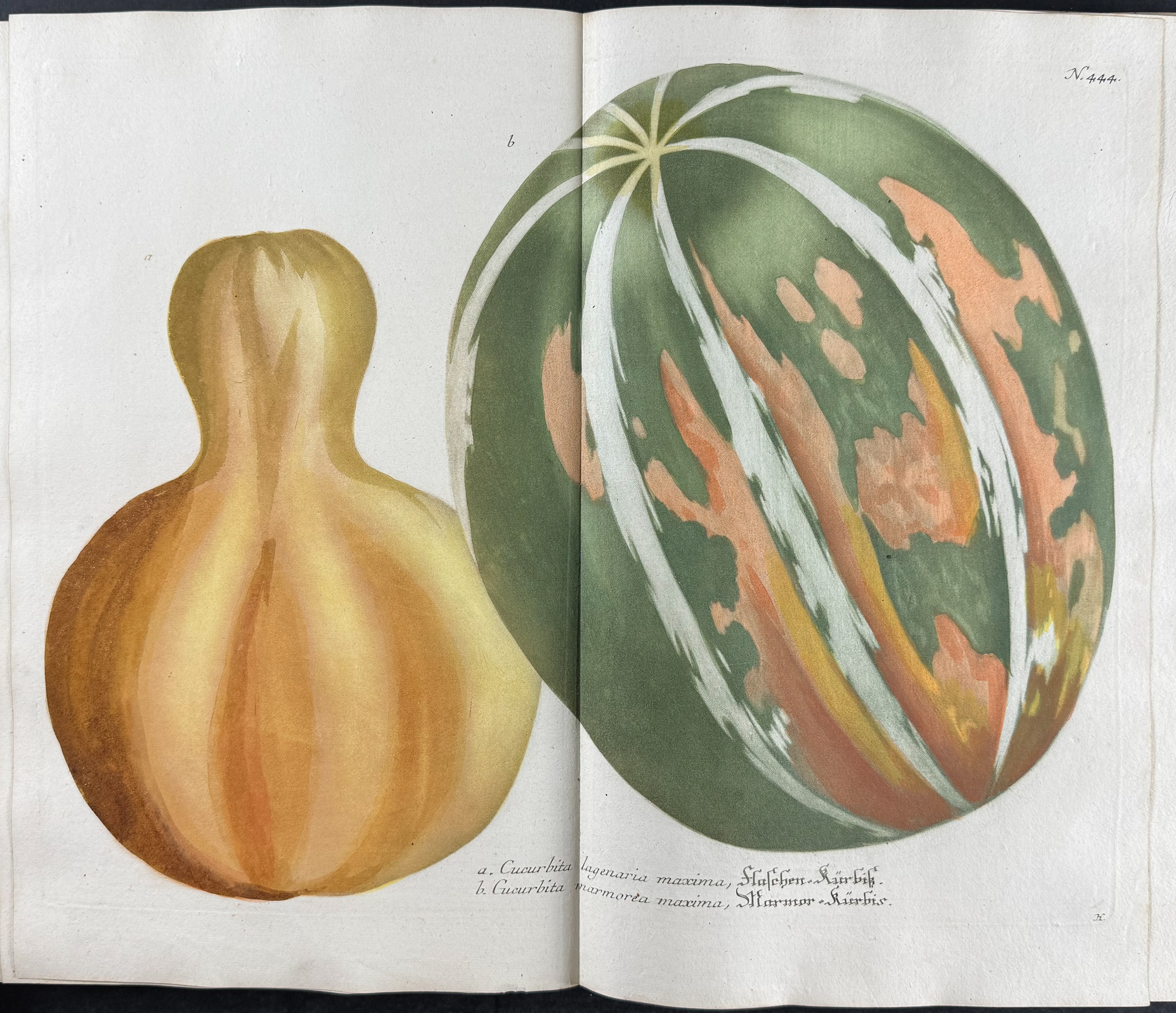
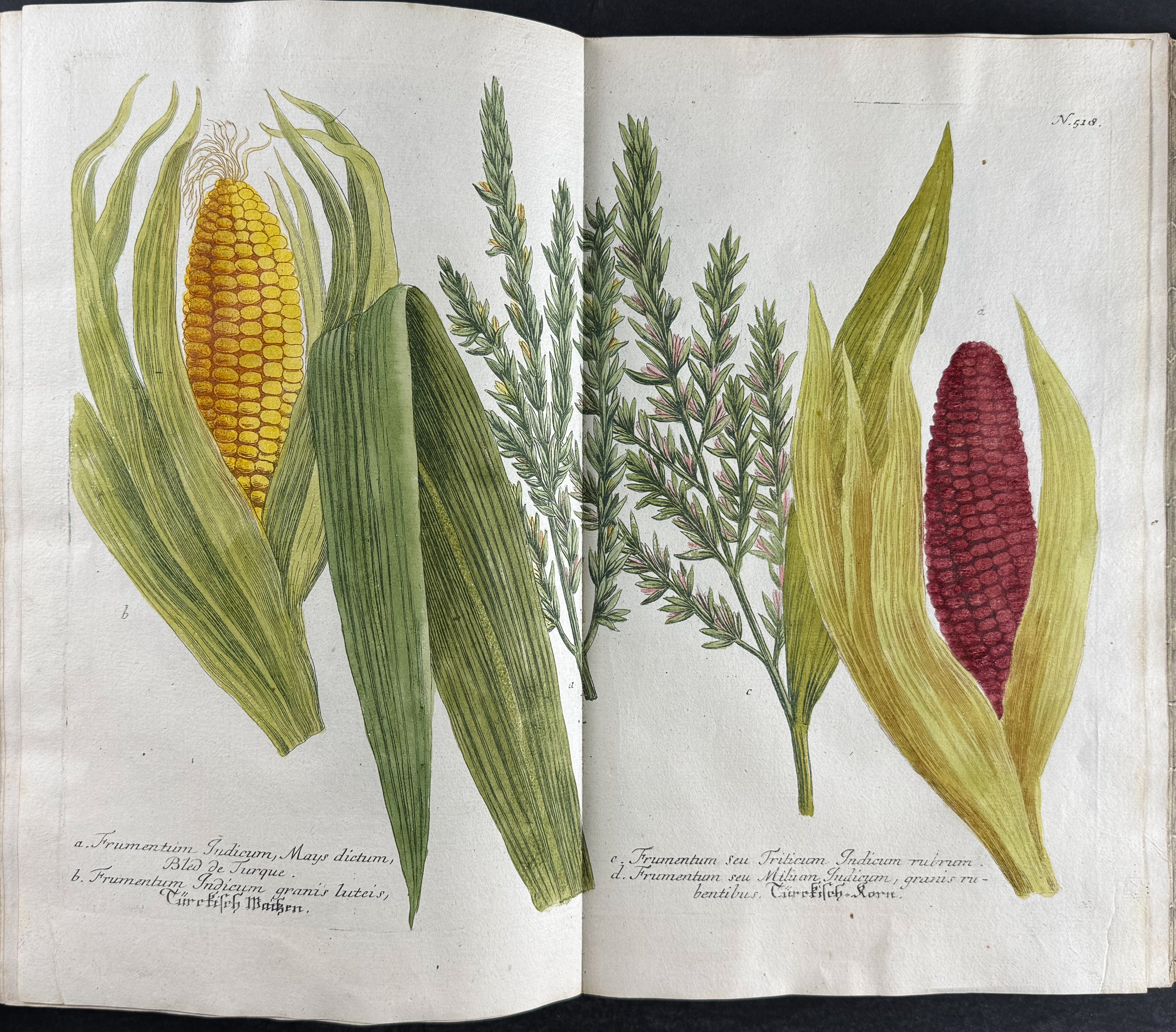
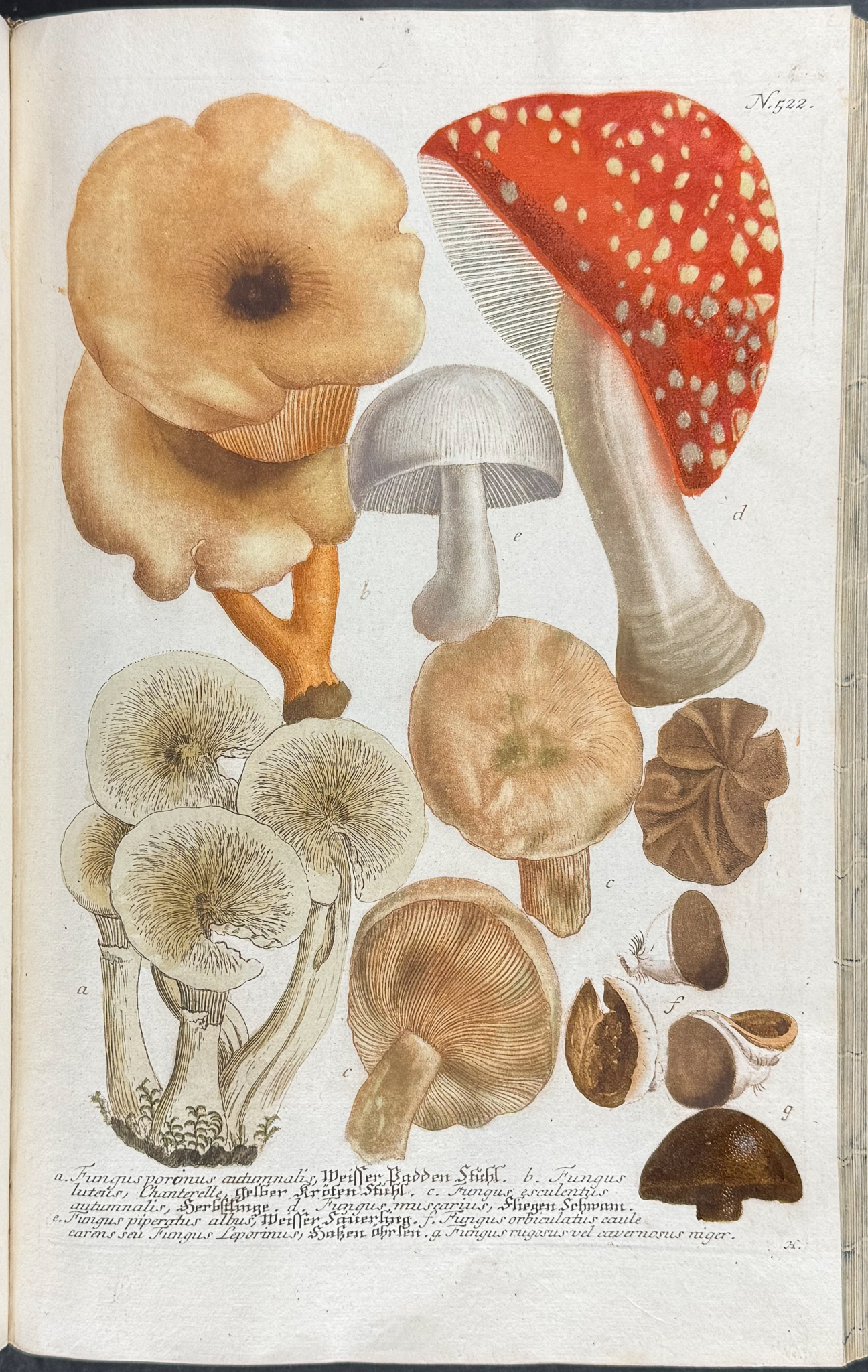
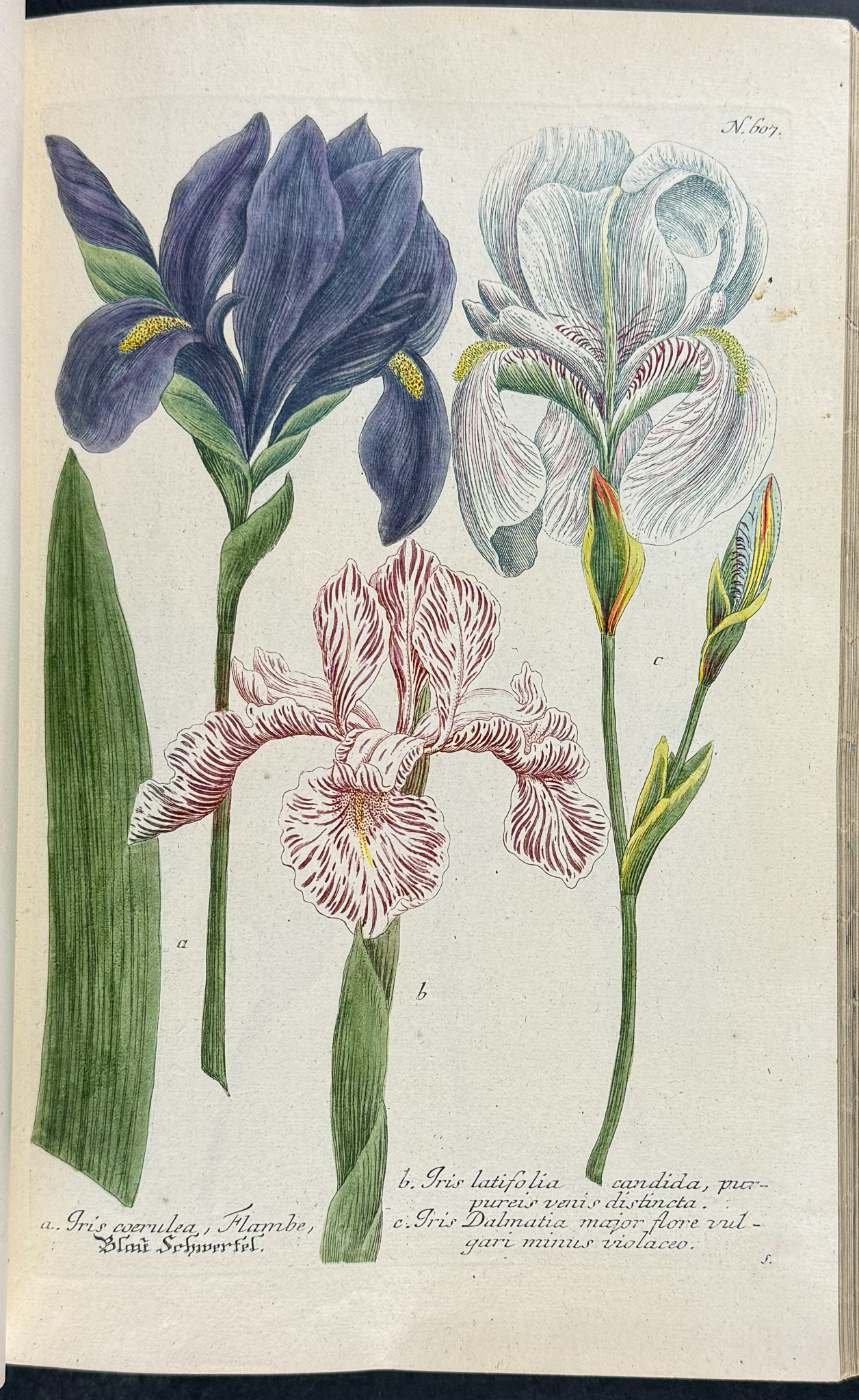
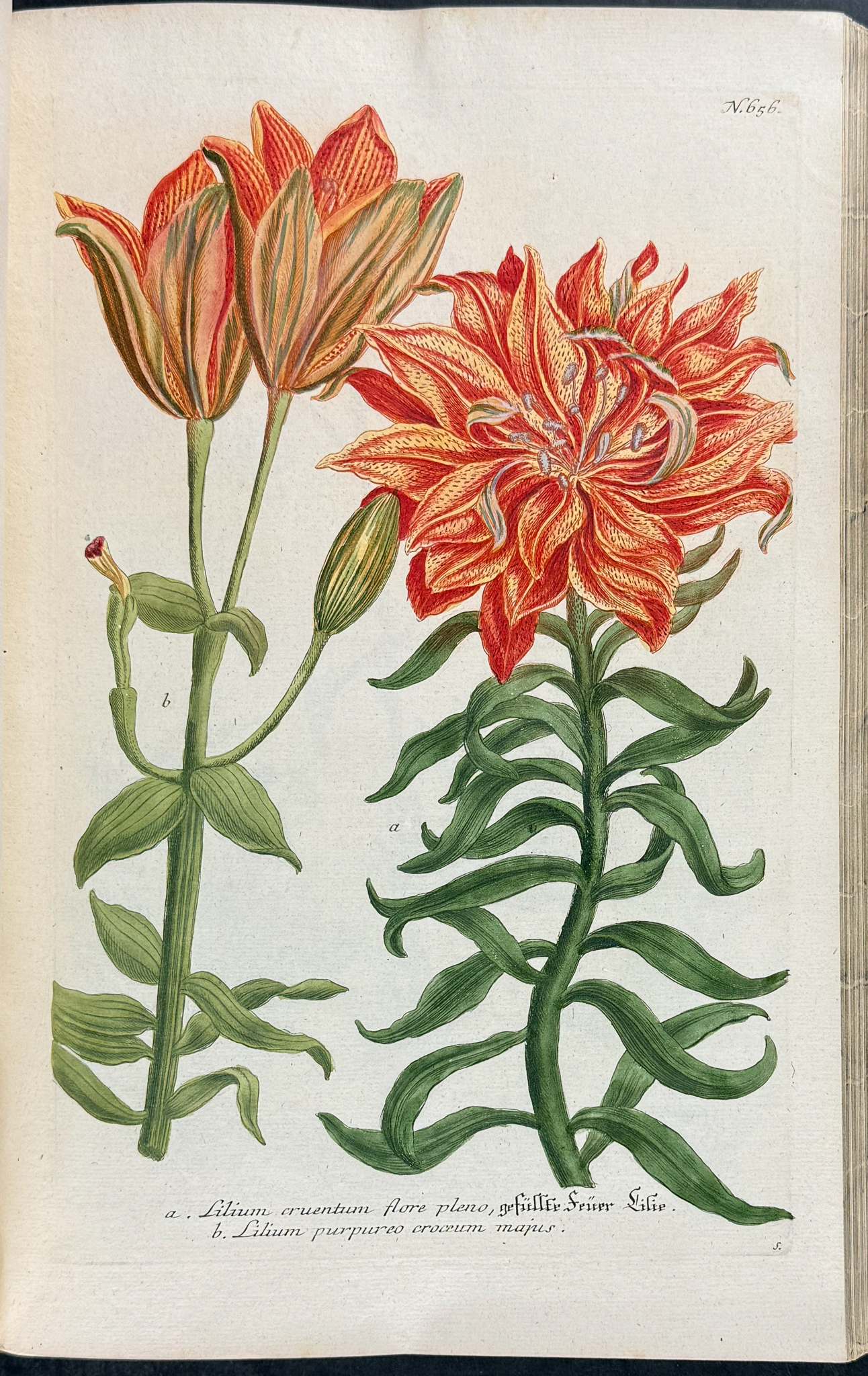
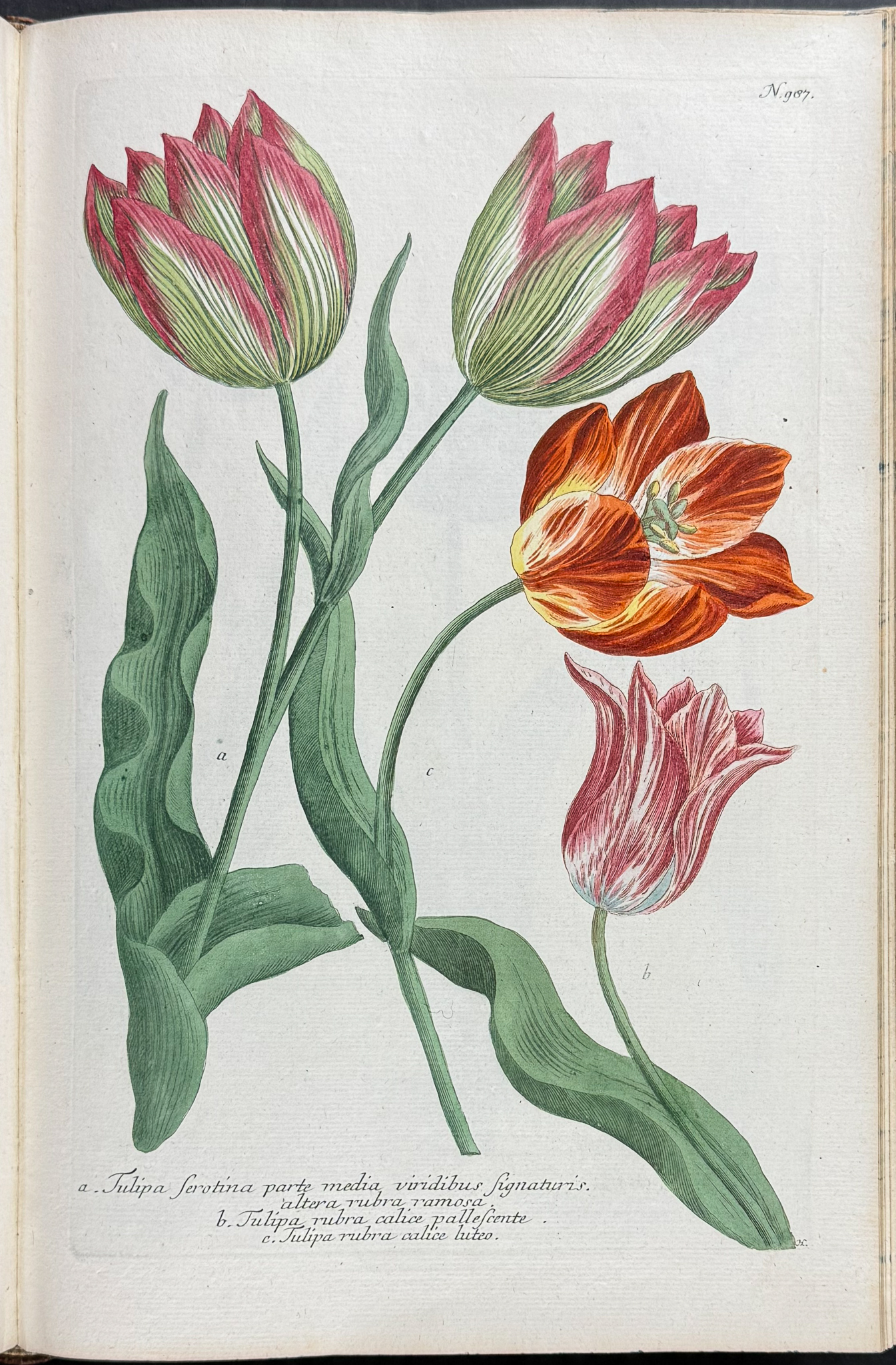
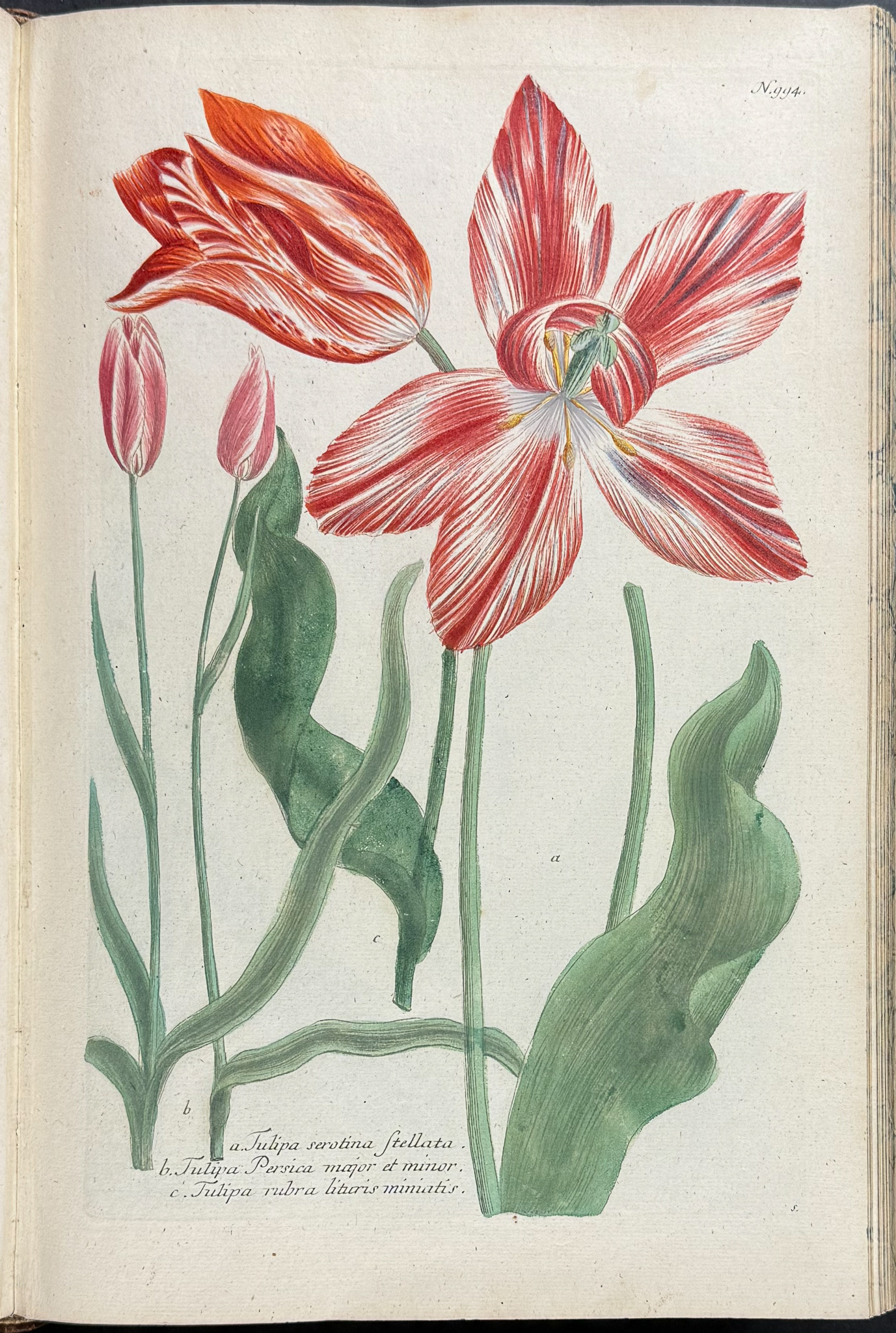
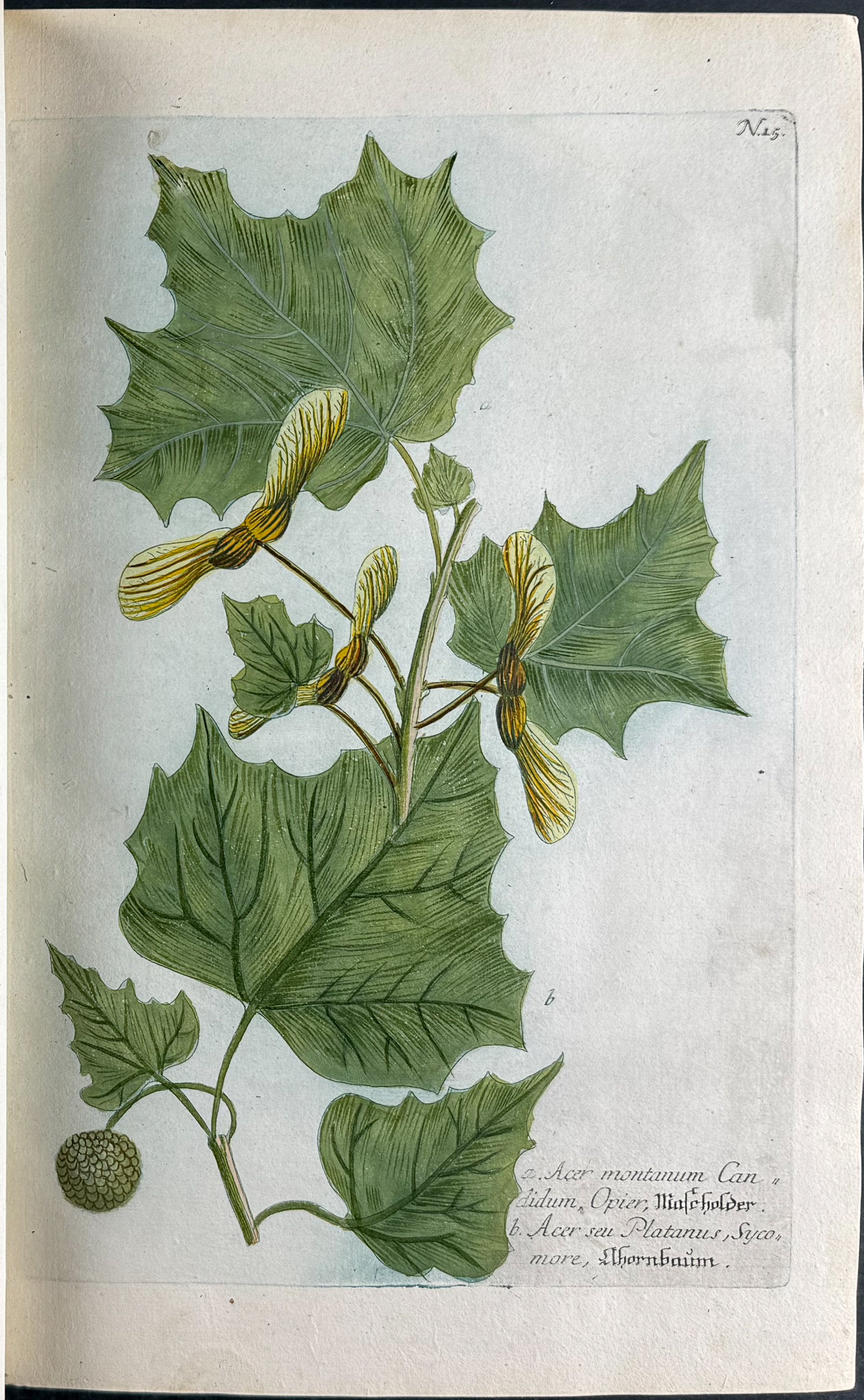
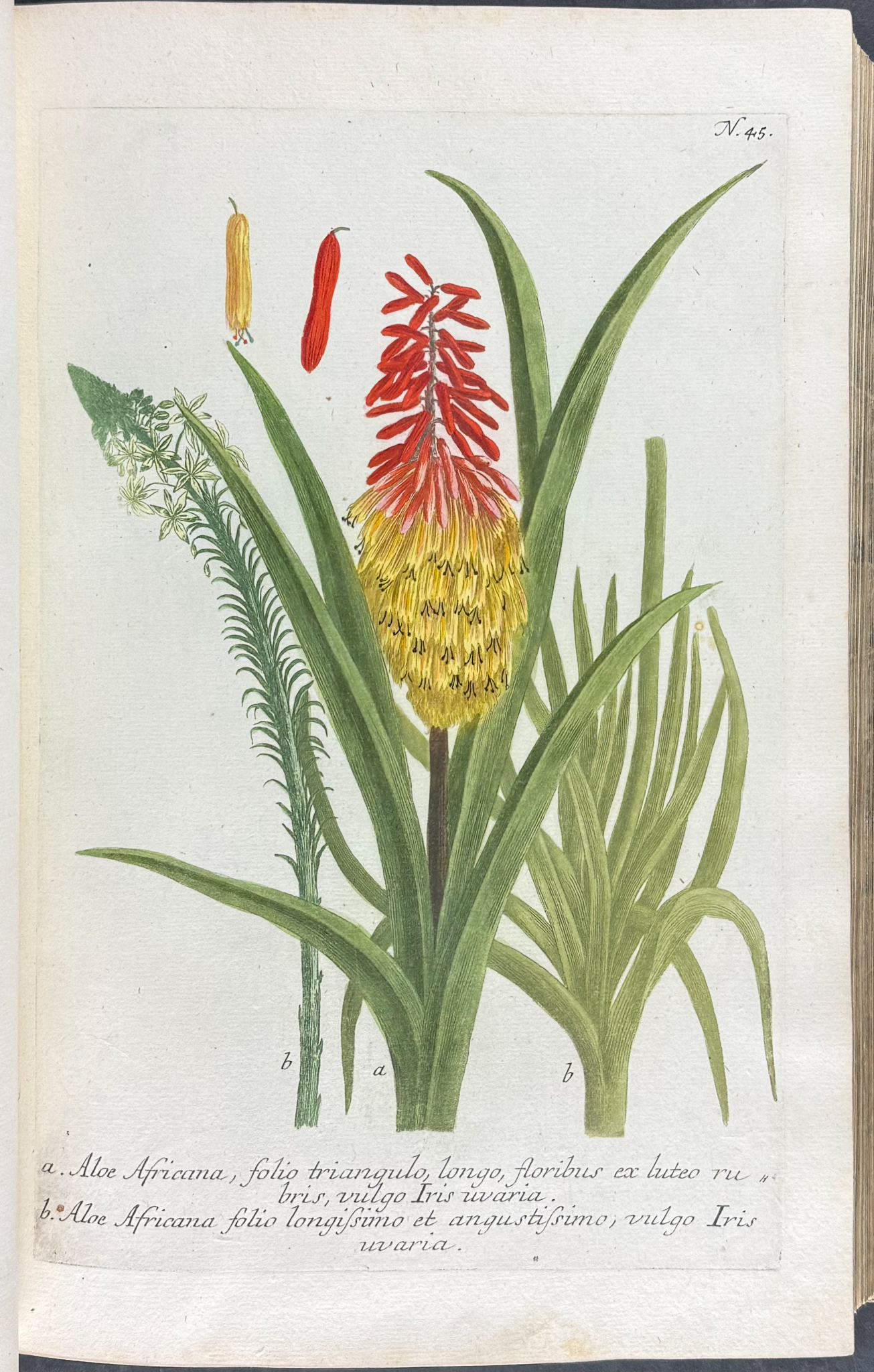
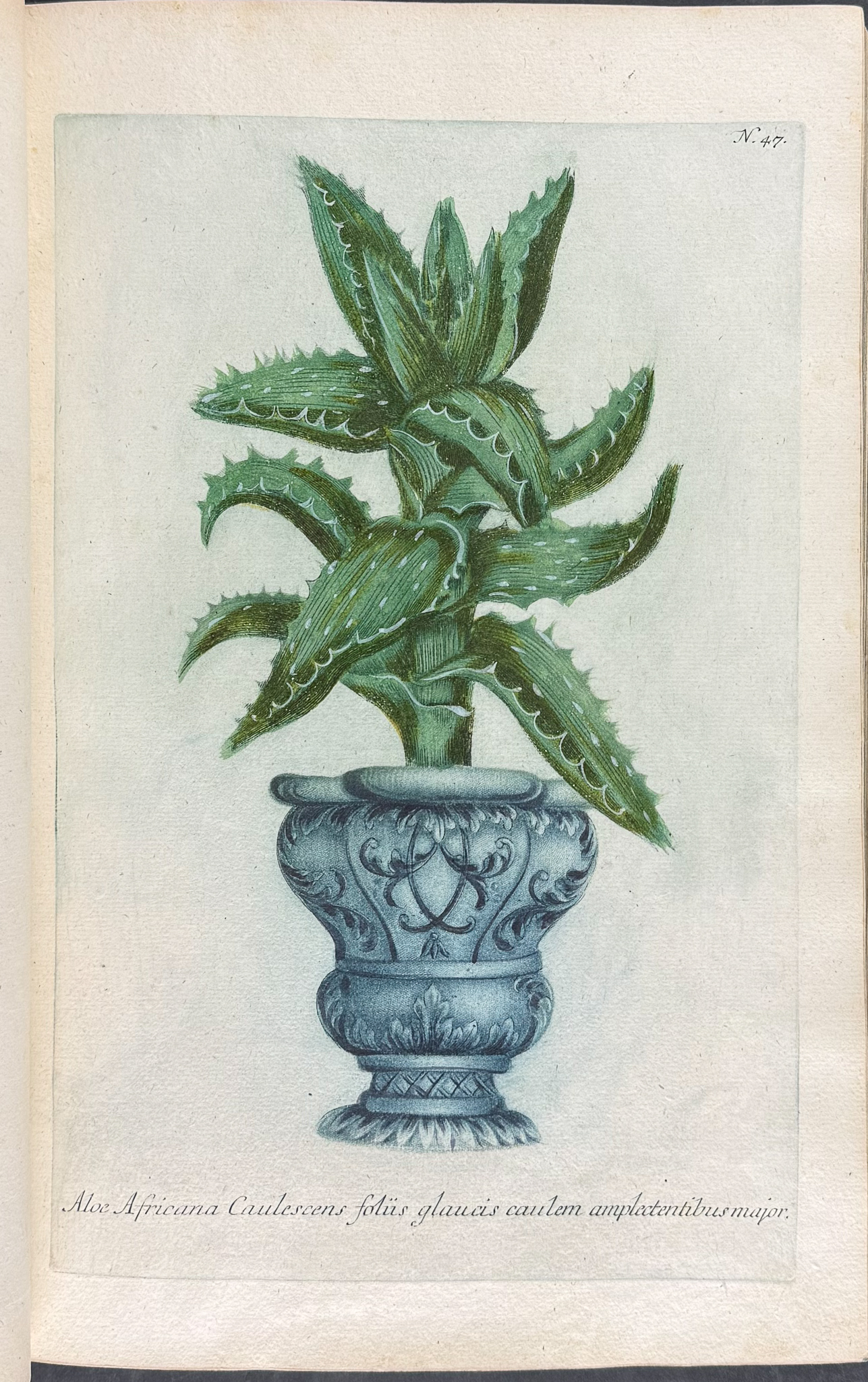
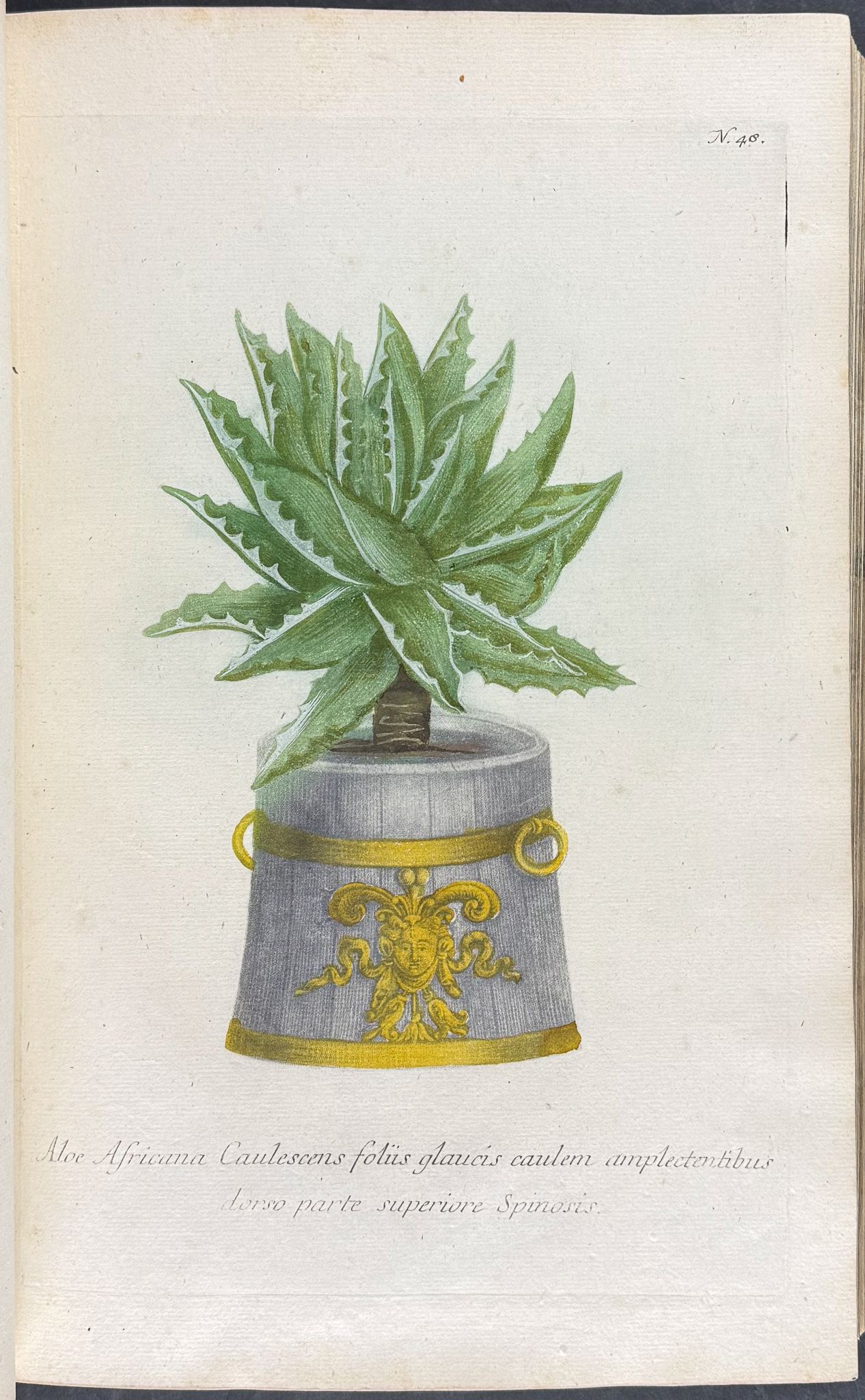
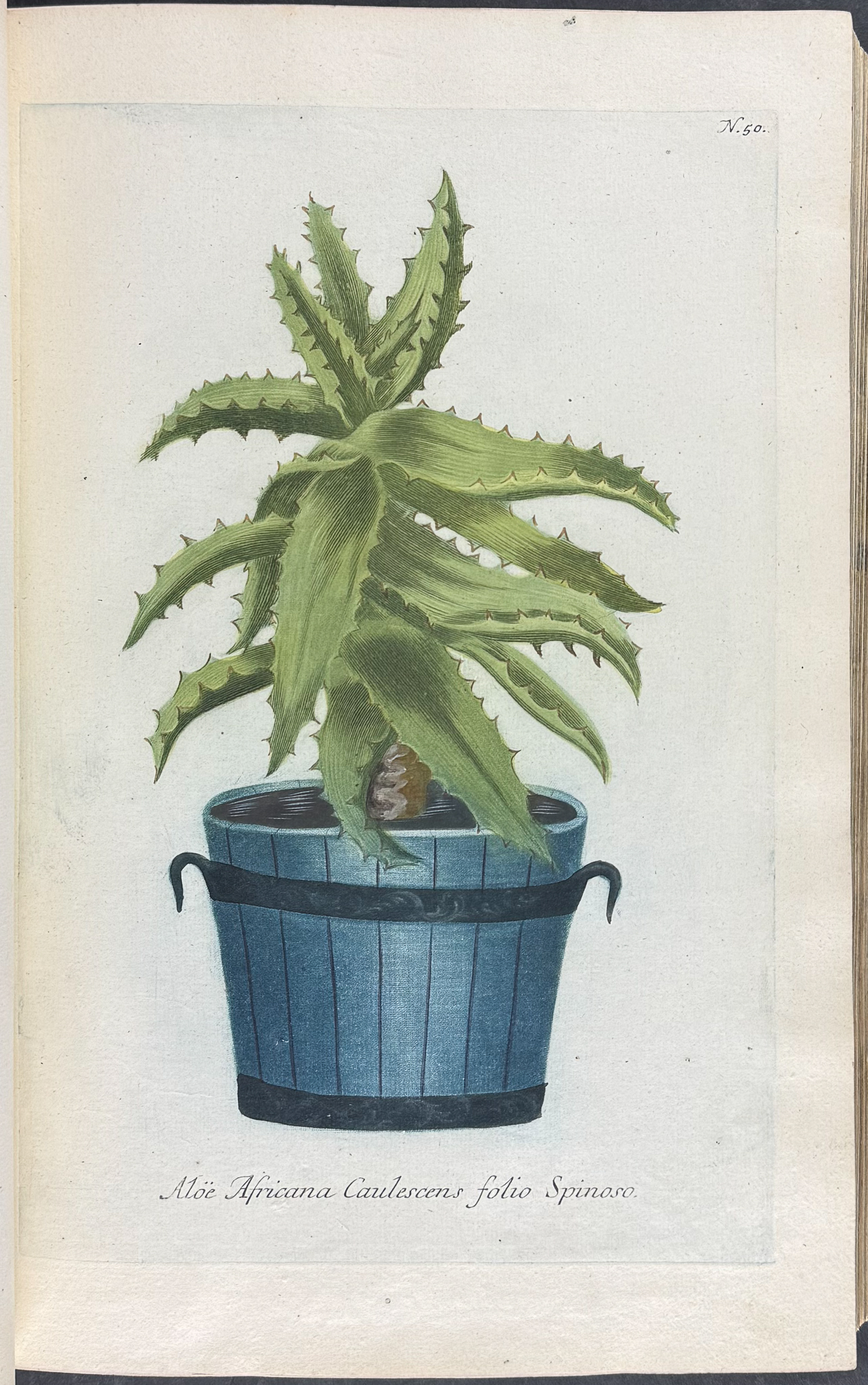
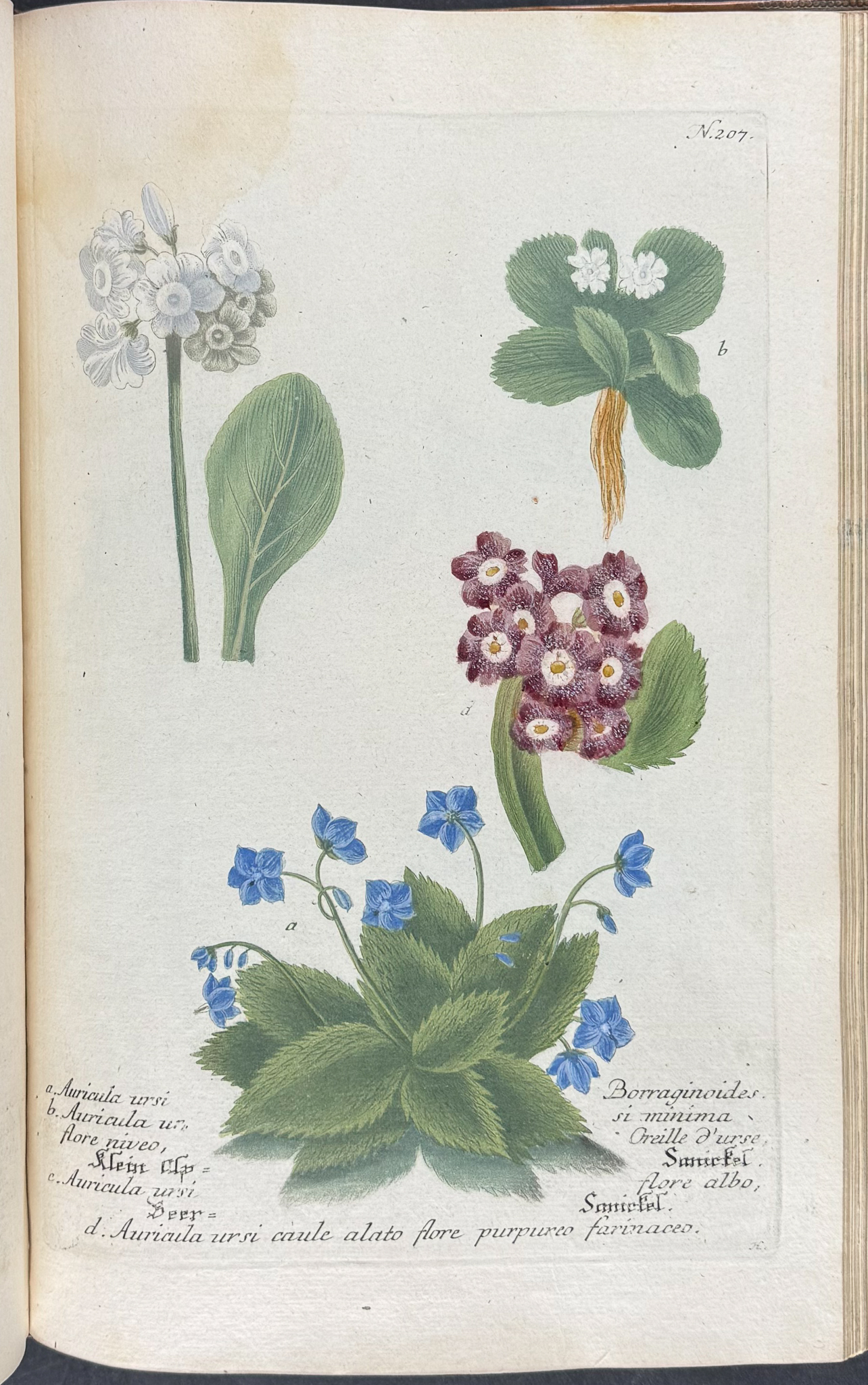
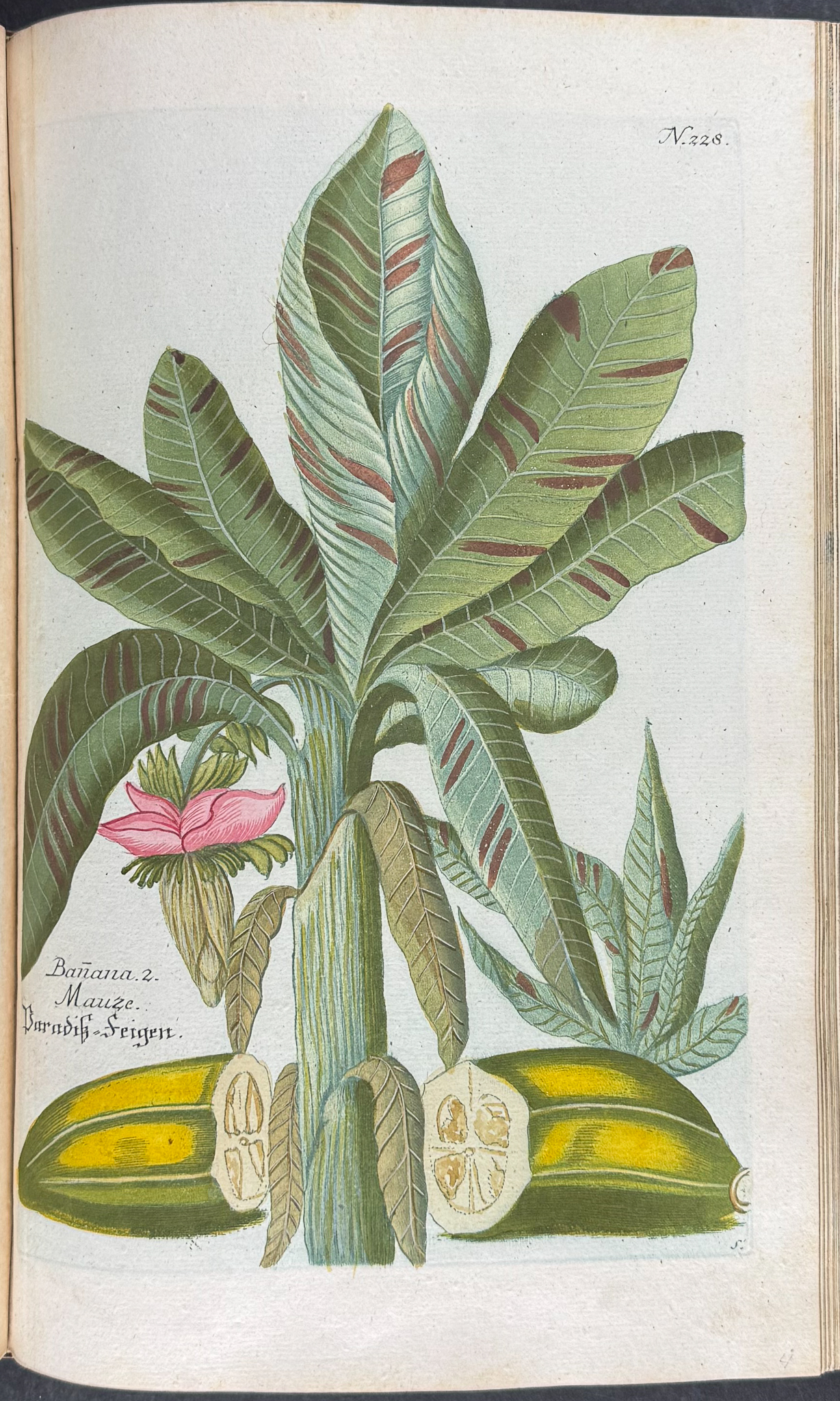
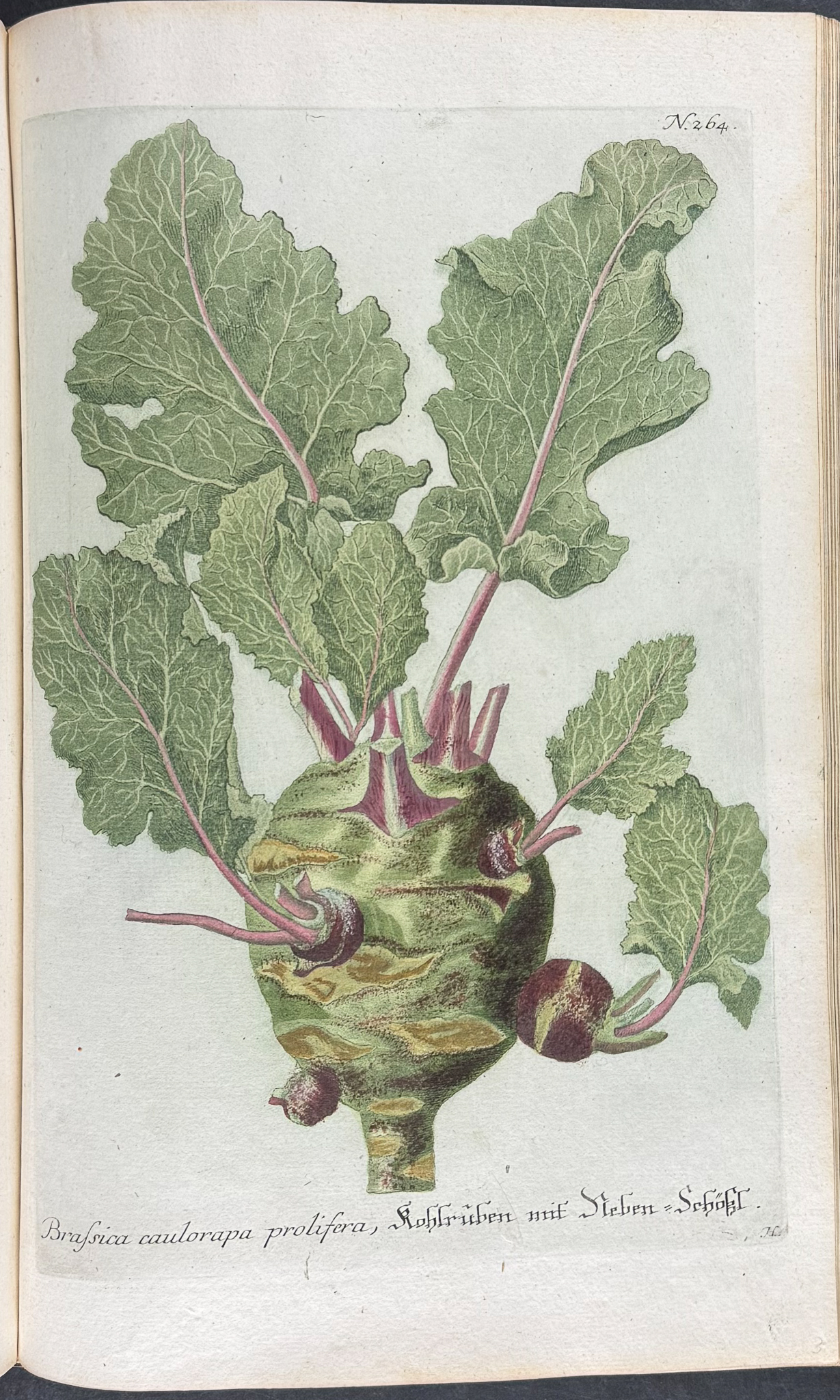
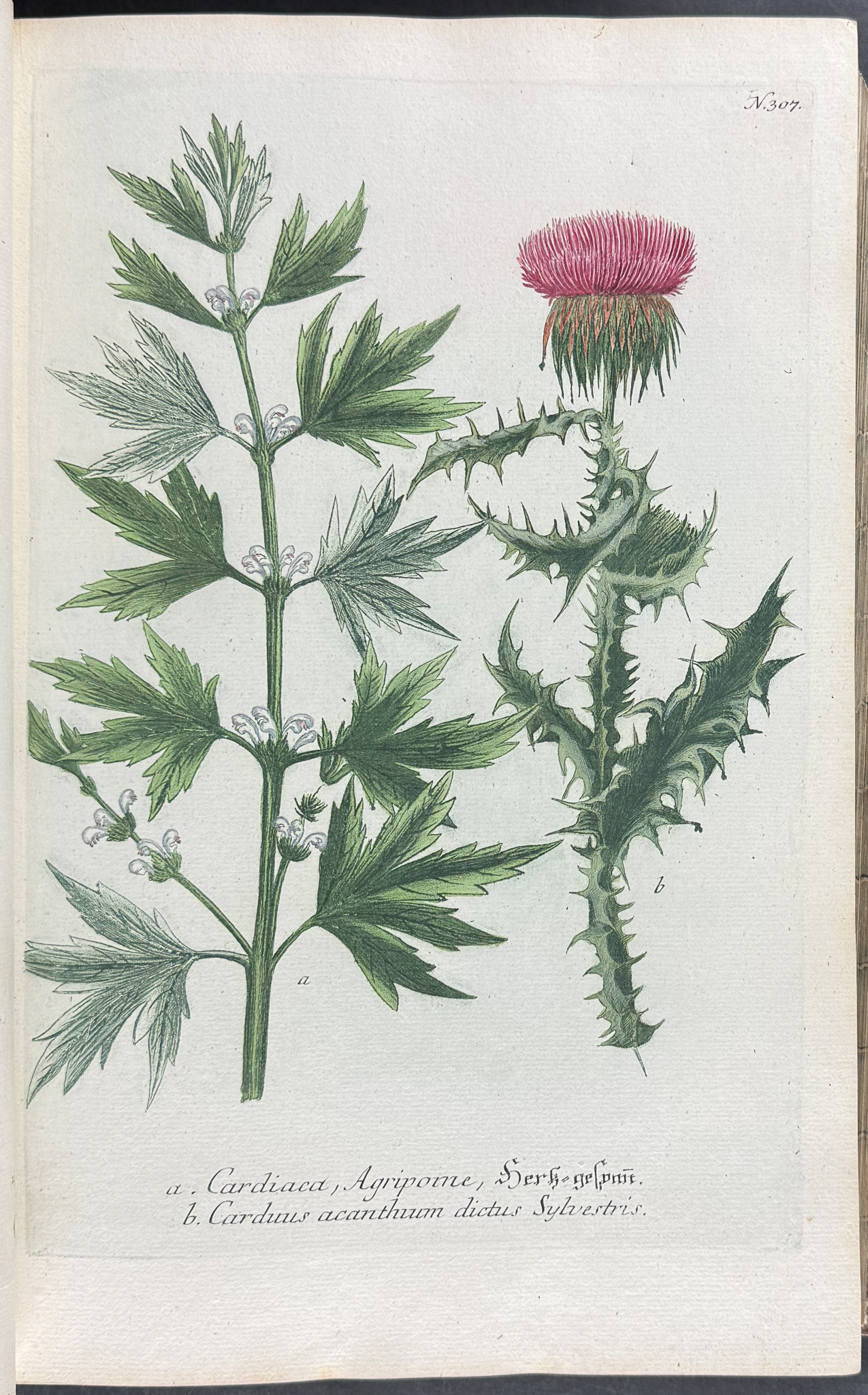
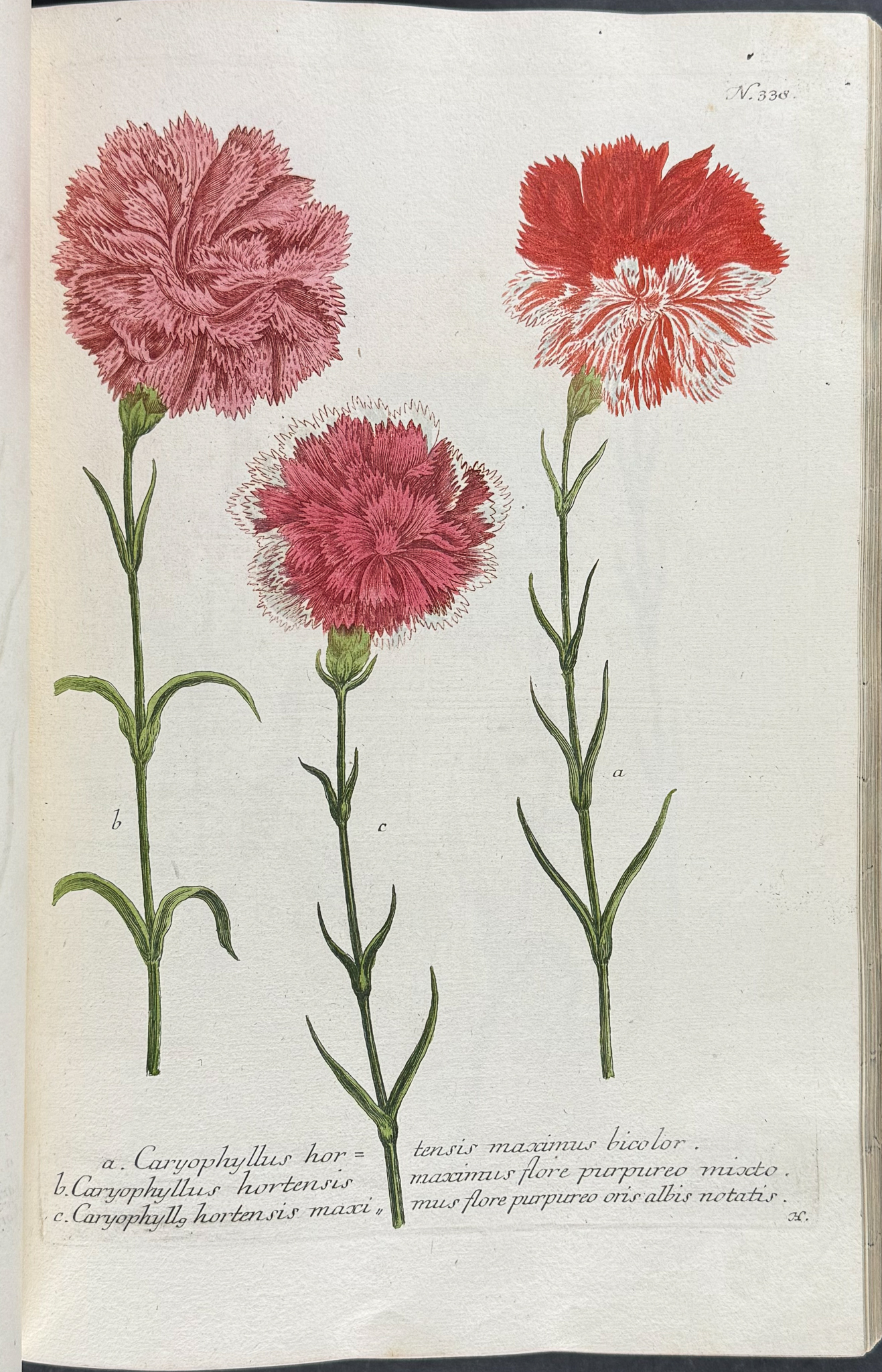
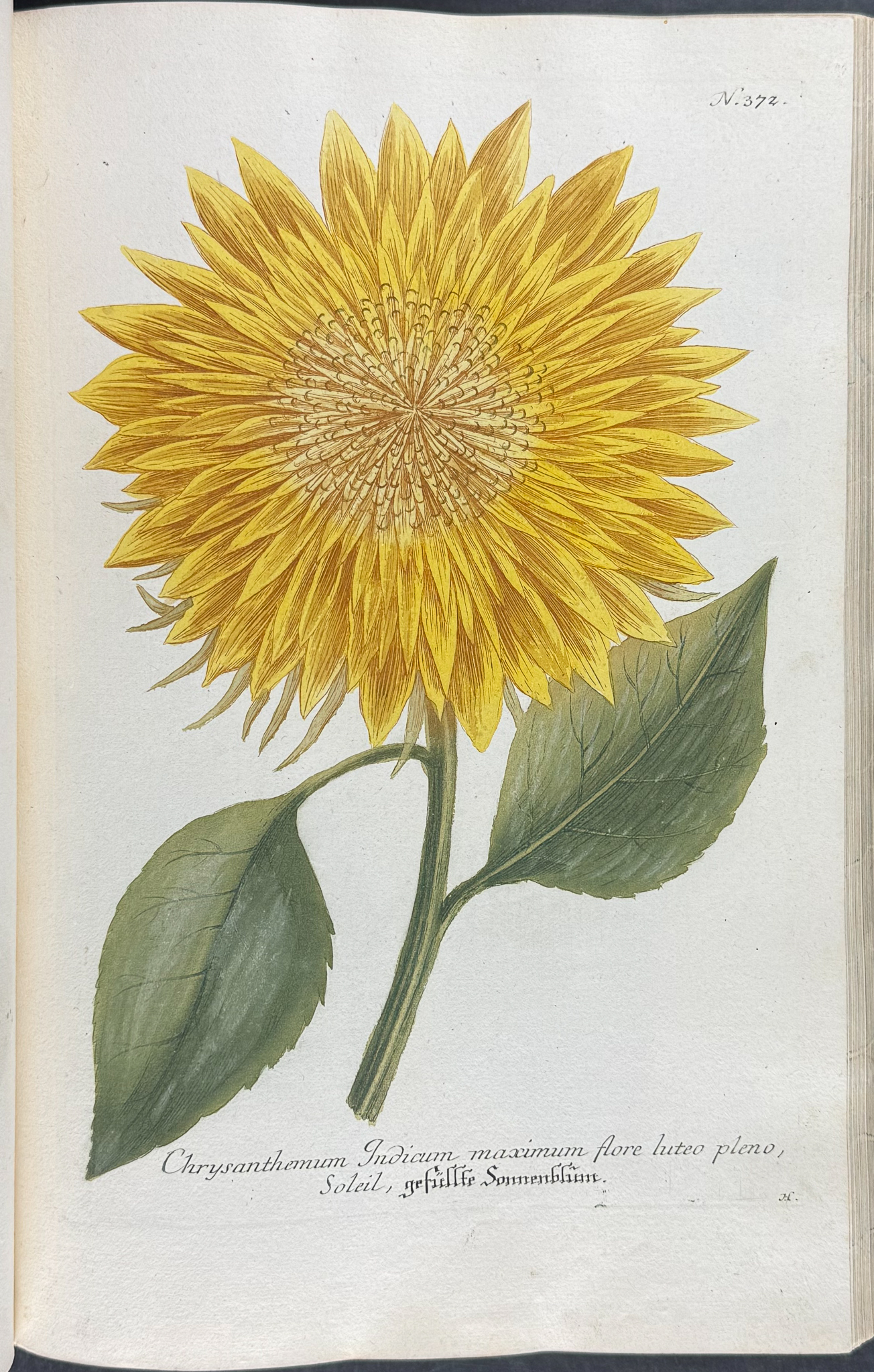
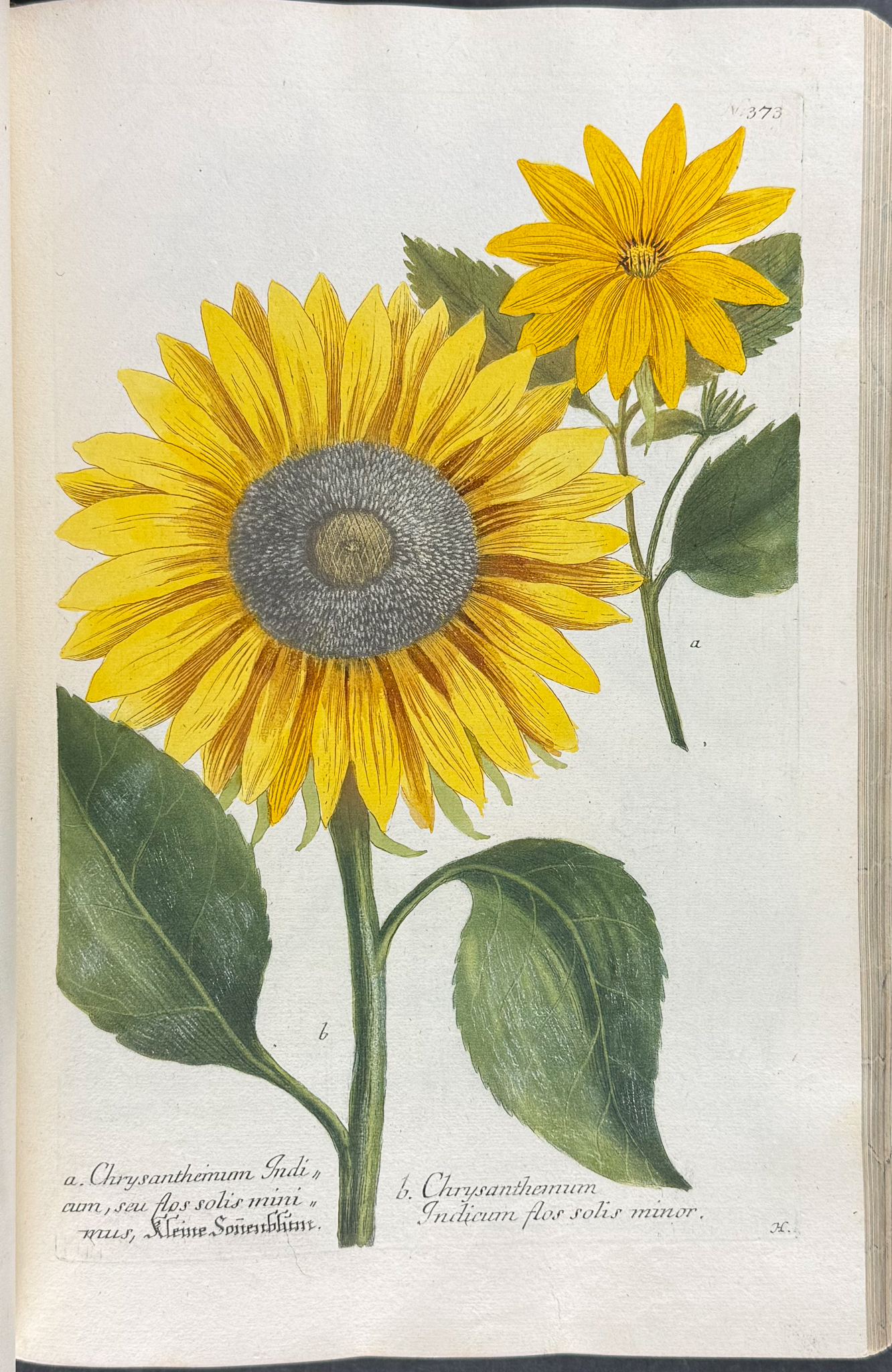
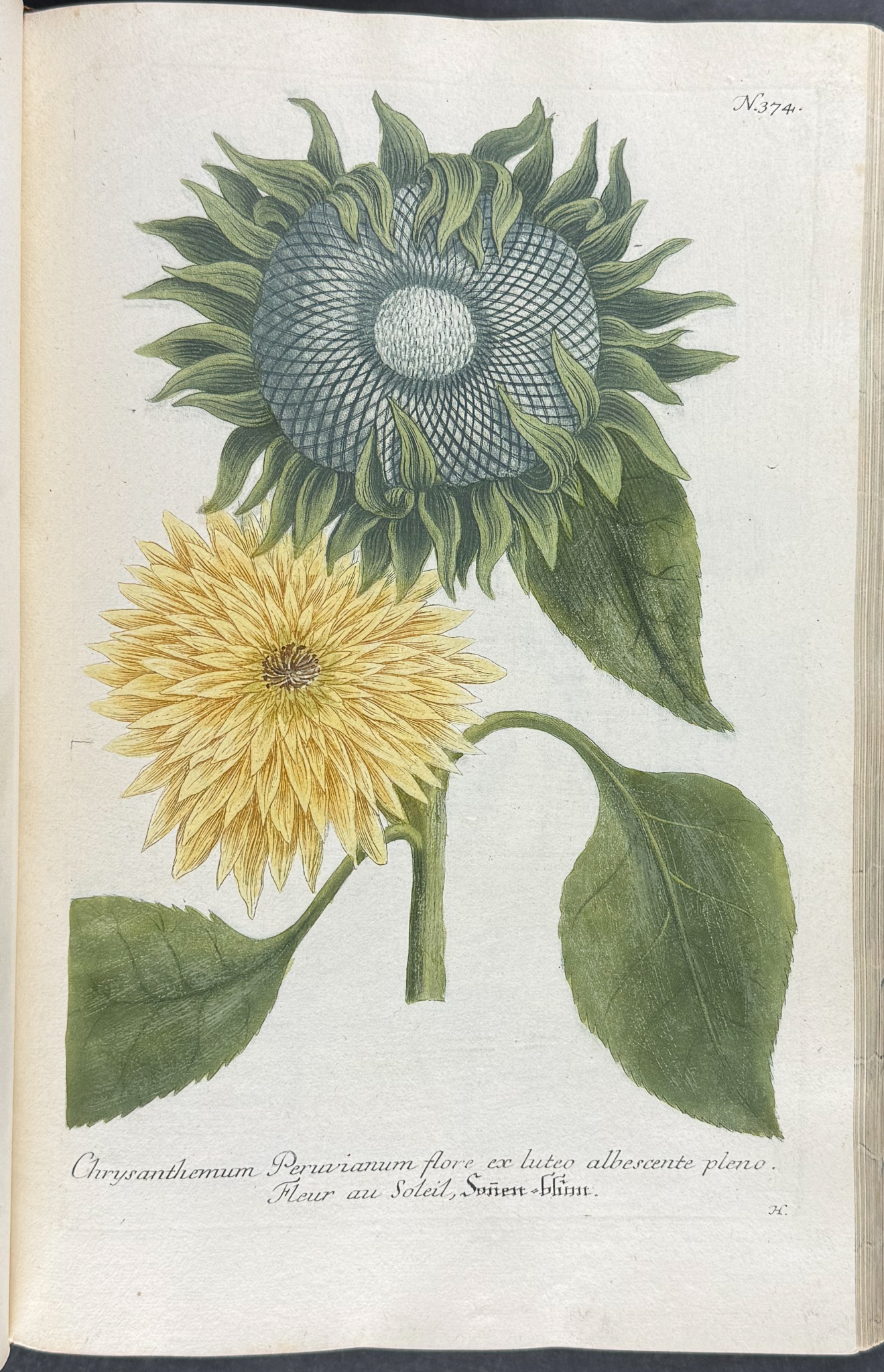
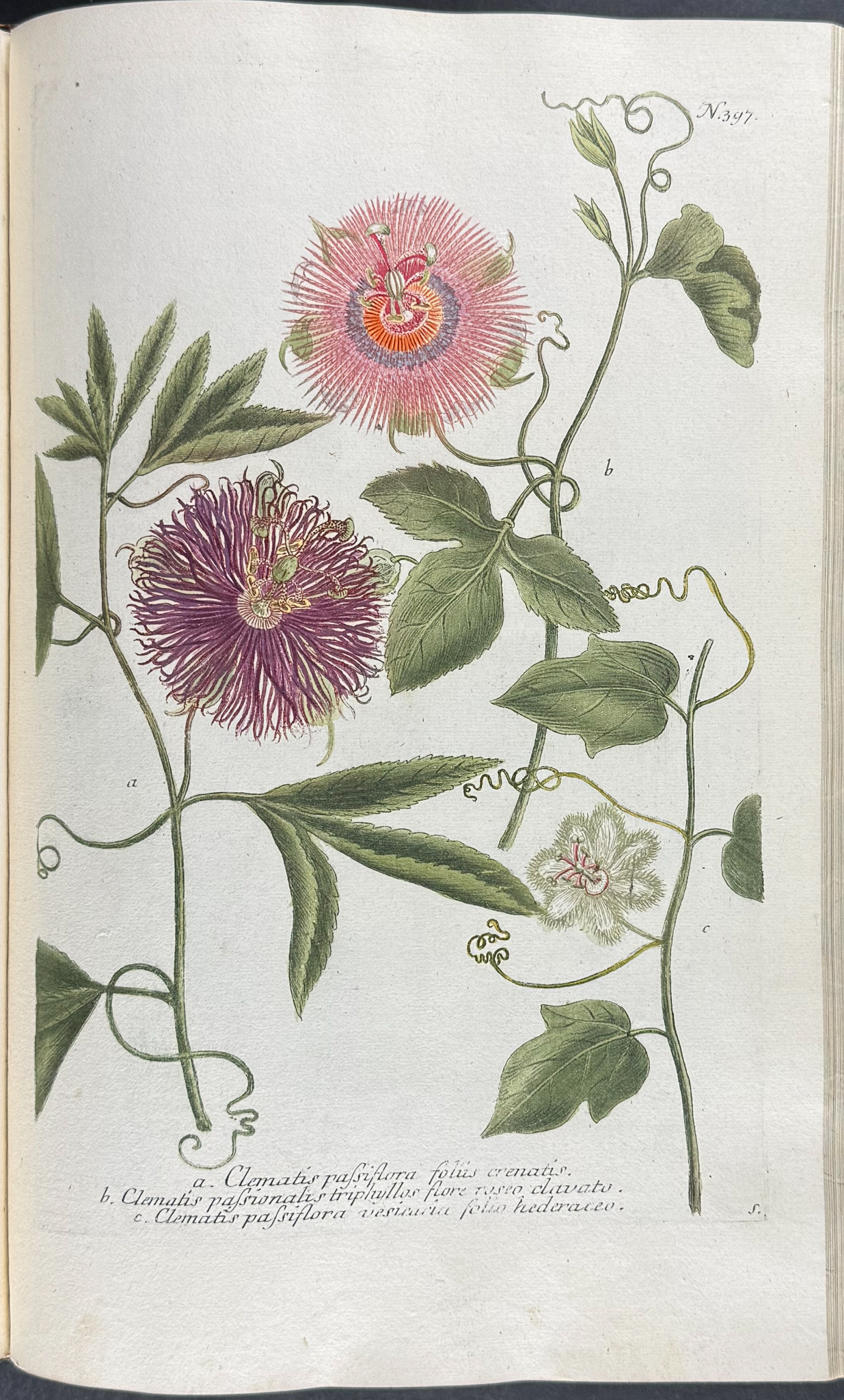
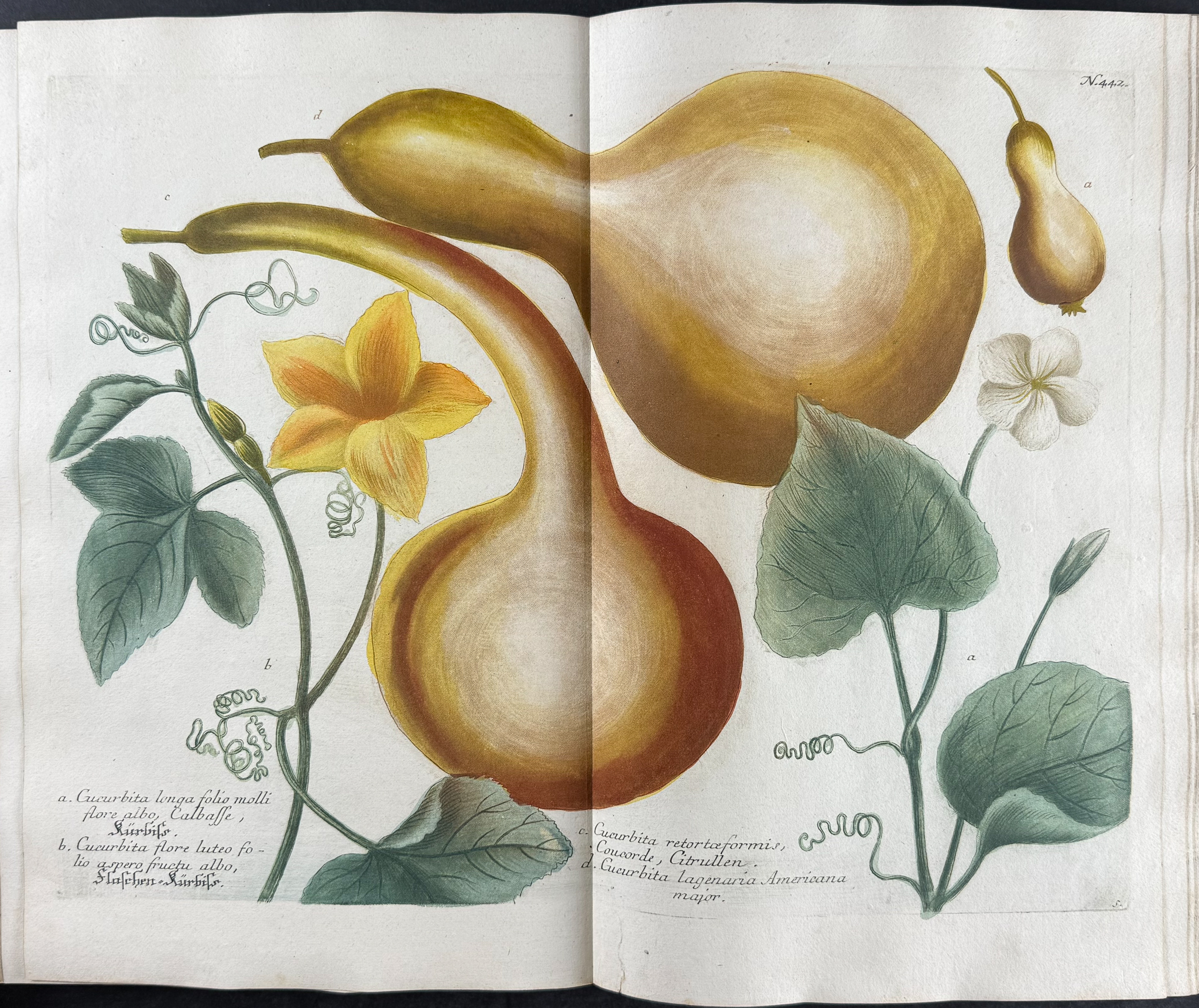
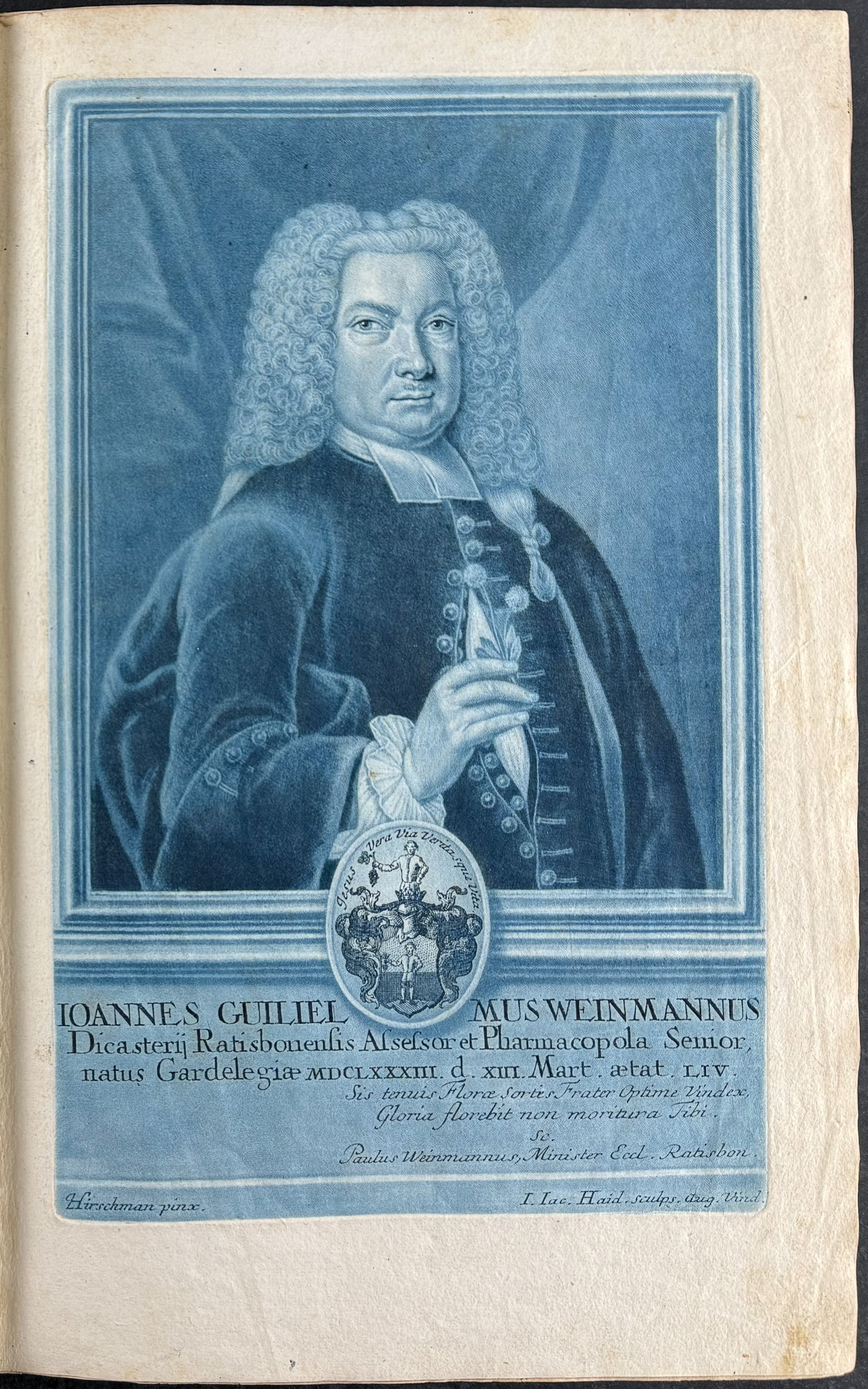
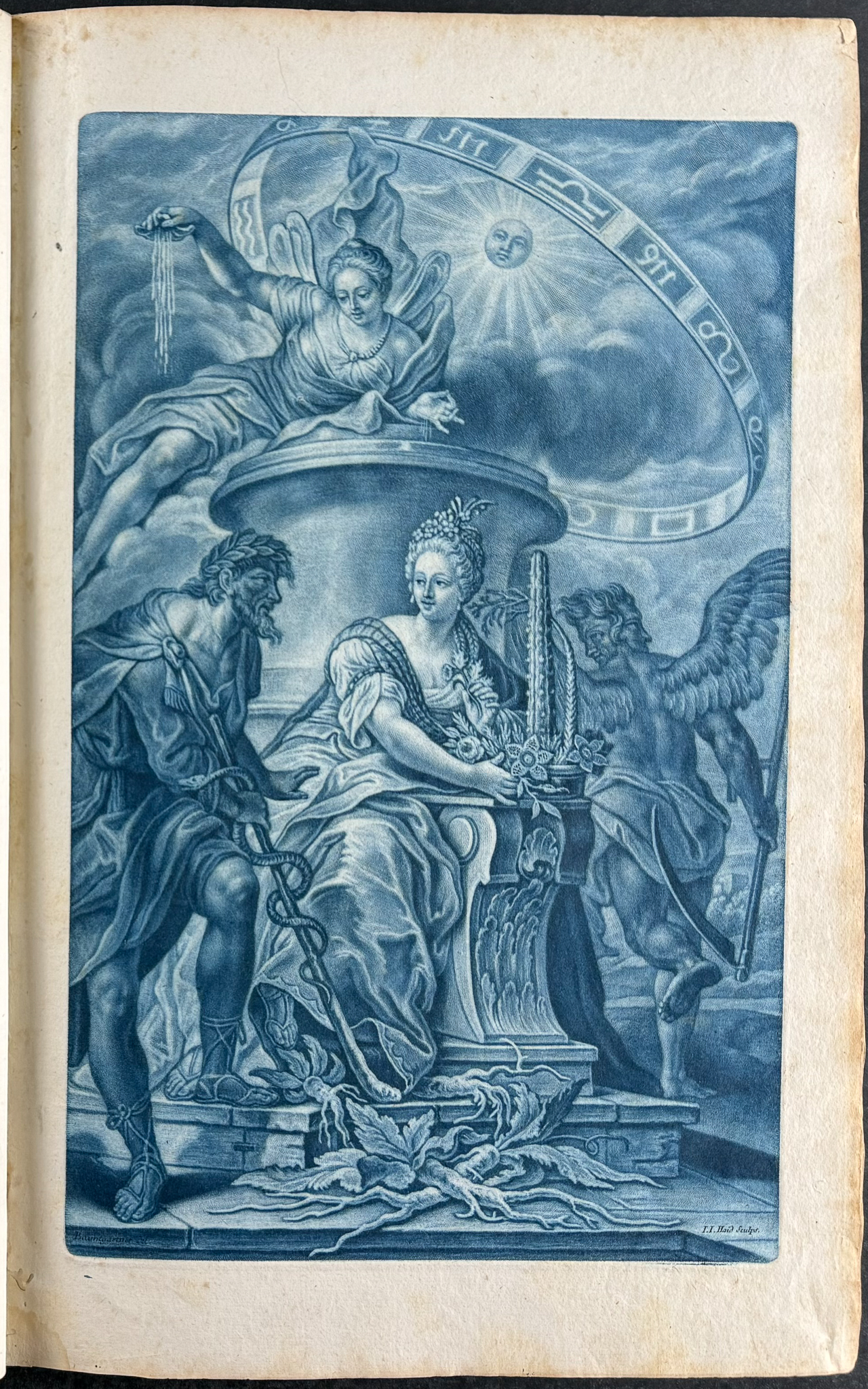
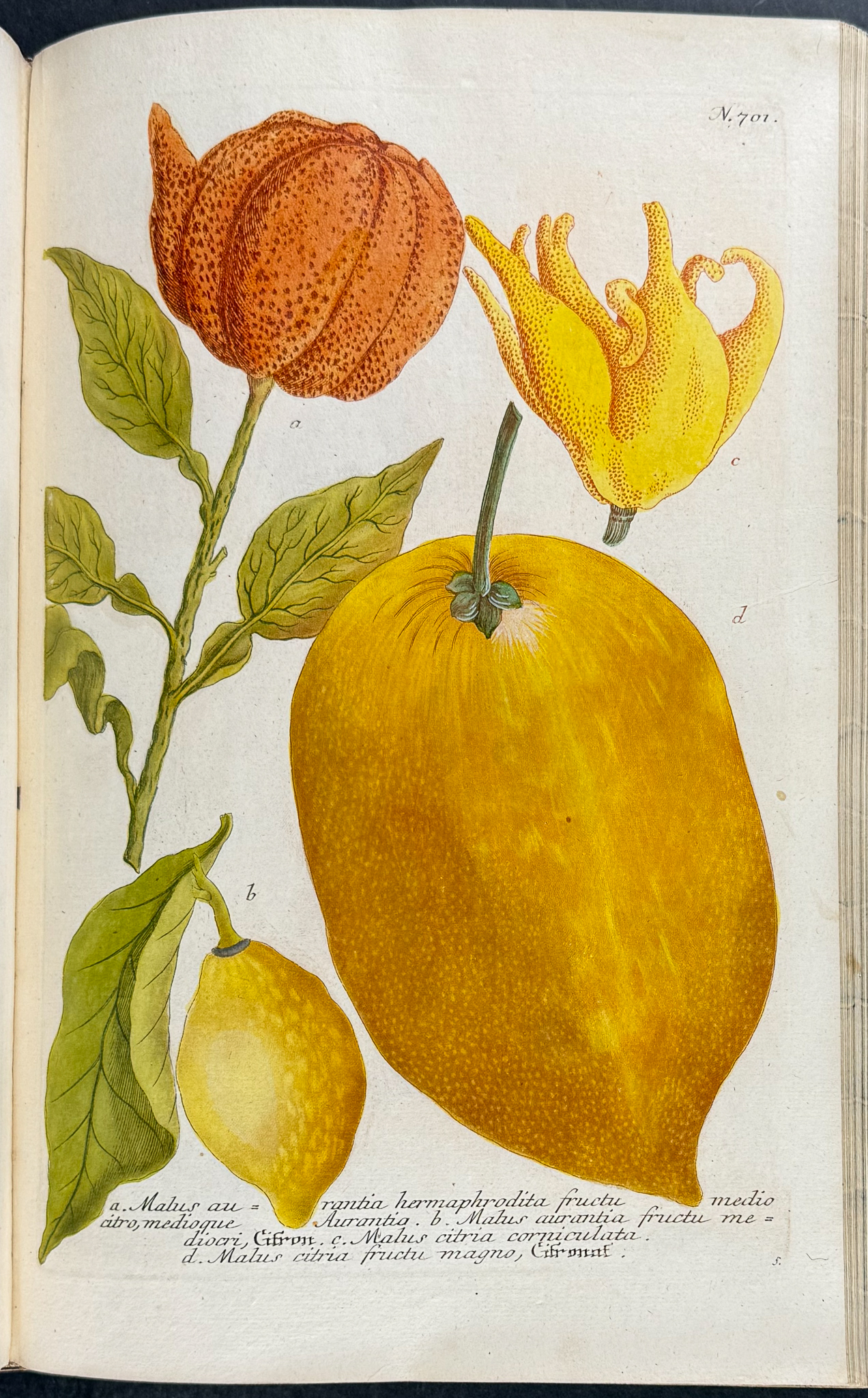
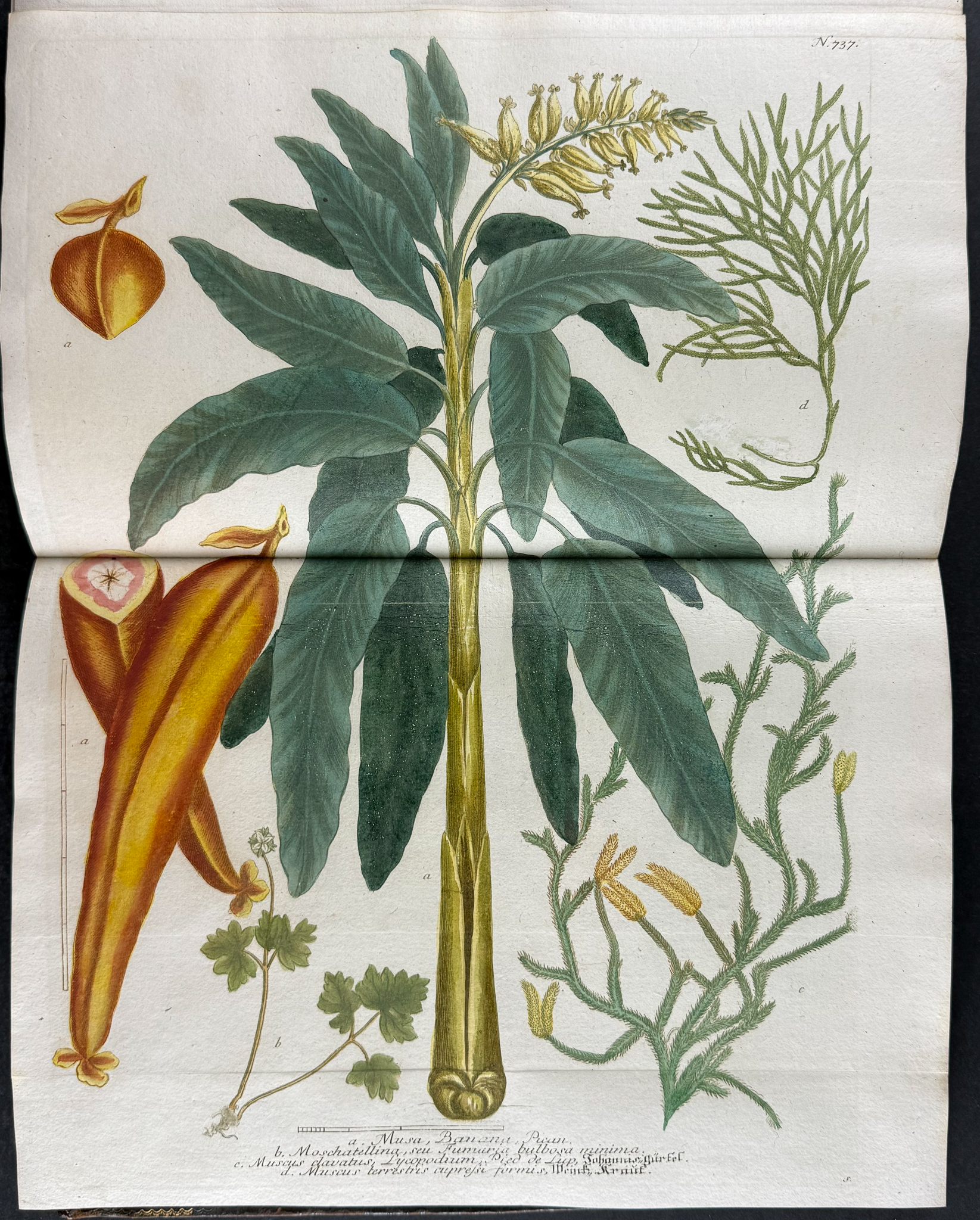
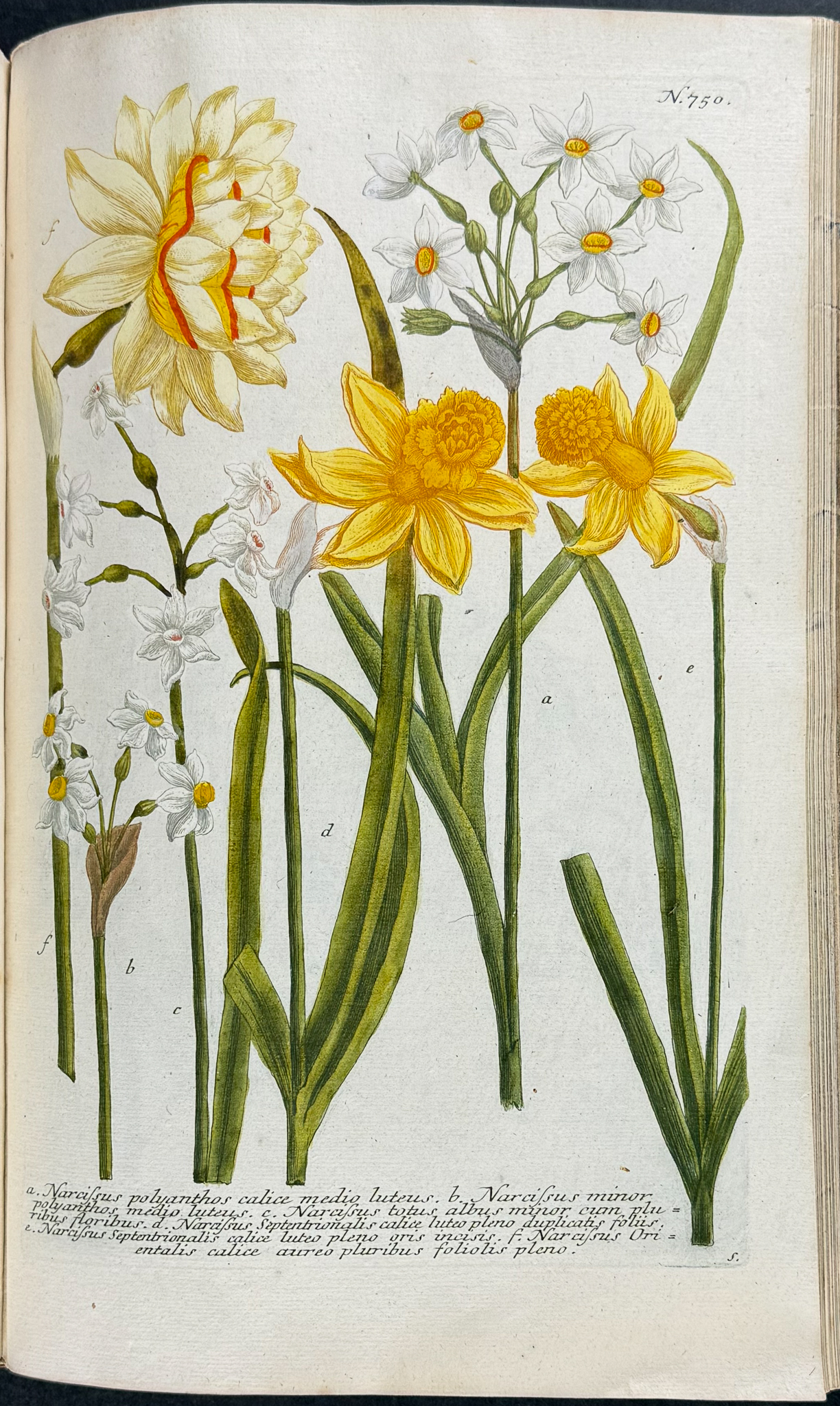
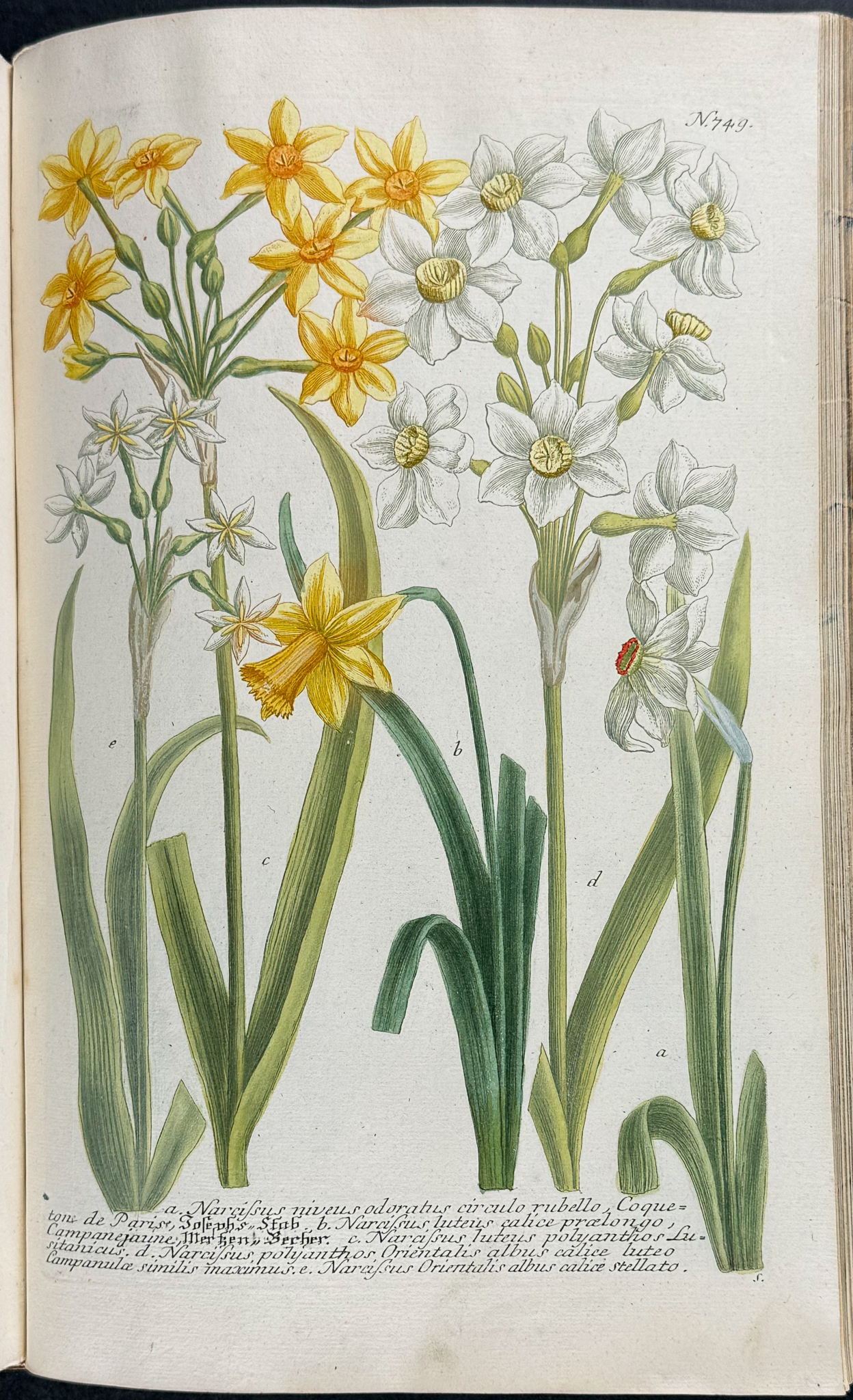
The set includes 4 plate volumes and 1 index volume. The books are bound in contemporary uniform calf, richly gilt decorated spines in 7 compartments with red gilt lettered label, sides with gilt ornamented border and gilt corner pieces. There are four engraved titles printed in red and black, frontispiece, two portraits, and 1025 engravings (mostly mezzotint, some folding). All engravings with original hand-color, those with mezzotint process printed in partial color and finished by hand. "The copperplates (…) were printed according to Johannes Teyler’s invention, patented 1688; they are engraved in combination with mezzotint printed in colour and finished by hand" (Landwehr 212).
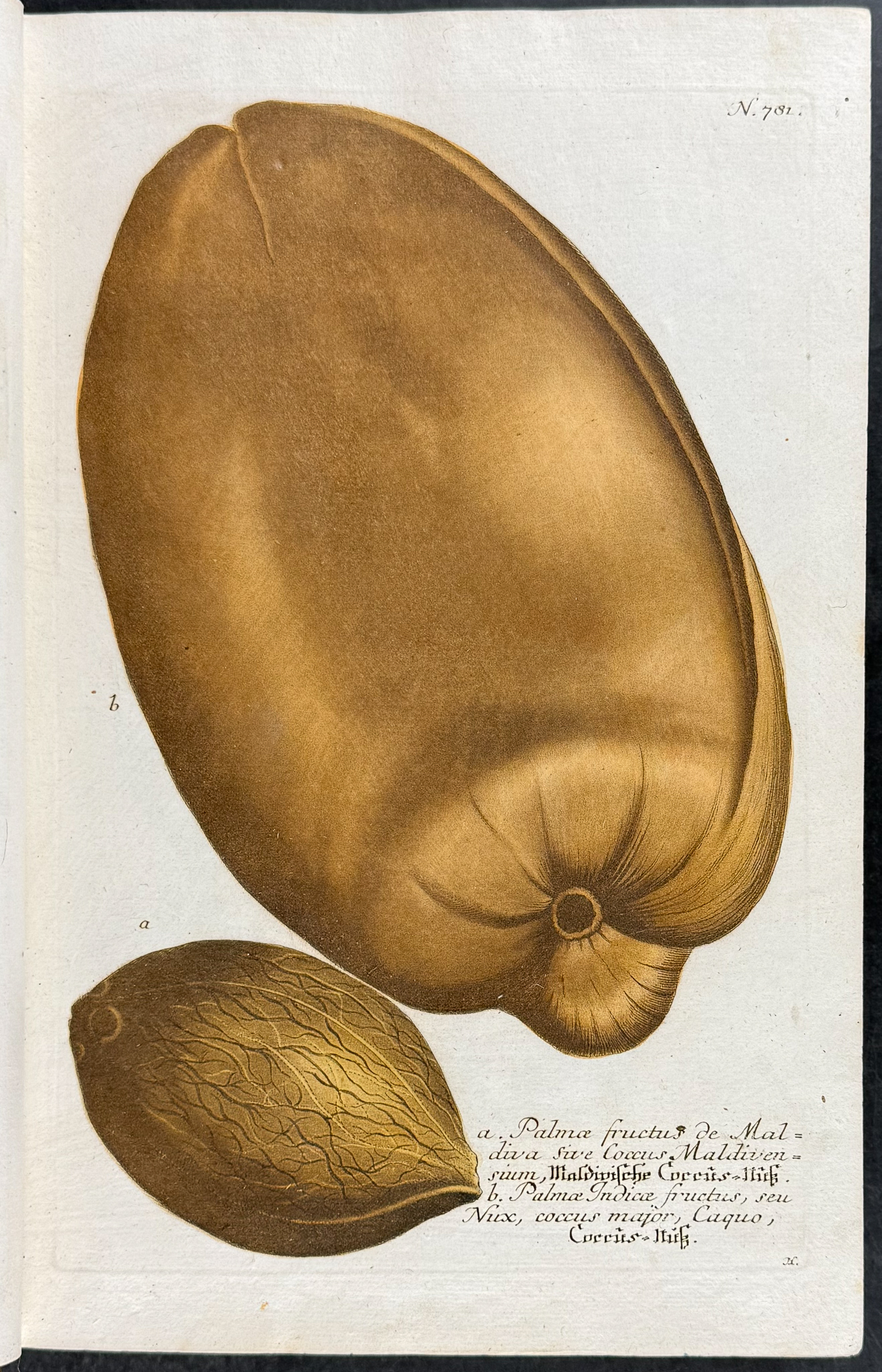
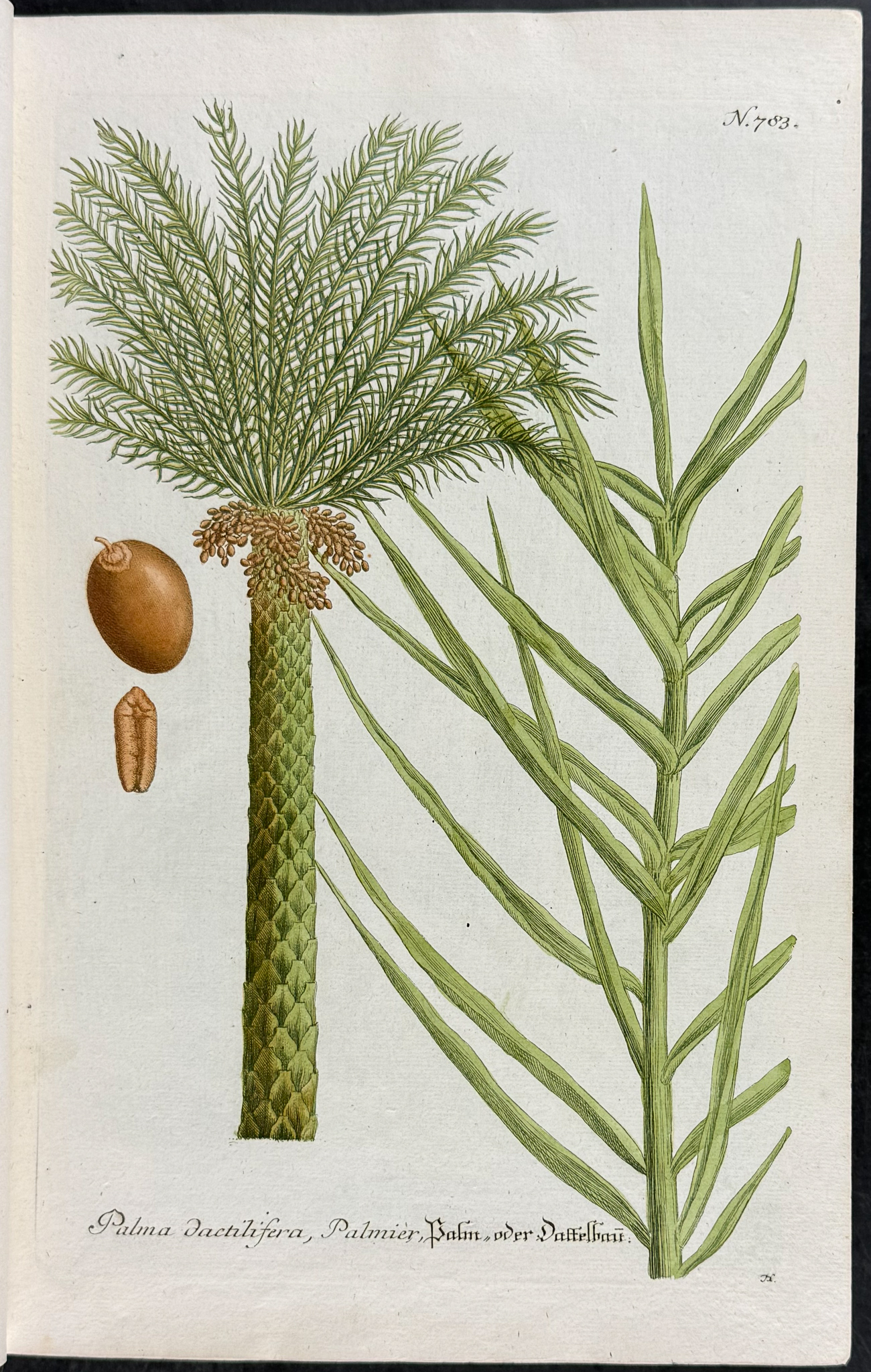
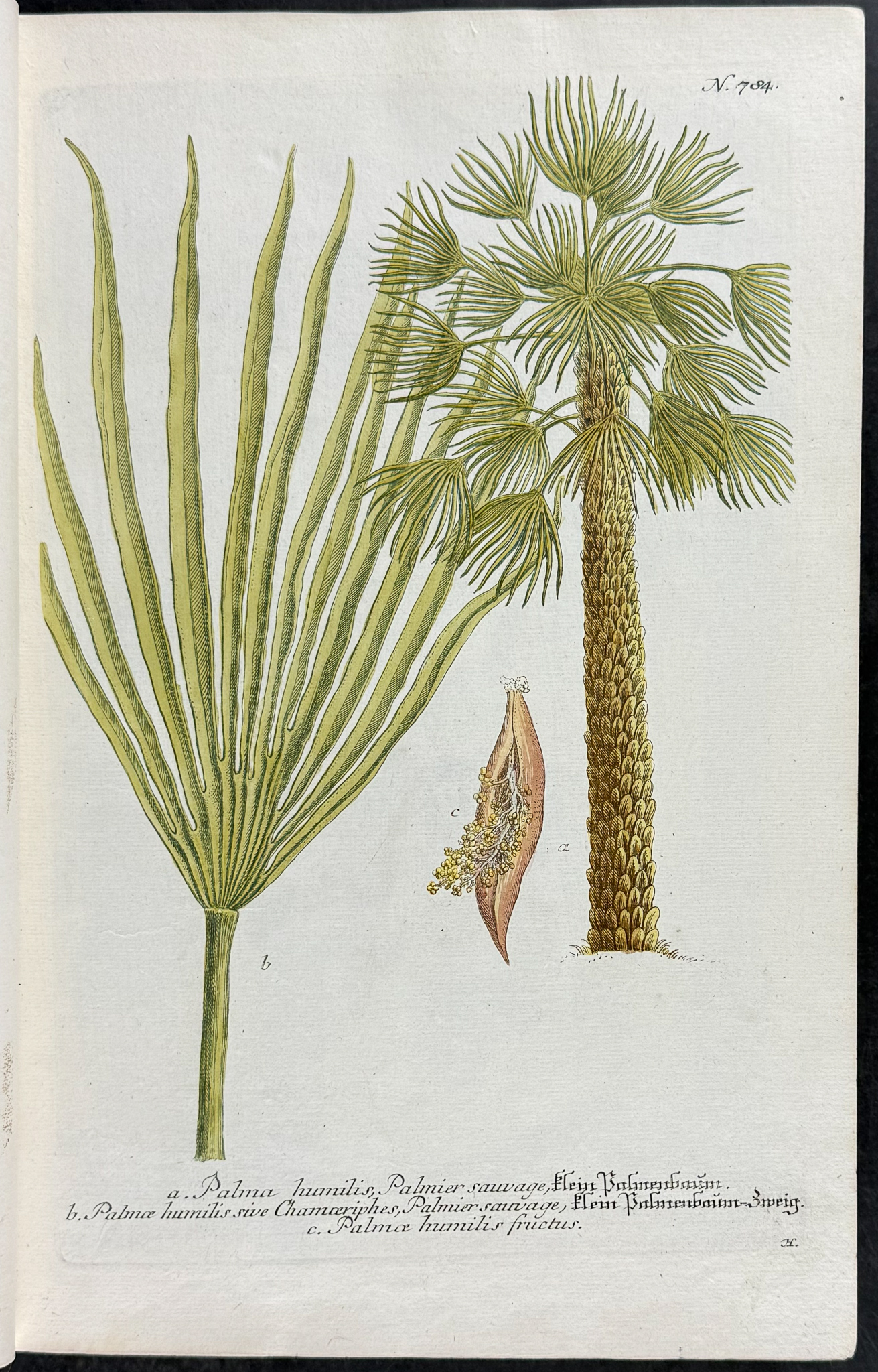
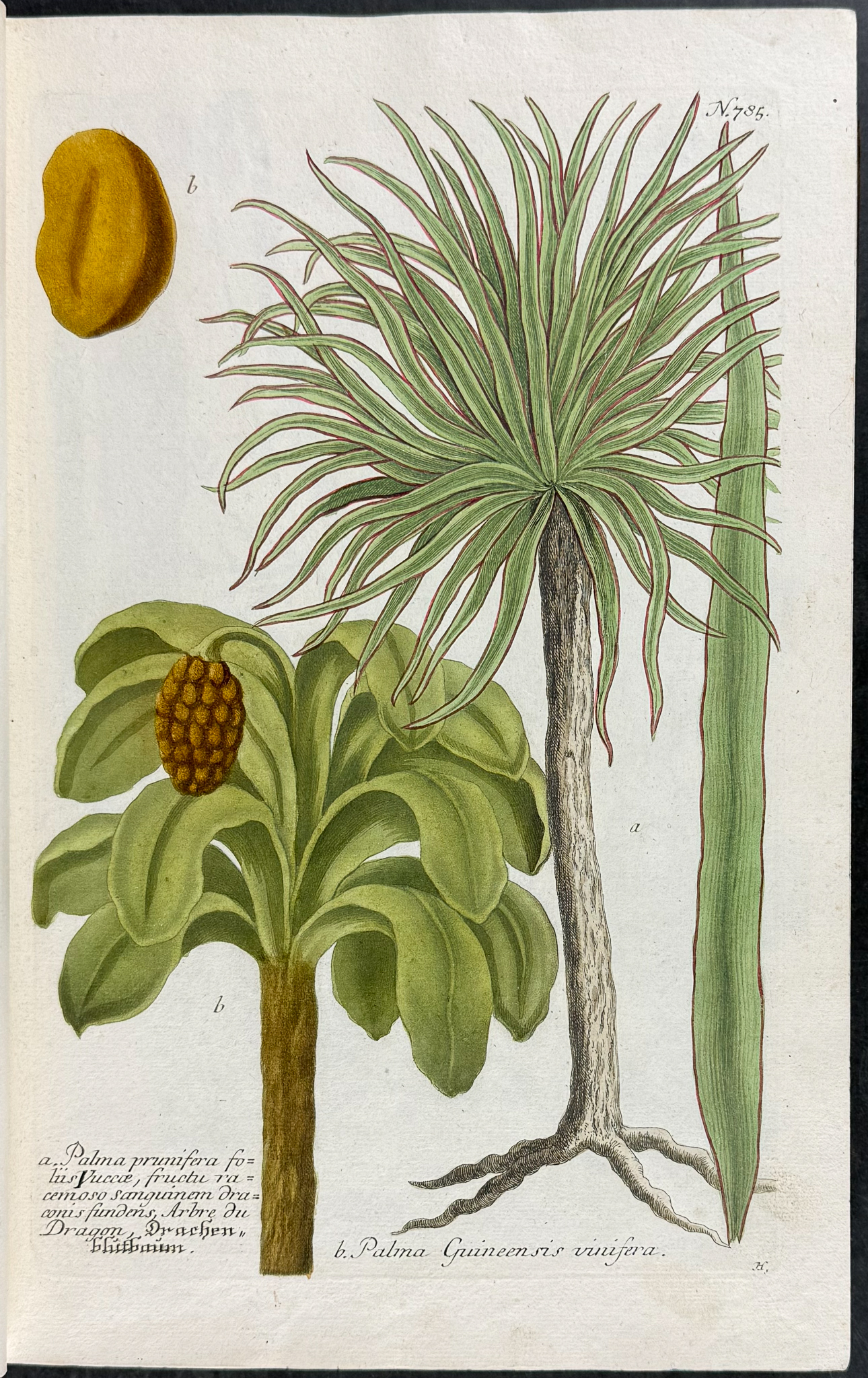
It was the first published work to include engravings by the greatest botanical artist of the eighteenth century– Georg Dionysus Ehret. It provided one of the most comprehensive botanical references of the 18th century. It also included work from B. Seuter, J.E. Ridinger, J.J. Haid, N. Asamin, & others. "373 plates are signed S for Seuter and 273 plates signed H for Haid. The plates are after originals by Ehret, N. Asamin, and others, although none is so marked on the plate." (Johnston)
Based on Weinmann’s collection of plants, and financed by him, this is the first complete edition of what amounts to a comprehensive iconography of all the flowers, fruit and vegetables in cultivation in early-18th century Europe. Georg Dionysius Ehret’s pivotal contribution to the work is nowhere acknowledged as the artist parted with Weinmann after producing 500 designs.
Weinmann (1683-1741), an apothecary from Regensburg, was the organizer of this huge undertaking, but the work was financed by Bartholomaeus Seuter, one of the engravers. The text for the first twenty-five plates was written by Johann Georg Nicolaus Dieterichs (1681-1737), who was succeeded by his son Ludwig Michael (1716-1747), and the work was completed after Weinmann’s death by Ambrosius Karl Bieler (1693-1747). The plates became an important source for copyists, appearing, for instance, in a number of Meissen designs.
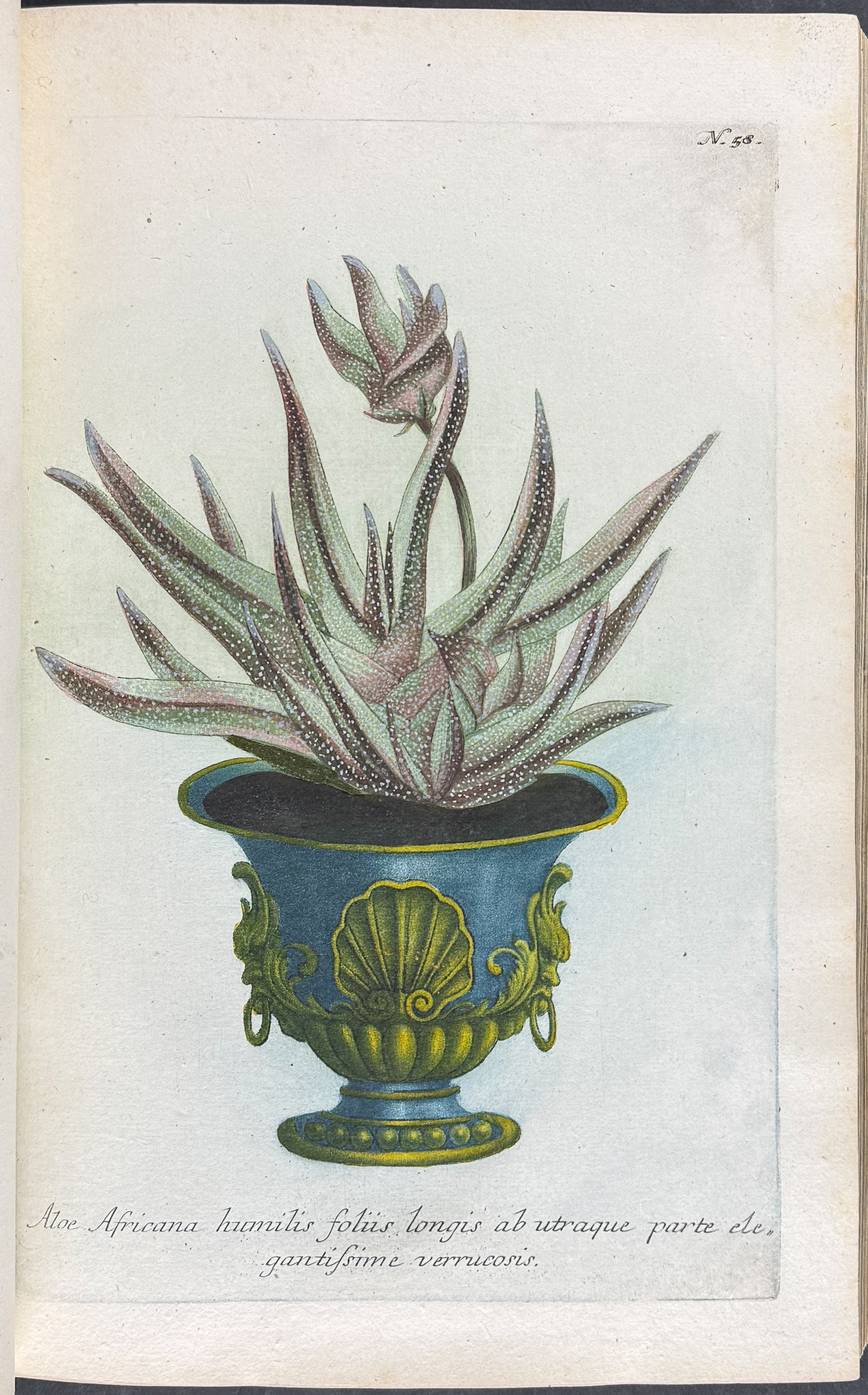
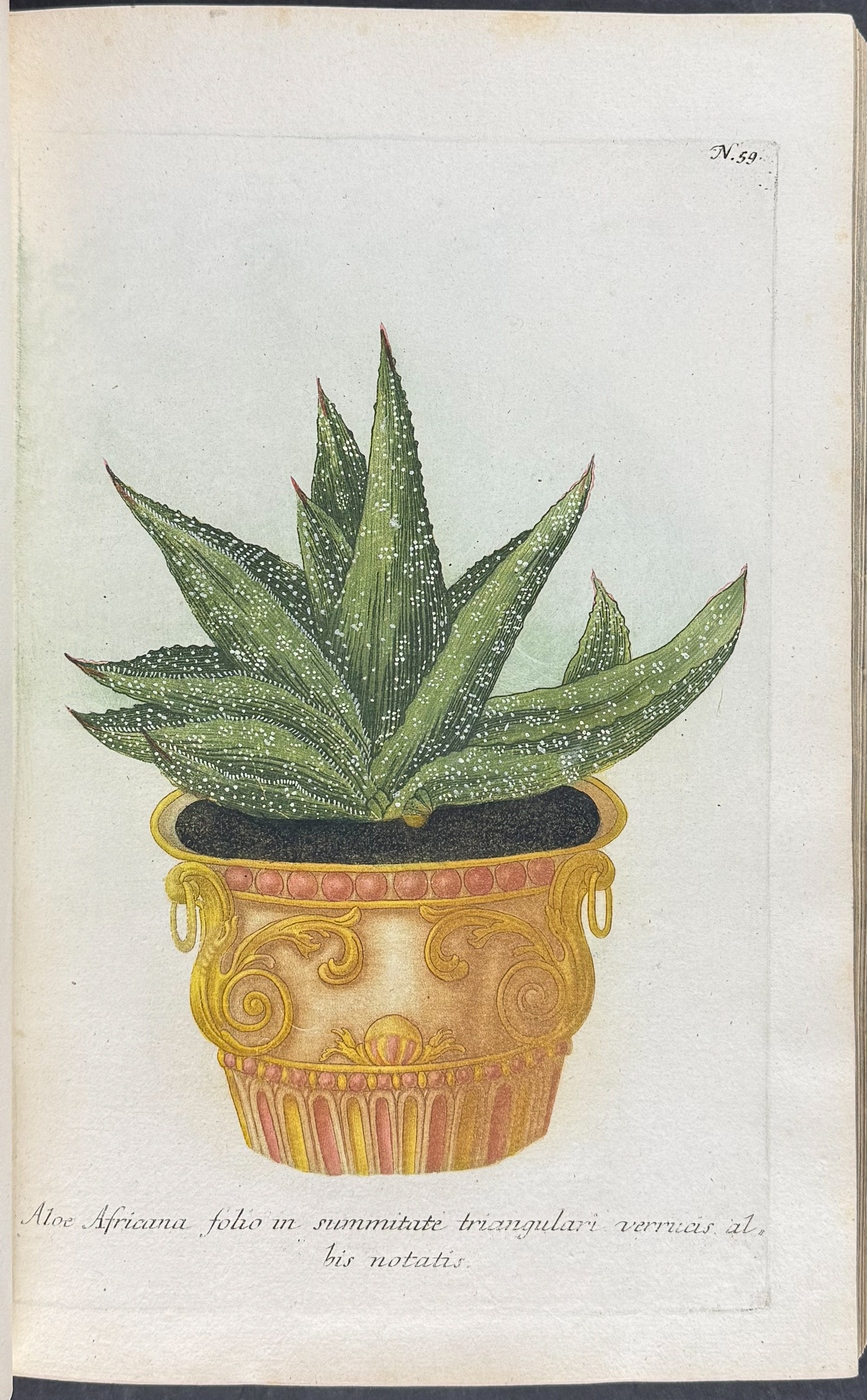
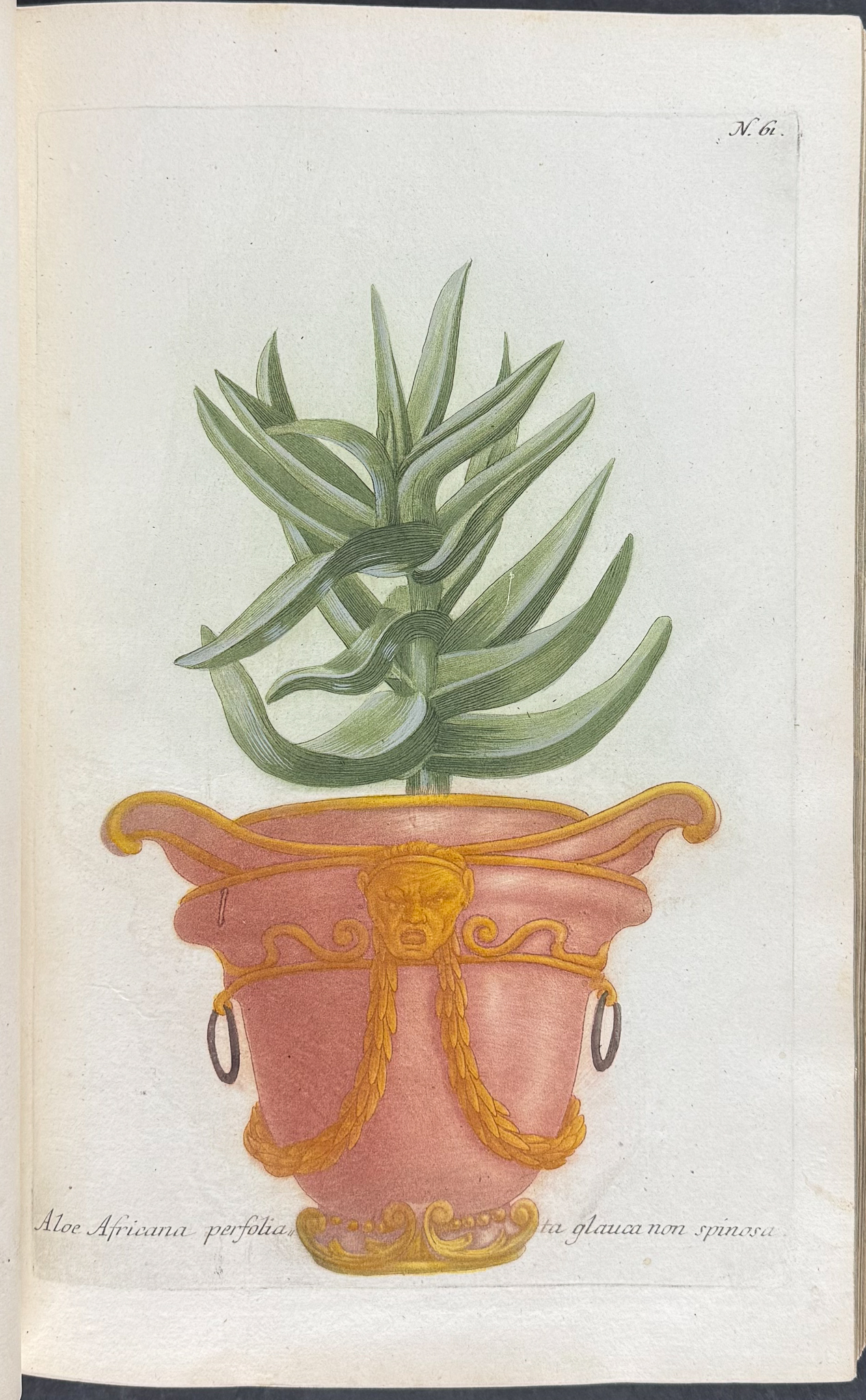
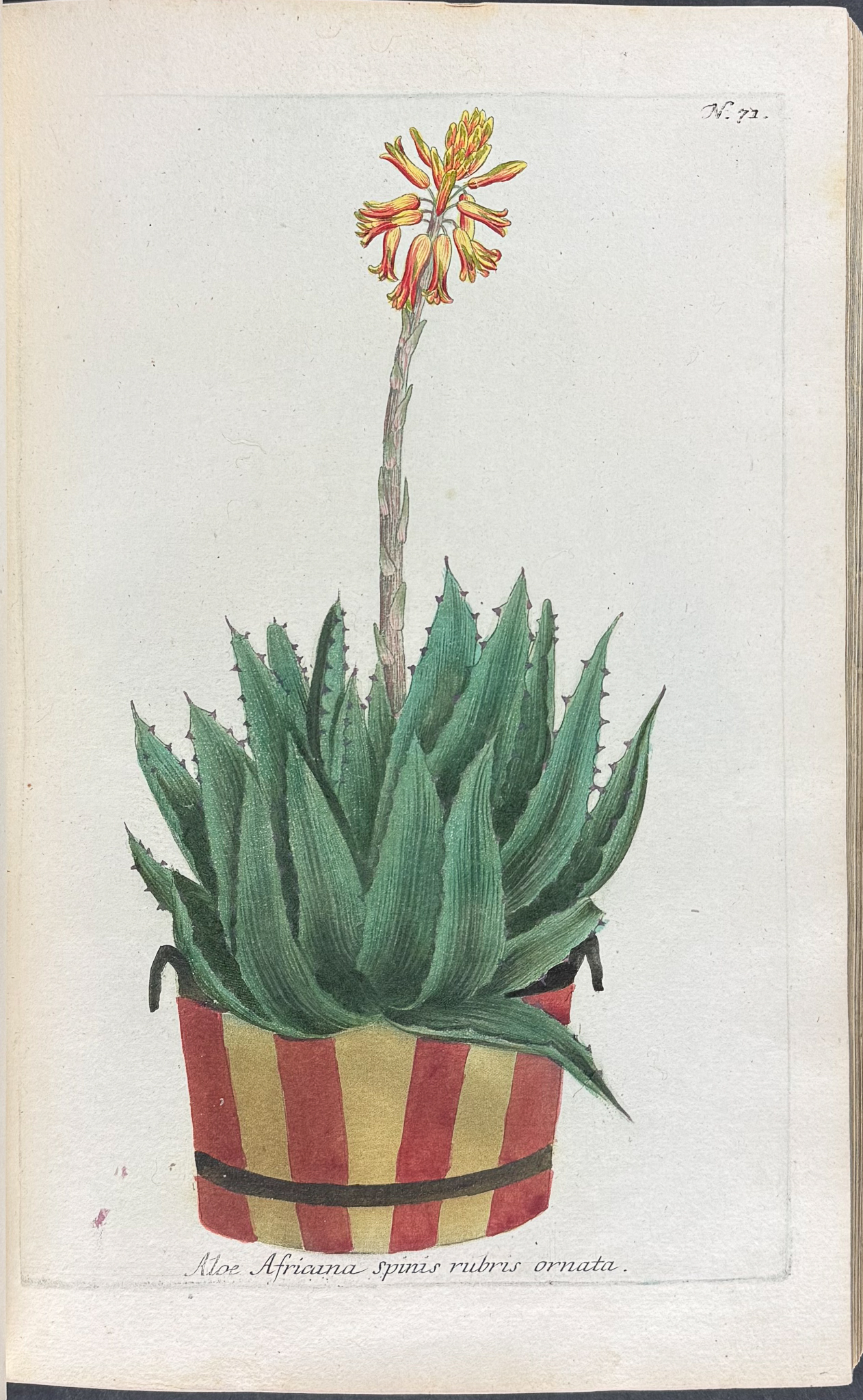
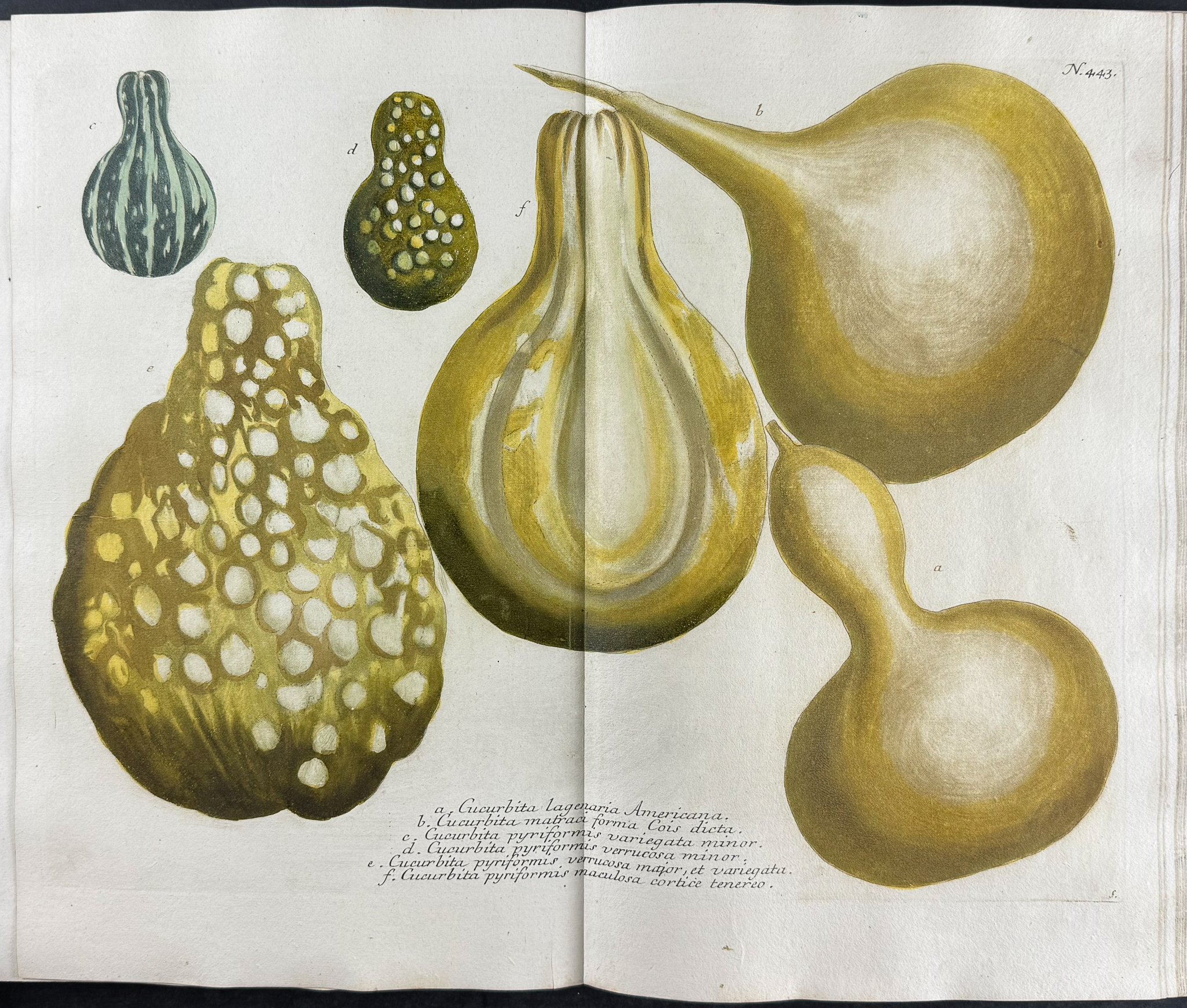
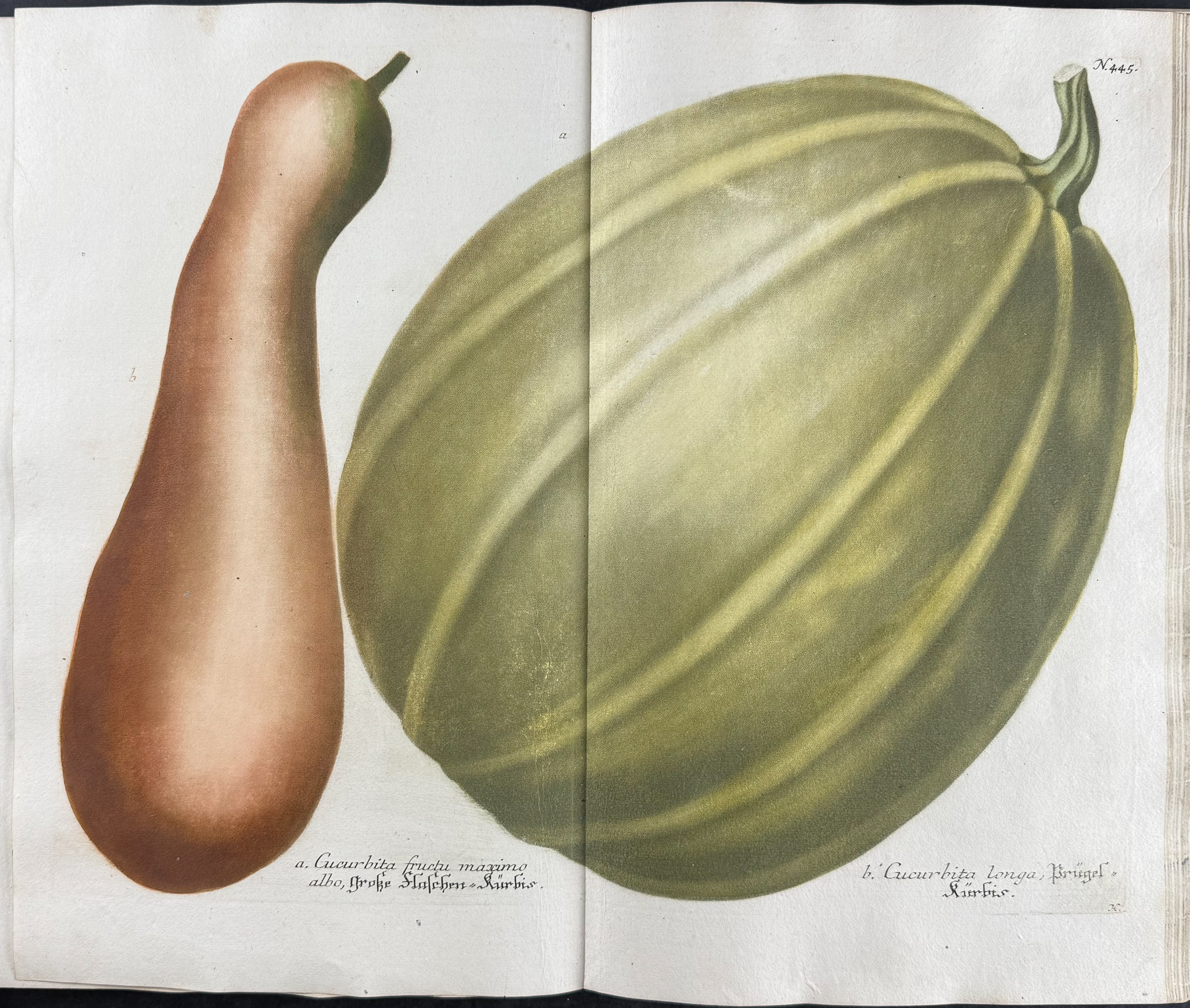
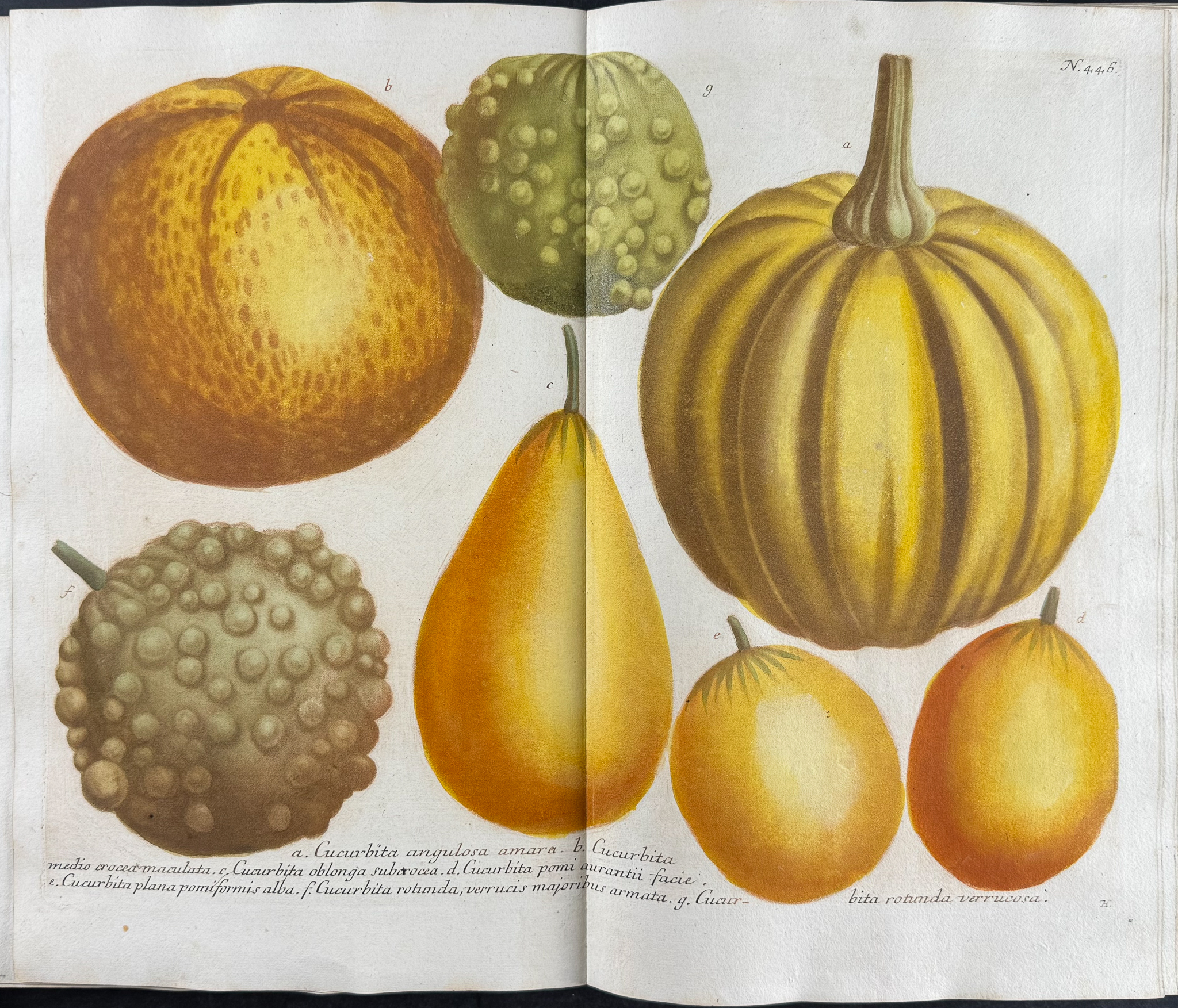
Many plates are ‘of particular interest on account of the colour printing, especially the plates of Aloes and Cactus depicted in pots of different designs, and the folding plates of gourds’ (Dunthorne). ‘The mezzotint process used [in the present work]… had been invented by Johann Teyler in the Netherlands around 1688. As practiced here by Bartholomaeus Seuter (1678-1754) and Johann Elias Ridinger (1698-1767), it was really a combination of etching and mezzotint, which made possible delicate lines and a very fine grain. The addition of hand-tinting brought about unusual and subtle effects. Some of the best work was done in later volumes by Johann Jakob Haid (1704-1767)’ (Hunt)
Paper Size: 9 7/8" by 15"
Paper Type or Special Features: 1025 Botanical Engravings in 4 Volumes + Separately Bound Index
Condition report:
The work is in very good to excellent condition. This is perhaps the nicest we\'ve seen this work that can be prone to fox marks or toning, exceptionally clean throughouth. There may be a few minor marks or imperfections to be expected with age. Please review the image carefully for condition and contact us with any questions.
Share this lot: